November is the month of the Mediterranean, and the best city to reflect the Euro-Mediterranean is the one where an important engagement was taken, Barcelona.
To celebrate the 30 years from the launch of the Barcelona process, the Euro-Mediterranean Partnership launched to foster dialogue and cooperation between the European Union and Southern Mediterranean countries. Its main goals were to create a common area of peace, stability, and shared prosperity through three main pillars: political dialogue, economic cooperation (including a free-trade area), and human and cultural exchange. This process set the basis for the creation of the Union for the Mediterranean, the intergovernmental organisation bringing together 43 countries of the region, as well as the Anna Lindh Foundation, focusing on intercultural dialogue.
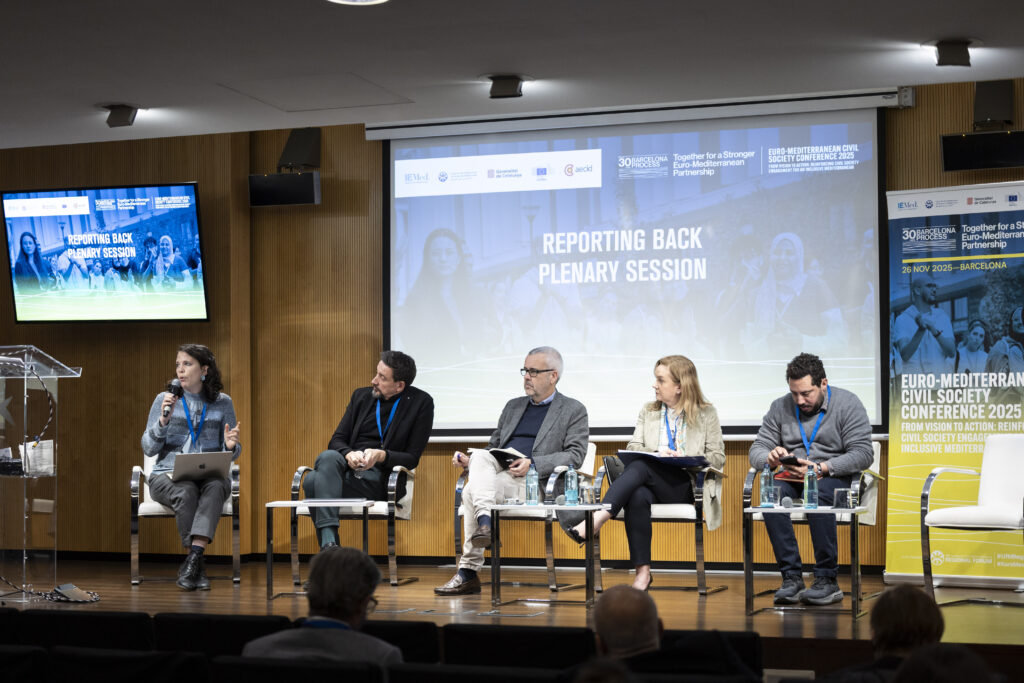
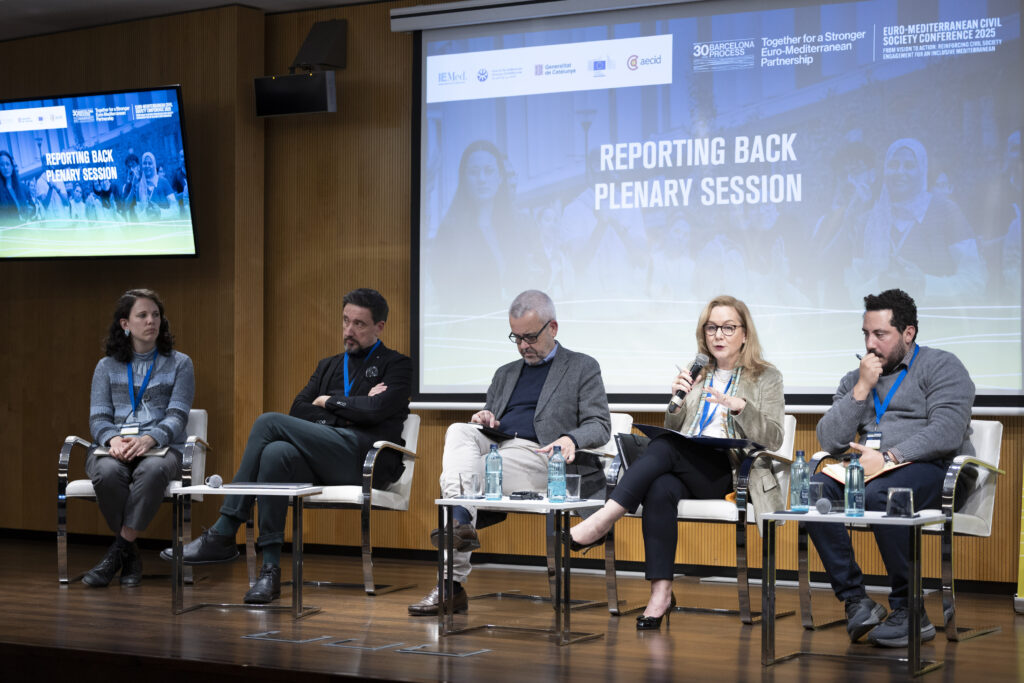
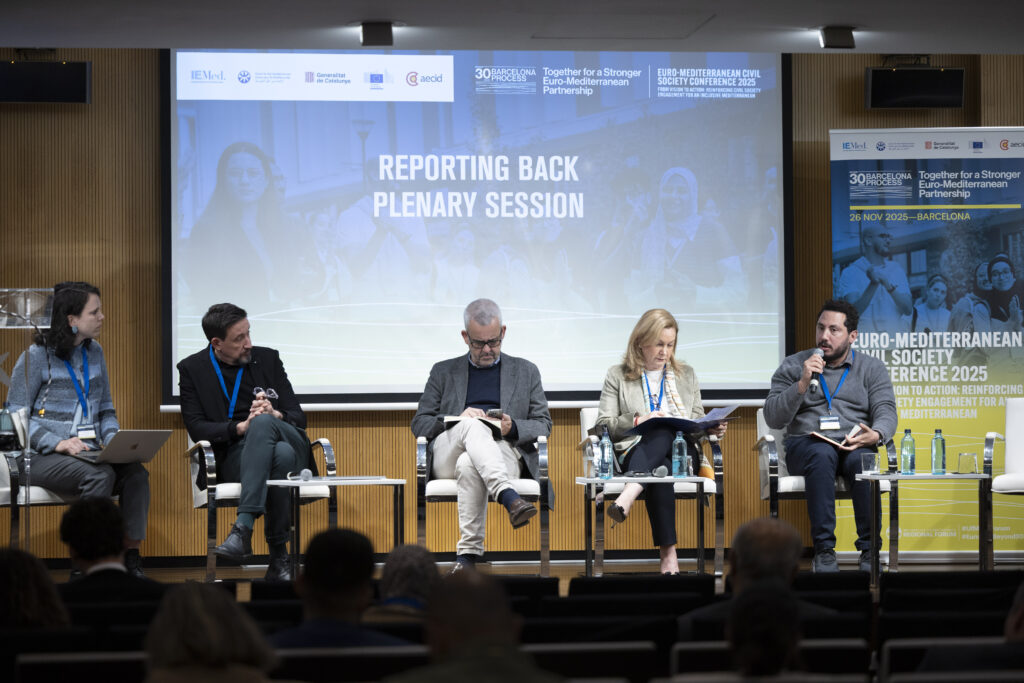
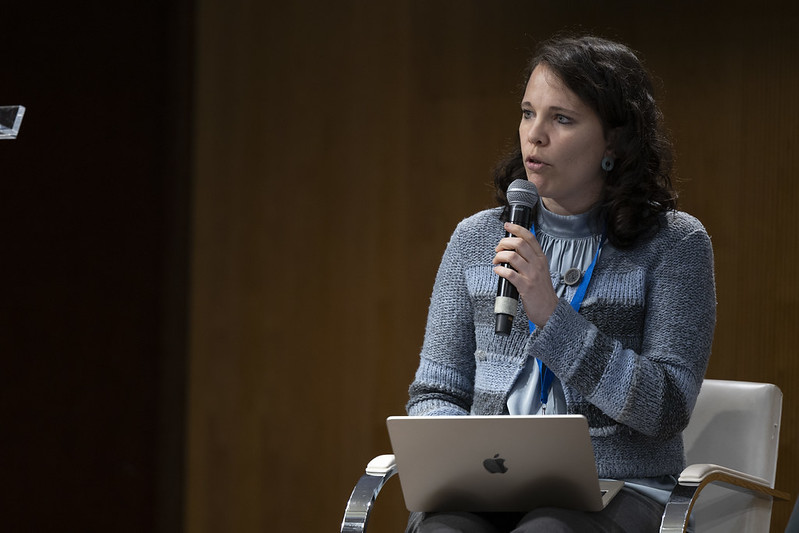
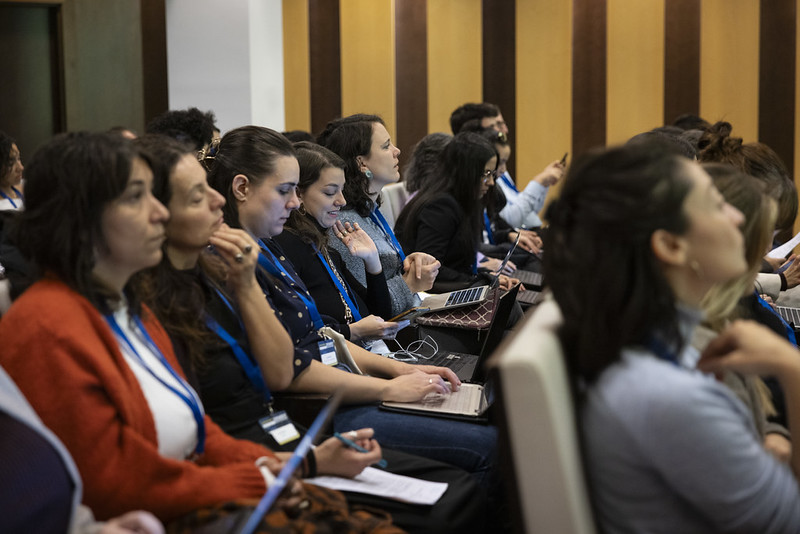
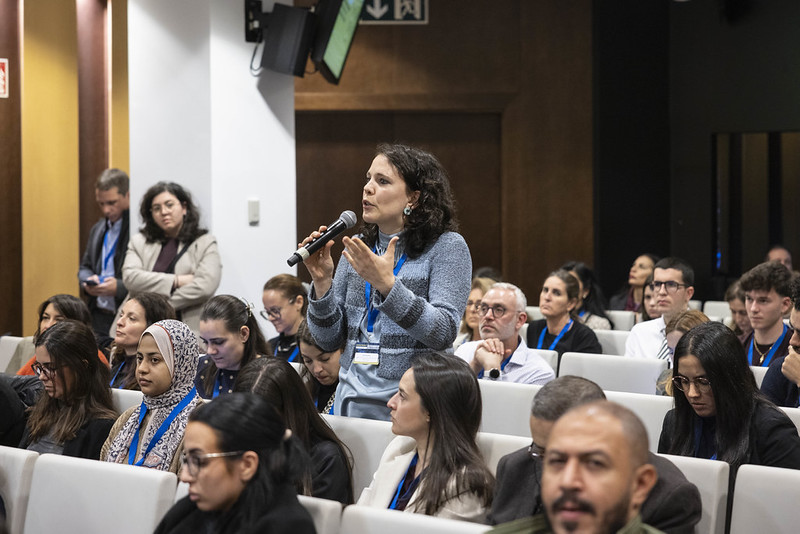
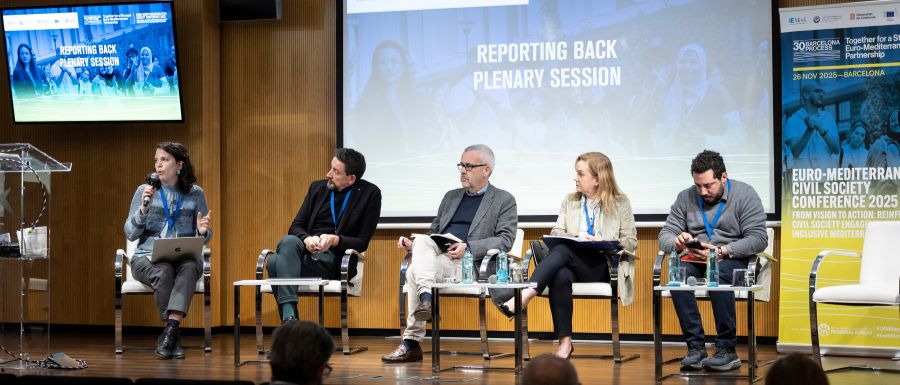
In this frame, the Union for the Mediterranean (UfM), the European Institute for the Mediterranean (IEMed), MedCities as well as the city, metropolitan area and province of Barcelona and the Catalan region have co-organised two parallel events: the Euro-Mediterranean Civil Society Conference and the Conference of Mediterranean cities. By bringing together civil society actors and local authorities from the region, the goal was to share inputs on the imminent implementation of the recently adopted Pact for the Mediterranean by the European Union (DG MENA) and reflect on the past 30 years of Euro-Mediterranean cooperation. Many points were raised, but the representatives of CSOs at the Conference mostly asked for further means to combat polarisation in the region, greater trust-building between CSOs and institutions as well as the possibility to closely follow the implementation of the Pact for a positive impact on our communities.
As ALDA, through the representation of Giulia Sostero – Coordinator of the ASWAT (Africa, SouthWest Asia and Turkey) Department, we could actively contribute to both events by bringing the voice of our members, some of which were also present: above all, Diputació de Barcelona as co-organiser. Through the working group on People to People and with a discussant intervention in the panel “First responders – The frontline position of Local Authorities in regional challenges”, Giulia could underline how more joint spaces are needed for Local Authorities and Civil Society actors to work together. Sharing similar motivation to be involved in the implementation of the Pact, trust between these actors needs to be reinforced in order to react jointly to the region’s current crises. Co-creation and participation can no longer be considered a plus, but became a real need in view of effective policy-making. Moreover, we underlined the importance of a human-rights based approach to migration, and the mainstreaming of youth active participation.
You can find here the livestream of Giulia’s intervention.
What’s next? Both conferences will publish reports and the takeaways will be included in the Pact’s Action Plan, now under development and expected to be published in early 2026. Keep following our channels as well as UfM and IEMed for more information. As ALDA, covering also the role of co-Heads of the French network of the Anna Lindh Foundation, we will keep making sure that the voices and perspectives of our members are heard and taken into account.