Malta – 14 May 2026
The third and final day of the ALDA Assembly and Festival 2026 “Local Democracy that Delivers” brought together local authorities, civil society organisations, researchers, practitioners, and international experts for a dynamic programme of discussions, workshops, and collaborative sessions focused on the future of democracy at local level.
The final day explored some of the most pressing challenges and opportunities facing democratic governance today — from artificial intelligence and youth participation to EU enlargement, water governance, and partnership-building.
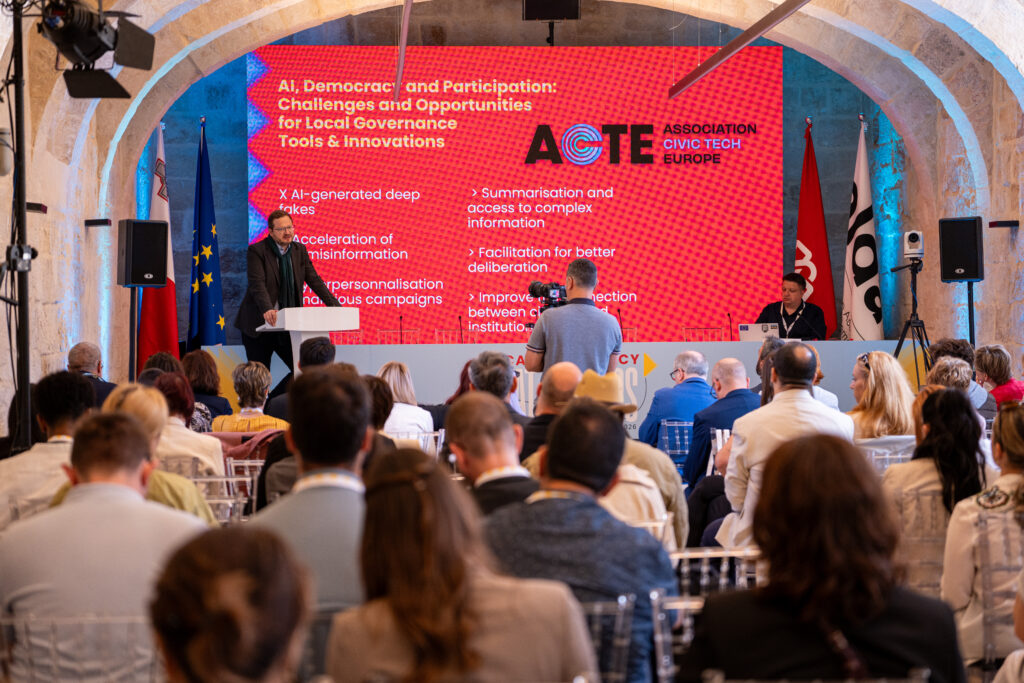
AI, Democracy and Participation: Challenges and Opportunities for Local Governance
The day opened with a high-level discussion on the relationship between artificial intelligence and democracy, building on ALDA’s growing work within the Digital & Innovation Hub and recent initiatives such as the March 2026 workshop “Ethical AI in Local Governance”. Moderated by Denys Tkachov, Member of the ALDA Scientific Committee, the session explored how AI is already transforming local governance, citizen participation, and public services, while also raising critical concerns around bias, disinformation, polarisation, and democratic accountability.
Opening remarks by Nataša Vučković, President of ALDA, highlighted the importance of ensuring that technological innovation remains human-centred and aligned with democratic values. Participants discussed the implications of the EU AI Act, the role of initiatives such as the Democracy Shield, and practical experiences from ALDA projects including Hatedemics and Media4EU. Experts including Patrick Molinoz, Alexis Prokopiev, Marco Guerini, Nino Tvaltvadze, Eszter Hartay, and Ivana Velkova contributed to discussions on democratic safeguards, ethical digital transformation, and the need for inclusive AI governance frameworks.
The session concluded with reflections on the creation of an ALDA AI Task Force and future international cooperation opportunities linked to global discussions on AI and democracy.
Designing ALDA’s Youth Political Agenda 2026–2028
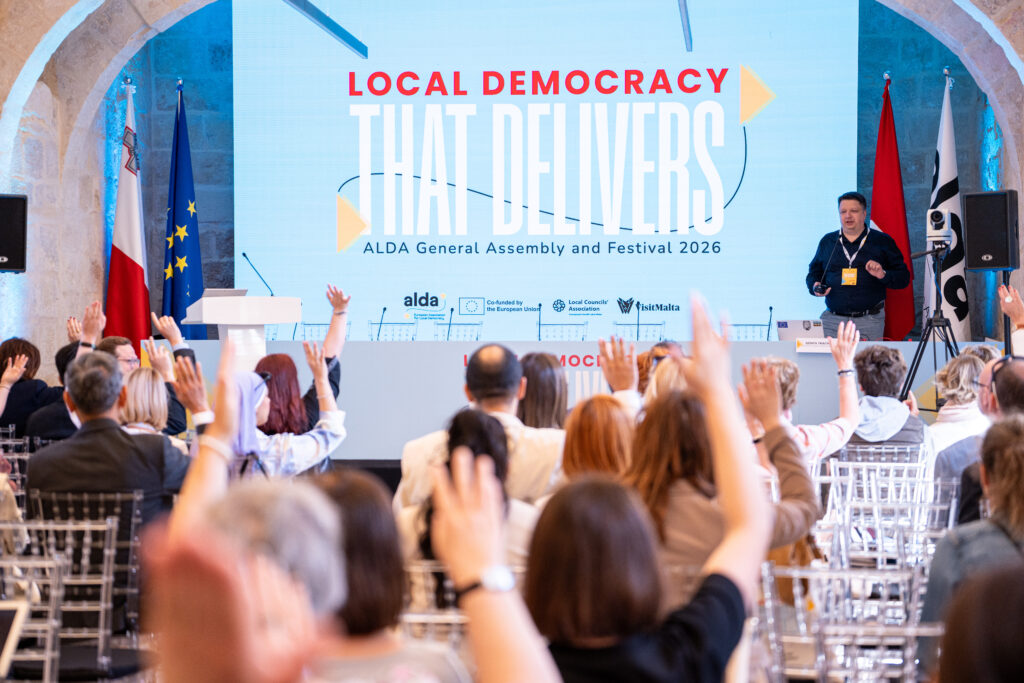
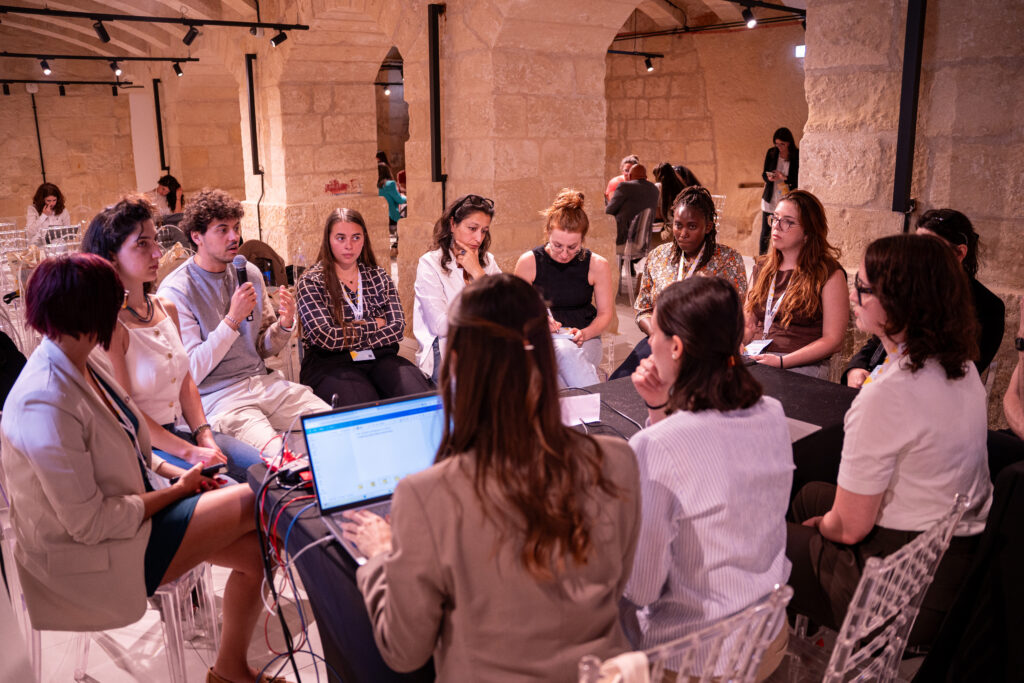
At the same time, ALDA’s Youth Empowerment & Education Hub led a participatory session dedicated to shaping ALDA’s Youth Political Agenda for 2026–2028. Facilitated by Alexandre Météreau, ALDA’s Coordinator of the Youth Hub & Policy Officer,the session focused on strengthening the political voice of ALDA’s network on youth participation, civic engagement, and education at European level. The discussion featured contributions from Ana Maria Rodrigues, Deputy Mayor of Valongo and ALDA Youth Hub Co-Chair; Rareș Voicu; and Miriam Teuma, CEO of Malta’s Youth Agency.
Participants worked collectively to identify advocacy priorities, map strategic alliances, and establish the foundations for a structured Youth Hub Advocacy Committee, reinforcing ALDA’s commitment to youth participation in democratic processes.
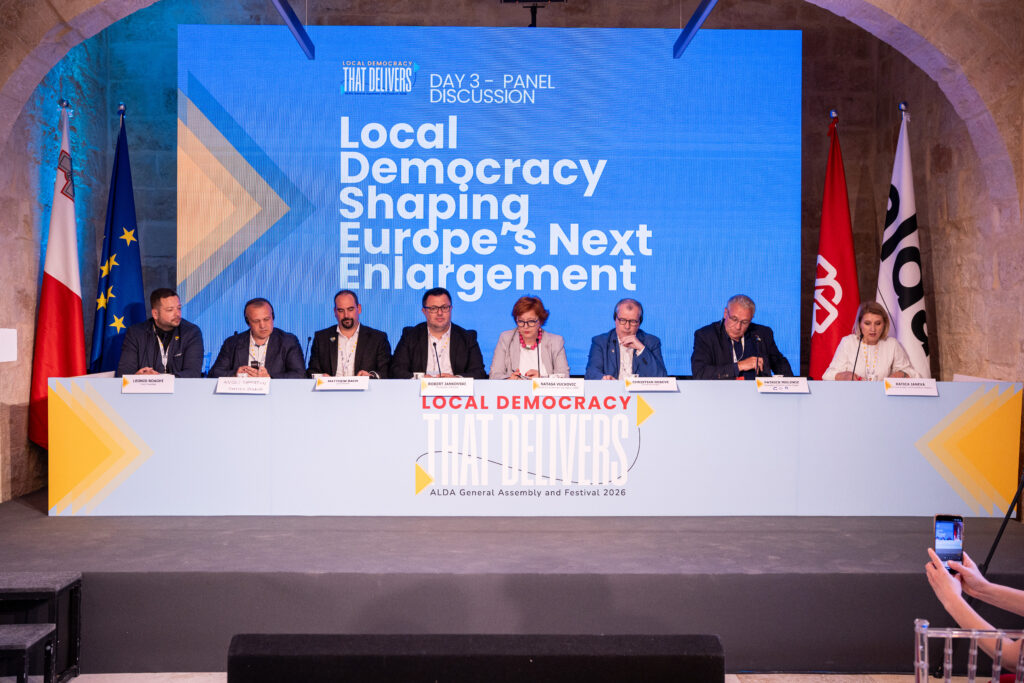
Local Democracy Shaping Europe’s Next Enlargement
Another key session of the day focused on the future of EU enlargement and the role of local authorities in supporting democratic transformation and European integration. Moderated by Katica Janeva, Head of Unit Western Balkans, the panel brought together speakers from the Western Balkans, Ukraine, Moldova, and European institutions to discuss how local governance reforms, decentralisation, and multilevel cooperation can strengthen democratic resilience across candidate countries.
The session highlighted the importance of cooperation between local authorities, civil society, and European institutions in supporting democratic reforms and strengthening local governance capacities throughout the enlargement process.
Building Partnerships and Networking – Meet, Connect, Collaborate
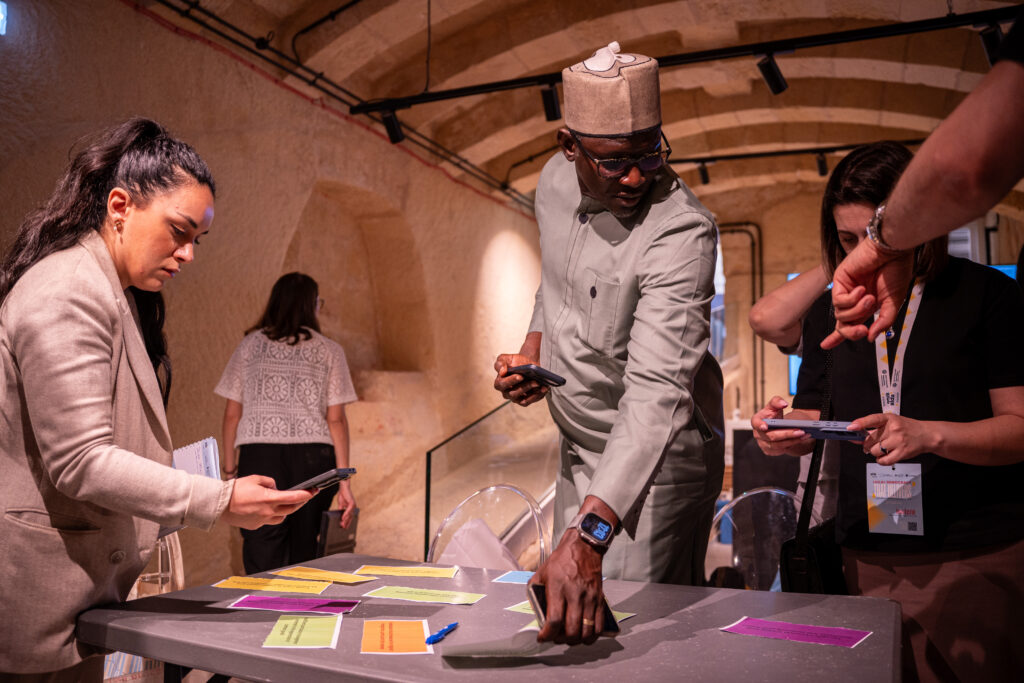
The afternoon continued with an interactive networking and project design session led by ALDA’s Fundraising and Project Design Department. Facilitated by Marco Boaria, Executive Director and Deputy Secretary General of ALDA, Anna Ditta, Head of the Fundraising & Project Design Department and ALDA project designers Deborah Anzile, Silvia Anselmi, Alma Bustamante, and Linda Rombolà, the workshop encouraged participants to transform shared territorial challenges into collaborative project ideas.
Through participatory exercises, matchmaking activities, and project pitches, participants explored opportunities for future partnerships, funding, and cross-sector cooperation.
From Blue Economy to Local Democracy: Engaging Communities in Water Governance
The Environment & Climate Hub hosted a session dedicated to participatory approaches to water governance and sustainable blue economy development. Introduced by ALDA Project Manager, Valeria Fantini and moderated by Alice Fantin, the discussion explored how local communities can play a central role in shaping environmental governance and sustainable resource management. Speakers included Alessandro Silvestri, Elisa Volpin, and Dženana Dedić, who shared experiences related to innovation ecosystems, community-led water governance, and the preservation of water heritage.
AI in Local Governance Training: From Smart Cities to Wise Cities
The final workshop of the day returned to the topic of artificial intelligence with a practical training session entitled “Wise Cities, Not Just Smart Cities: Turning AI Challenges into Local Opportunities.”
Led by Denys Tkachov and Kirsi Verkka, ALDA Advisory Board member, the interactive training encouraged participants to reflect on how AI can strengthen democratic participation, transparency, inclusion, and trust at local level. Through simulations, debates, and thematic workshops connected to ALDA’s thematic hubs, participants worked on concrete democratic challenges linked to civic engagement, migration, youth participation, gender equality, climate transition, and territorial development. The session also contributed to the drafting of ALDA’s emerging Local Democracy AI Manifesto.
Strengthening International Cooperation
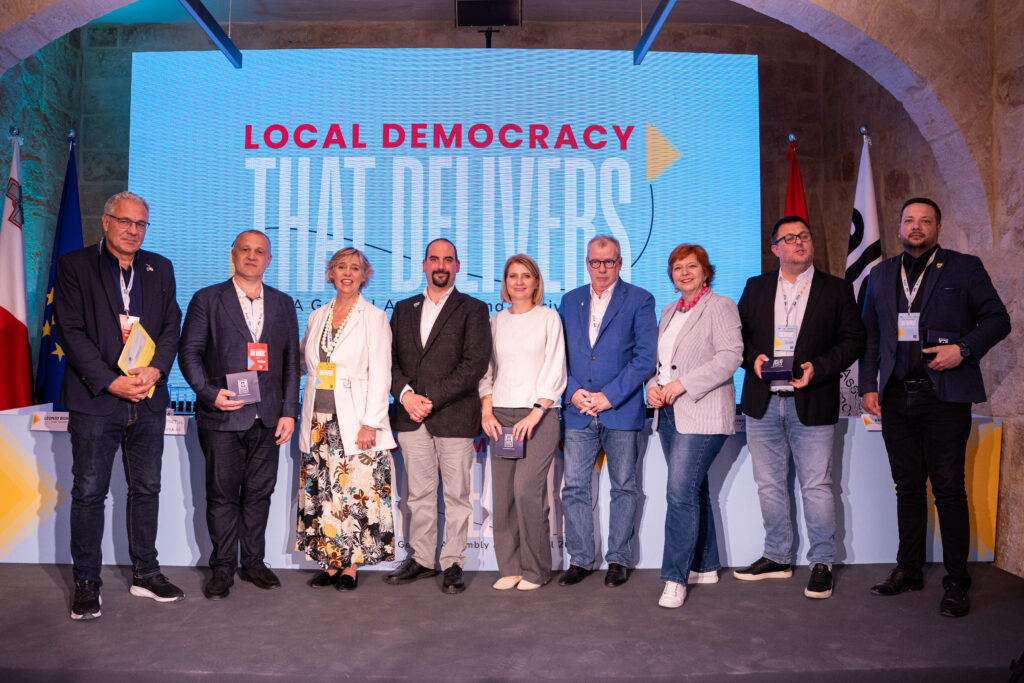
Another important milestone of the final day was the official signature of two Memorandums of Understanding between ALDA and ICLEI Europe, as well as with ACTE, Association Civic Tech Europe.
These agreements mark an important step in reinforcing strategic cooperation and building new synergies around sustainable local development, democratic innovation, citizen participation, and territorial cooperation. By strengthening partnerships with key European networks, ALDA further expands its collaborative ecosystem and its capacity to support local authorities and civil society actors across Europe and beyond.
Closing Remarks
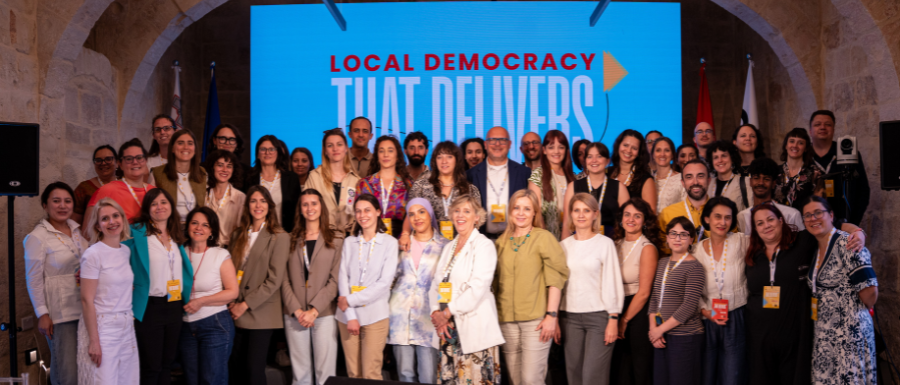
The third day, and the ALDA General Assembly and Festival 2026 as a whole, concluded with closing remarks by ALDA Secretary General, Antonella Valmorbida, who thanked participants, speakers, partners, and members for their active engagement throughout the event.
She highlighted how the discussions, ideas, and collaborations developed over the three days demonstrated the strength and diversity of the ALDA network, reaffirming the organisation’s collective commitment to democracy, participation, cooperation, and local governance.
As the Festival came to a close, one message clearly emerged: local democracy continues to be one of the strongest spaces for resilience, innovation, and hope in Europe and beyond.