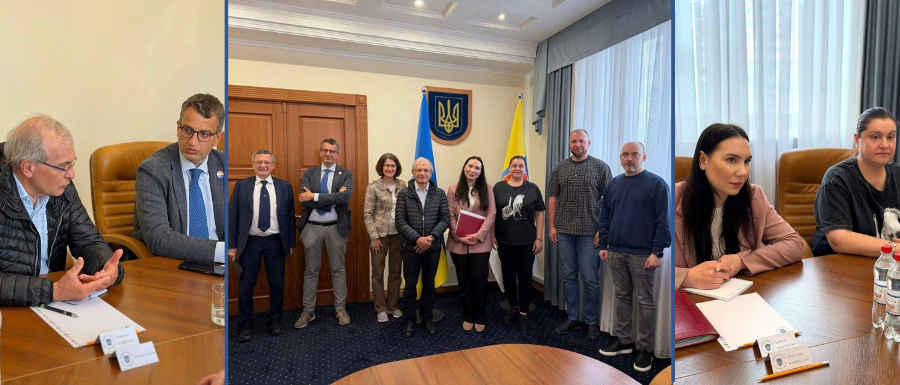
A productive institutional meeting was held at the Odesa Regional Military Administration with representatives of MEAN – Europe Movement for Nonviolent Action, an Italian network bringing together more than 40 associations that have actively supported Ukraine since the beginning of Russia’s full-scale invasion.
The meeting, initiated by LDA Odesa Region in cooperation with ALDA, aimed to strengthen international humanitarian cooperation and reinforce solidarity and local democracy initiatives in the Odesa region.
Discussions focused on the current humanitarian situation and the most urgent needs of vulnerable groups, including internally displaced persons, veterans, people with disabilities, and children affected by the war.
Particular attention was dedicated to several strategic priorities for local communities and institutions, including:
- preparation for the winter period;
- ensuring stable water and heat supply;
- strengthening energy resilience for communities and social institutions;
- developing sustainable solutions in the field of water management;
- rehabilitation programmes and mental health support;
- support for children and families, including opportunities to organise solidarity and rehabilitation stays for Ukrainian children in Italy.
Representatives of the Odesa Regional Military Administration expressed their sincere gratitude to the Italian partners for their continued solidarity with Ukraine, their concrete support to local communities, and their willingness to contribute to humanitarian initiatives in the region during this challenging period.
The meeting also reaffirmed the importance of international partnerships and people-to-people cooperation in supporting Ukrainian communities affected by the war. Through initiatives such as this, ALDA and LDA Odesa Region continue to facilitate dialogue, cooperation, and coordinated action between European civil society organisations and Ukrainian local authorities.
As Ukraine continues to face the consequences of the war, strengthening long-term partnerships, reinforcing local resilience, and supporting democratic local governance remain essential priorities for ensuring sustainable recovery and community wellbeing.