Restorative Outreach For Youth and Territorial Engagement
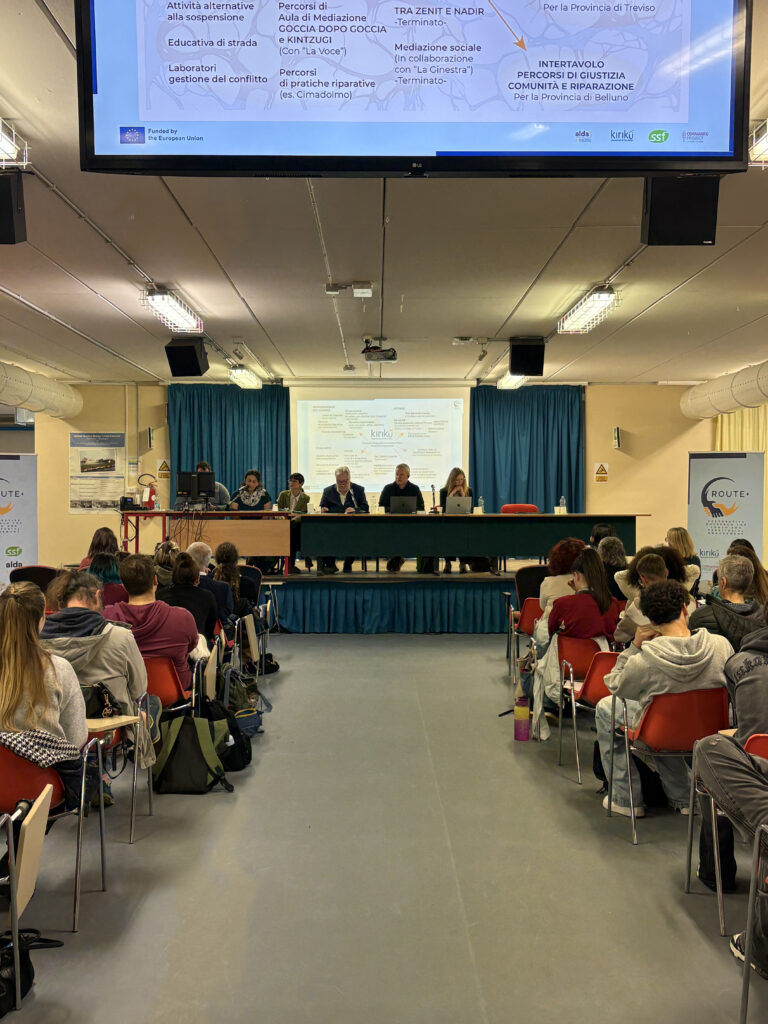
Montebelluna – Tuesday, 12th of May. Leading experts, educators and stakeholders from Italy, Finland, and Ireland gathered together to present the outcomes of intensive months of transnational work and cooperation.The main objective of this European-funded initiative was to promote innovative frameworks and strengthen the capacities of professionals, supporting them in transforming interpersonal and systemic conflicts into robust opportunities for youth social inclusion. Through training sessions and interactive activities, the project encouraged the exchange of different approaches and promoted constructive dialogue between public institutions and citizens.
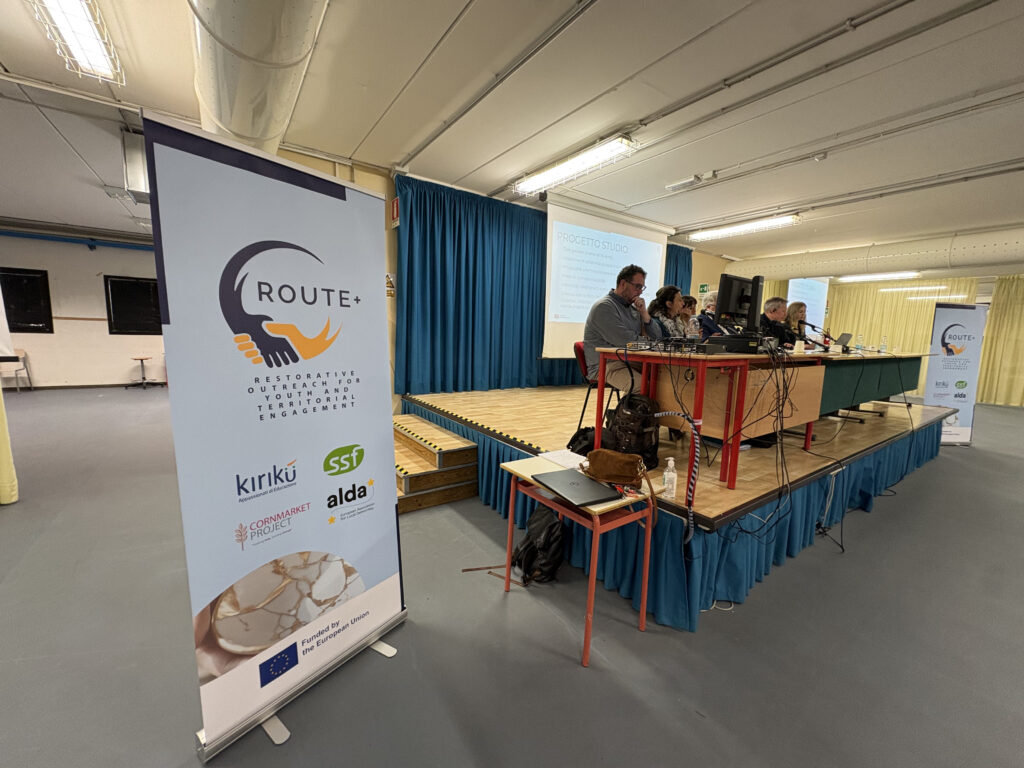
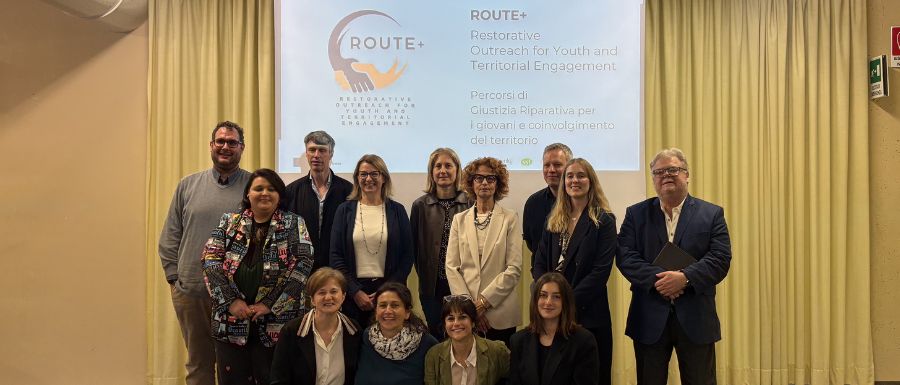
The final event of the ROUTE+ (Restorative Outreach for Youth and Territorial Engagement) project successfully concluded at “Einaudi Scarpa” Higher Education Institute, hosted specifically on the Luigi Einaudi ITS campus in Montebelluna, Italy. The project represented a dynamic partnership between organizations and experts from Italy (Cooperativa Kirkù) Finland (Finland’s Forum for Medling – Finnish Forum for Mediation), Ireland (Wexford Local Development), and France (ALDA).
Partners, in collaboration with one another, carried out field research, strategic workshops, local trainings and collaborative piloting. The goal was to present the milestones achieved in the area of work of Restorative Justice practices across Europe. Since its launch, the ROUTE+ project aimed to significantly strengthen the core competencies of educators, social workers, and public actors, actively promoting an educational culture centred on dialogue, trust, and relationship-building, where school actors are empowered to work with students using a restorative approach.
Each country had its own distinct line of work, where they were able to make the best out of their social framework, specializing in distinct operations.
- The Finnish Team focused primarily on the educational ecosystem, integrating restorative dialogue into schools.
- The Irish Team addressed the judicial field directly, exploring how diversionary restorative practices can prevent youth recidivism within the legal system.
- The Italian Team concentrated on the community level, building strong local support systems and various civic networks to engage vulnerable young people and create a restorative culture, starting with new generations.
The first session of the event concentrated on presenting the main outputs of the ROUTE+ project. Central to these achievements was the creation of specialized training programs tailored to the distinct socio-political and legal contexts of the different national partners.
Additionally, the partnership created an e-Toolkit, both in English and Italian. This digital resource integrates theoretical frameworks with practical, on-the-ground case studies. It was created with the aim of promoting restorative practices more widely and to be shared with participants involved in the trainings and workshops, and more in general for anyone who has an interest in the topic.
The event hosted several distinguished figures, who shared invaluable technical contributions. Opening the formal presentations was Tim Chapman, a globally renowned expert, former president of the European Forum for Restorative Justice (until 2022), and an esteemed lecturer at Ulster University.
“Restorative justice is not a soft option; it is a rigorous process that demands accountability while preserving the human dignity of all parties involved.”
Chapman remains a leading figure in the field of restorative justice, as today, due to his role in implementing those mechanisms in Northern Ireland. His work proved that this empathetic approach can support reconciliation and peacebuilding, even in environments historically defined by extreme violence and deep-seated social division. Furthermore, his extensive research heavily contributed to drafting the Council of Europe’s official guidelines on restorative justice in criminal matters.
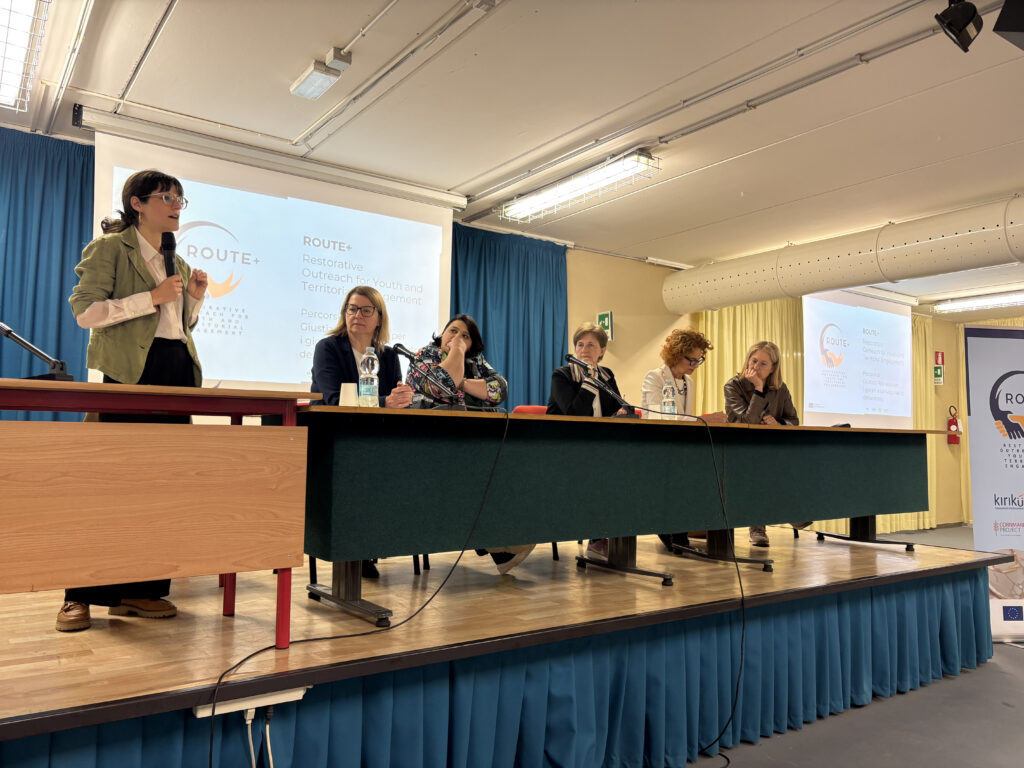
The event continued focusing on the detailed presentations from the representatives of each pilot nation, showcasing their personal and local success stories, and which approach they decided to use for implementing such practices in their counties. The day concluded with an interactive round table discussion dedicated to local stakeholders, focusing on future legislative developments and exchanging views and questions with the partners.
The closing event highlighted the long-term impact that restorative practices can have on local communities and social policies, not to mention the commitment to continue this work with great passion. In a joint closing statement, the project partners emphasized the meaning behind their cooperation:
“Today’s event does not just mark the end of a technical journey. Instead, it is the celebration of a vision of justice that is inherently more human and is capable of generating collective growth, healing communities, and fostering genuine solidarity starting directly from the resolution of conflict.“