On one of the many war‑ruined buildings in Mostar, there is graffiti with the old saying ‘Divide and conquer’. But from 10 to 12 June, Mostar hosted the final conference of the Shared Horizons project, which proved that the young generations of the Western Balkans no longer want to divide themselves, but are ready to build new connections based on reconciliation.
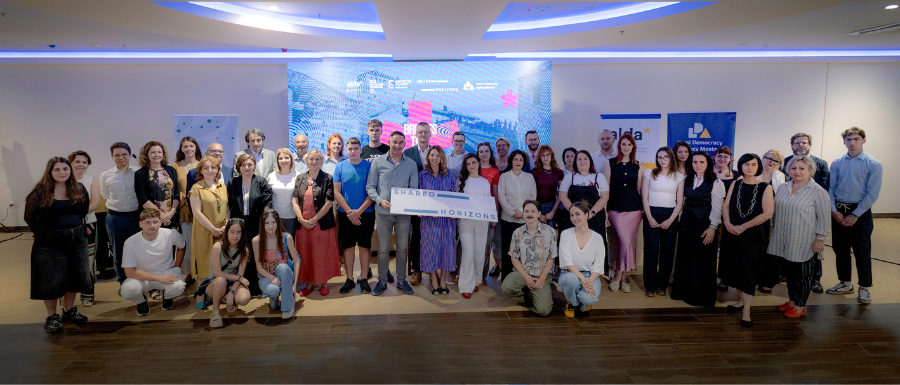
The international conference ‘Bridges that Connect’ that was held in Mostar, organised by ALDA in cooperation with LDA Mostar and supported byExpertise France, brought together youth, researchers, cultural experts and policymakers to explore how heritage and storytelling can foster reconciliation across the Western Balkans.
The opening ceremony at Narodno Pozorishte Mostar set the tone with remarks from Dženana Dedić, founder and director of LDA Mostar, French Ambassador François Delmas, President of the City Council of Mostar Đani Rahimić, and ALDA’s Secretary General Antonella Valmorbida.
The first sessions highlighted the achievements of Shared Horizons, with project manager of the Shared Horizons project, Component 2, Viktorija Postolovska presenting key results. Loè Lagrange from the Institut français in Bosnia and Herzegovina and Paul‑Alexis Berthezene of Expertise France outlined how France has supported youth initiatives and how the project has engaged communities across borders. Young researchers shared testimonials and artistic work, while an augmented reality exhibition showcased digitalised cultural heritage, photography and storytelling. The day concluded with an Open day festival, inviting the public to experience the craft of local artisans while enjoying the famous Bosnian sevdah.
The second day opened with the panel discussion ‘Importance of Shared Narratives in the Process of Peacebuilding in the Western Balkans’, moderated by ALDA Balkans director Katica Janeva. The discussion focused on cultural heritage as a foundation for peacebuilding and local development. Introductory remarks stressed the importance of shared narratives in reconciliation, with contributions from the representative from the EU Delegation to Bosnia and Herzegovina Petar Kraljević and ALDA Vice‑President Maurizio Camin.
The panel ‘Bridging Divides: Cultural Heritage as a Driver of Reconciliation, EU Integration and Local Development’ featured voices from across the region. Ognjen Marković of the RCC Youth Lab discussed tourism and memory as tools for regional growth, while Dženana Dedić from LDA Mostar emphasised community‑led heritage projects. Majlinda Ramaj, Director of Youth, Culture and EducationMunicipality of Berat, Albania presented strategies for turning heritage and youth policies into local action, and Deputy Secretary General of ALDA, Marco Boaria underlined the alignment of heritage initiatives with EU values. Ana Marija Aleksova Maleva, PhD explored the potential of memorial tourism for economic development.
Interactive workshops followed, including a session on shaping shared memory for democratic resilience by Elvir Đuliman fromNDC Mostar and a storytelling workshop led by expert Lejla Agić. The day closed with a heritage walk through Mostar, mapping symbolic sites that embody the city’s reconciliation history.
The final day opened with a panel on youth, memory and reconciliation. Speakers included Alen Gudalo of RYCO Bosnia and Herzegovina, Aleksandra Krstikj from Monterrey Institute of Technology and Higher Education, and NDC Mostar.
World Café sessions allowed participants to engage in small‑group discussions. Topics ranged from youth and reconciliation, facilitated by Adla Dizdar Hodžić from LDA Mostar, to cultural heritage and shared narratives, led by Danko Nikolić from Zajecar initiative Serbia, and memorial tourism with community engagement, guided by Kerim Medjedović from LDA Montenegro. Each table encouraged dialogue with young participants from the Western Balkan and showed how to strengthen intercultural trust, how heritage can shape inclusive narratives, and how memorial sites can foster empathy and civic participation.