While European legal frameworks promote equality, the 2024 Fundamental Rights Report reveals a stark “implementation gap” at the local level. Minority groups—specifically migrant people and Roma communities—face systemic exclusion not only in employment and housing but also within the very democratic processes designed to serve them. This exclusion is exacerbated by fragmented participation mechanisms and institutional silos that often leave minority voices insufficiently reflected in governance structures.
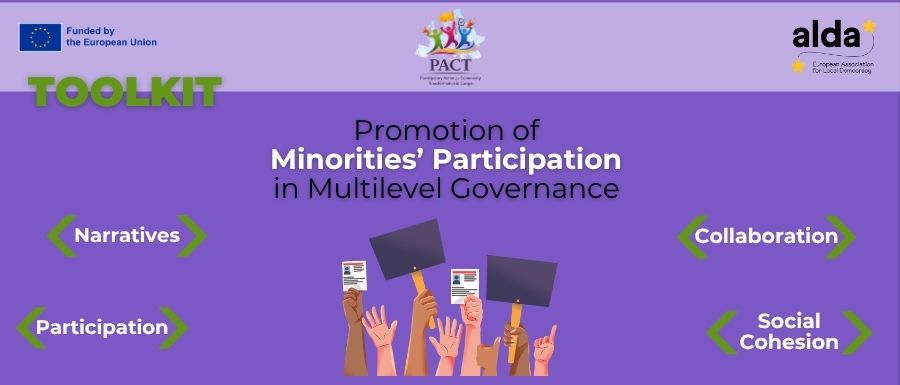
The PACT Toolkit is not only a guide. It is a rigorous collection of 9 innovative governance mechanisms designed to bridge the gap between European equality policies and local grassroot realities. This framework is built upon four interlinked pillars that address the core of democratic exclusion:
- Strengthening Participation to dismantle structural barriers;
- Transforming Narratives;
- Fostering Social Cohesion;
- Establishing sustainable Collaboration between local authorities and civil society.
These methodologies represent a synthesis of good practices gathered from a diverse transnational consortium of the PACT Project, including the expertise of ADL a Zavidovici, ALDA, Fons Català de Cooperació al Desenvolupament, KMOP – Social Action and Innovation Centre, CID – Center for Intercultural Dialogue, PLACE Network, and Konkáv Foundation.
Some of the tested frameworks that translate abstract concepts of “inclusion” into concrete administrative are:
- Italy: Over 1,500 residents participated in the 2023 Participatory Budgeting cycle, directly deciding how public funds are spent.
- France: Policy Labs and capacity-building sessions saw 85% of participants with migration backgrounds report increased confidence in public speaking, while 90% of local actors gained practical tools for inclusive engagement.
- Greece: Youth and marginalized groups are transforming lived experiences into structured policy manifestos for direct advocacy.
The toolkit also recognises that inclusive implementation demands a deep reflection for practitioners on the “invisible” considerations that define successful engagement: practitioners must embrace intersectionality to recognize how gender, age, and legal status create unique barriers, while actively addressing power dynamics to ensure marginalized voices lead discussions rather than just attending them