What does it take to rebuild trust in democracy?
Across Europe, policymakers, institutions and communities are searching for new ways to reconnect citizens with public institutions, strengthen democratic resilience and create meaningful opportunities for participation. In Bosnia and Herzegovina, where democratic development continues to be shaped by the legacy of conflict and complex political structures, these challenges are particularly visible.
For more than two decades, Local Democracy Agency (LDA) Mostar has demonstrated that democracy is not strengthened solely through elections or institutional reforms. It grows when citizens are empowered to shape decisions affecting their everyday lives, when public institutions embrace dialogue, and when European democratic values are translated into practical solutions for local communities.
Today, LDA Mostar is recognised as one of Bosnia and Herzegovina’s leading organisations in participatory and deliberative democracy, good governance and active citizenship. Its experience shows how long-term investment in local democracy can transform challenges into opportunities for democratic innovation.
From democratic vacuum to democratic innovation
Few European cities have experienced a democratic vacuum like Mostar. Between 2008 and 2020, the city held no local elections, leaving citizens without the opportunity to elect their local representatives.
Rather than accepting this situation as inevitable, LDA Mostar launched the civic initiative ELECT Mostar, mobilising citizens to advocate for the restoration of democratic governance. What began as a symbolic campaign evolved into a broad civic movement that demonstrated how democratic change can emerge from the grassroots.
The initiative also contributed to wider discussions facilitated by the Council of Europe, creating momentum for one of Bosnia and Herzegovina’s most significant democratic innovations – Citizens’ Assemblies.
Following the return of local elections in 2020, Mostar became one of the first cities in the Western Balkans to introduce deliberative democratic processes through Citizens’ Assemblies. Building on years of experience in participatory governance, LDA Mostar developed the expertise needed to design, facilitate and support these processes in line with European standards, becoming a recognised regional actor in deliberative democracy.
Bringing European standards to local communities
LDA Mostar’s contribution extends well beyond deliberative democracy. For years, the organisation has worked to transform European principles of good governance into practical tools that local authorities and civil society organisations can apply in their daily work.
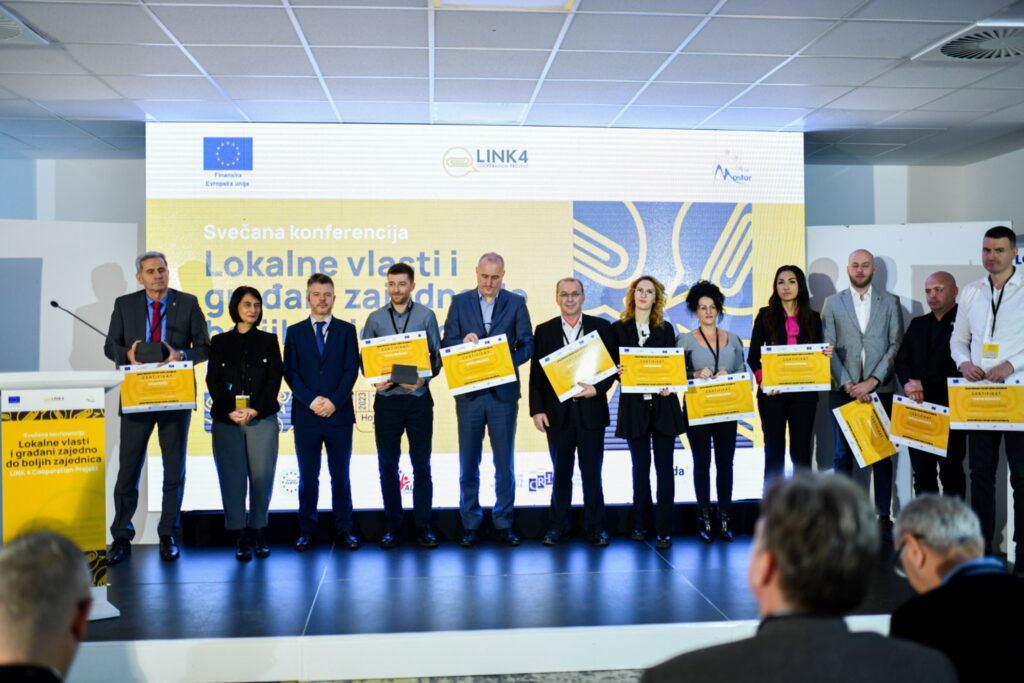
Through the EU-funded LINK4Cooperation project, Bosnia and Herzegovina became the first country outside the European Union to implement the Council of Europe’s European Label of Governance Excellence (ELoGE) programme. As the country’s first accredited ELoGE Platform, LDA Mostar has supported municipalities across Bosnia and Herzegovina in applying European principles of transparency, accountability, participation, effectiveness and ethical governance.
The organisation has also contributed to strengthening collaborative leadership through the Council of Europe’s Leadership Academy Programme (LAP), reinforcing partnerships between local authorities and civil society.
These experiences demonstrate that European standards become meaningful only when they are adapted, tested and embraced by local communities.
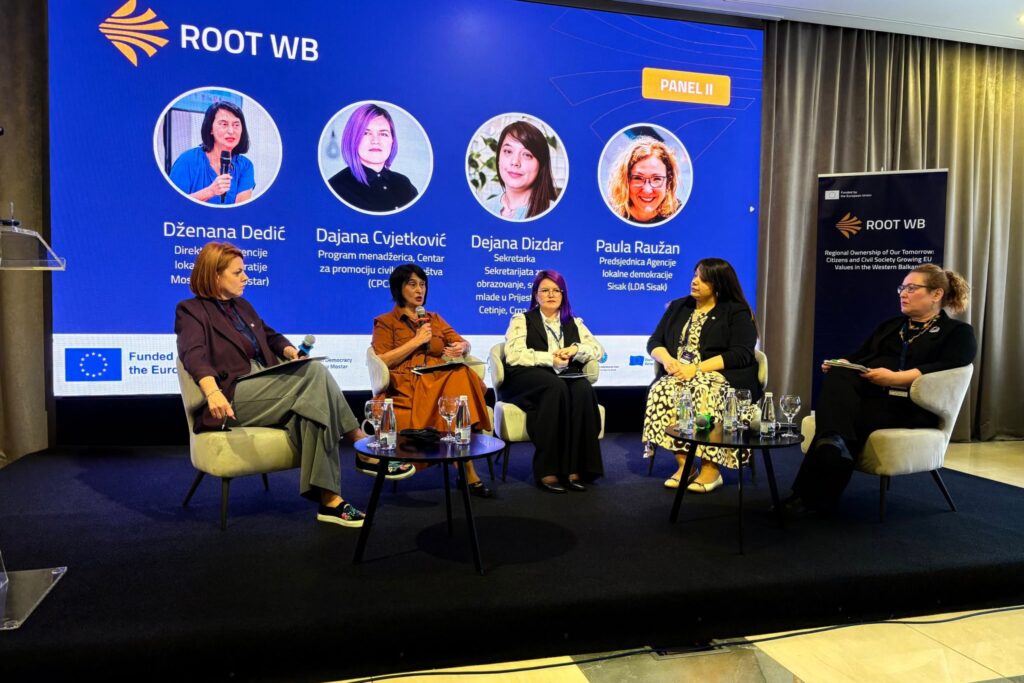
Building on this experience, LDA Mostar is currently leading the regional project ROOT WB – Regional Ownership of Our Tomorrow, funded through the EU’s Citizens, Equality, Rights and Values (CERV) Programme. Bringing together partners from across the Western Balkans and the European Union, the project strengthens civic participation, democratic resilience and awareness of EU values through capacity-building, policy dialogue, participatory governance and cross-border cooperation.
One of the project’s most important milestones was the publication of the comparative Assessment Reports on Civic Participation Trends and Barriers, providing a regional overview of civic participation trends, barriers and opportunities for strengthening democratic engagement across the Western Balkans, while also reflecting on relevant European Union experiences and approaches.
Empowering young people as active citizens and drivers of democratic change
LDA Mostar believes that democratic resilience cannot be built without young people.
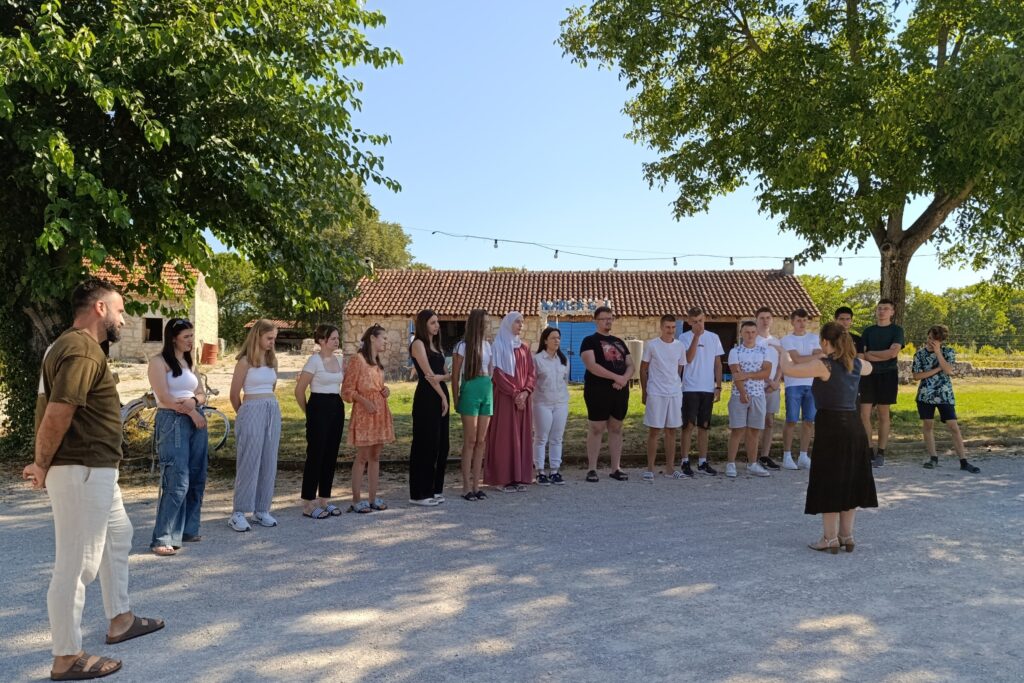
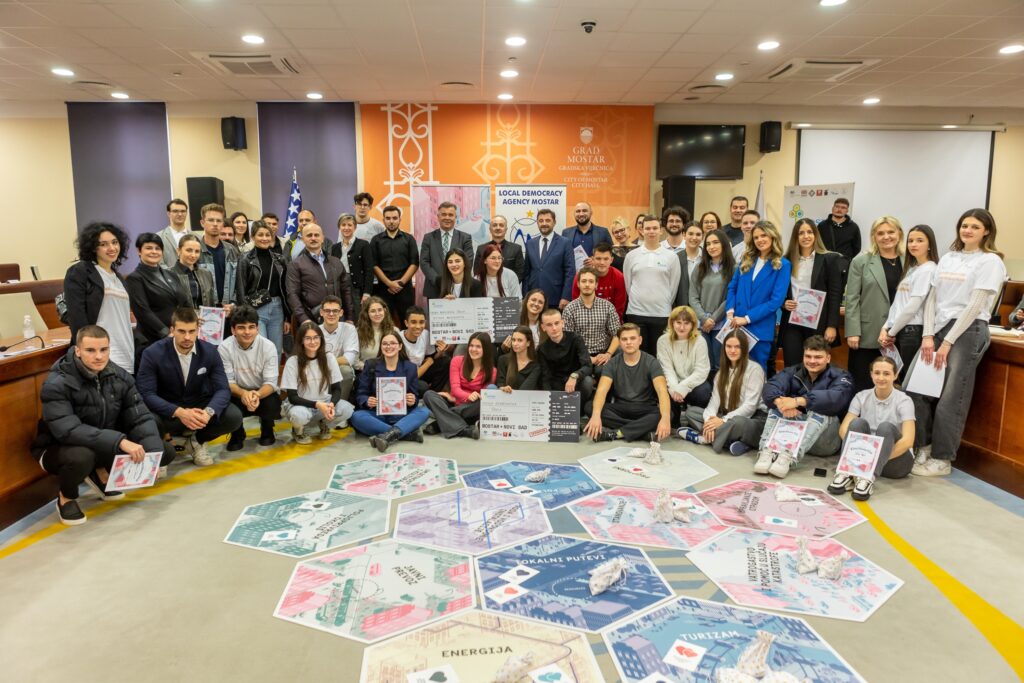
Through innovative educational approaches, the organisation encourages young people to move from being passive observers to active citizens and community leaders. One example is Electionville, an educational simulation that invites students to exchange their school desks for city council seats and experience democracy from a completely different perspective. By debating local issues, listening to different viewpoints and making collective decisions, participants gain first-hand insight into how local democracy works while developing the skills needed for active citizenship.
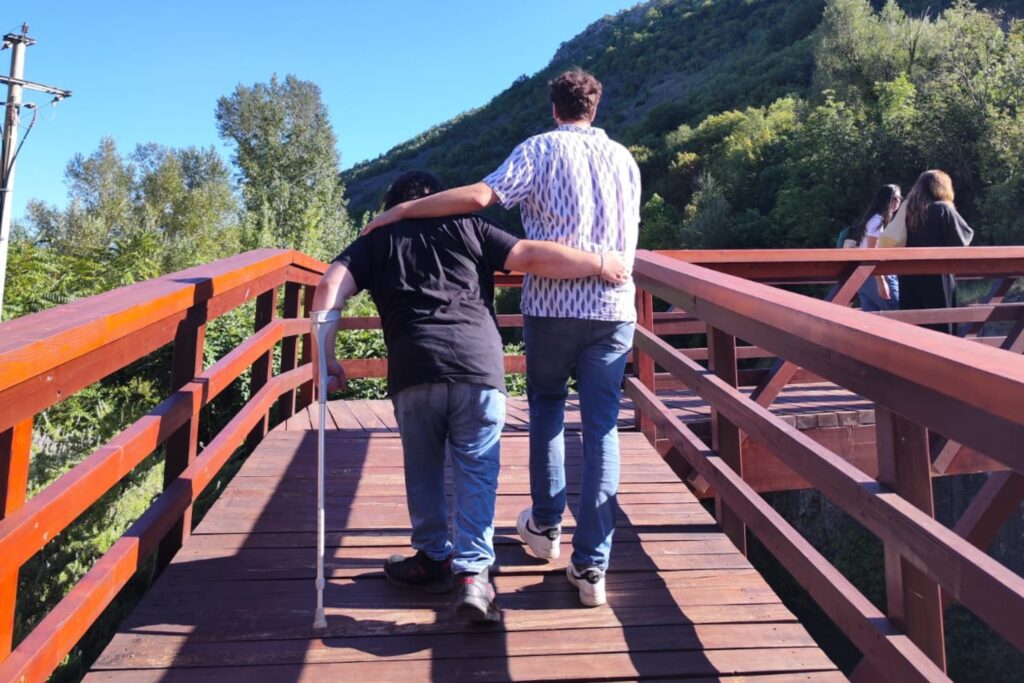
The organisation has also pioneered more equitable approaches to engaging with young people who are Not in Employment, Education or Training (NEET). Guided by the principle of “Leave No One Behind” (LNOB), a core commitment of the UN 2030 Agenda for Sustainable Development, LDA Mostar recognises that young people do not have the same starting points, face the same barriers or have equal access to opportunities. Through tailored support, research, innovative methodologies, capacity-building and regional cooperation, the organisation contributes to raising awareness of the challenges faced by NEET youth and promoting more responsive approaches within youth work and local communities. It has also introduced the first trained Youth Inclusion Coordinators in Bosnia and Herzegovina, equipping youth professionals with practical tools to identify, reach and support young people who are often overlooked by existing services.
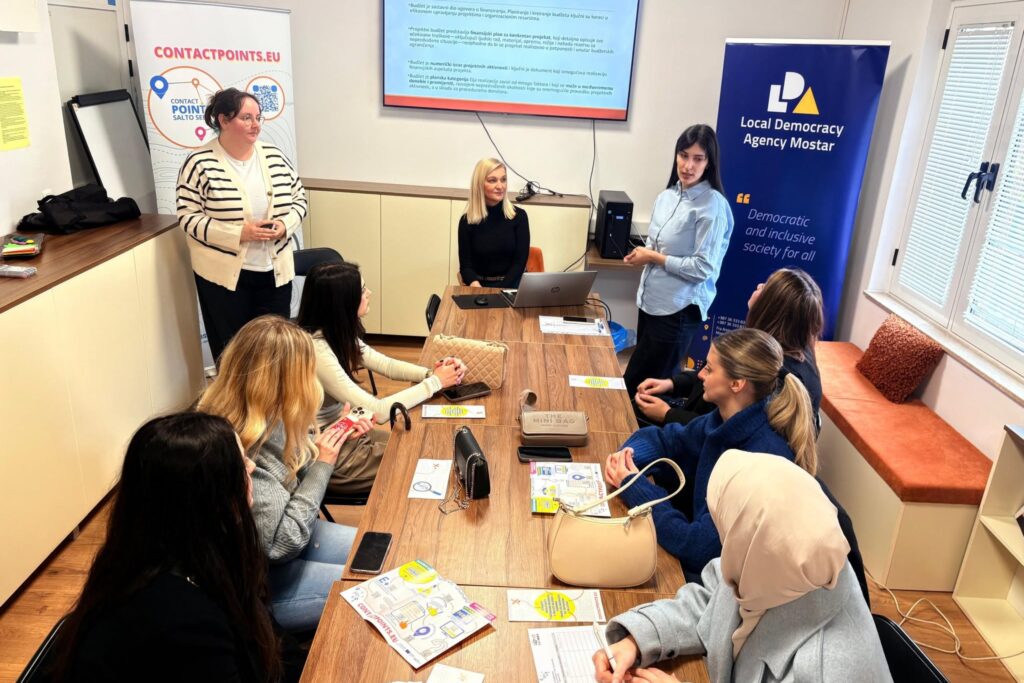
These efforts are complemented by numerous Erasmus+ initiatives promoting civic engagement, social innovation, critical thinking, leadership and European cooperation among young people across Bosnia and Herzegovina and the Western Balkans in line with the European Youth Goals. As the National Contact Point for the Erasmus+ Youth Programme in Bosnia and Herzegovina, LDA Mostar also serves as a resource and support hub for young people, youth organisations and other stakeholders, providing information, guidance and opportunities for participation in European youth programmes.
Building stronger communities together
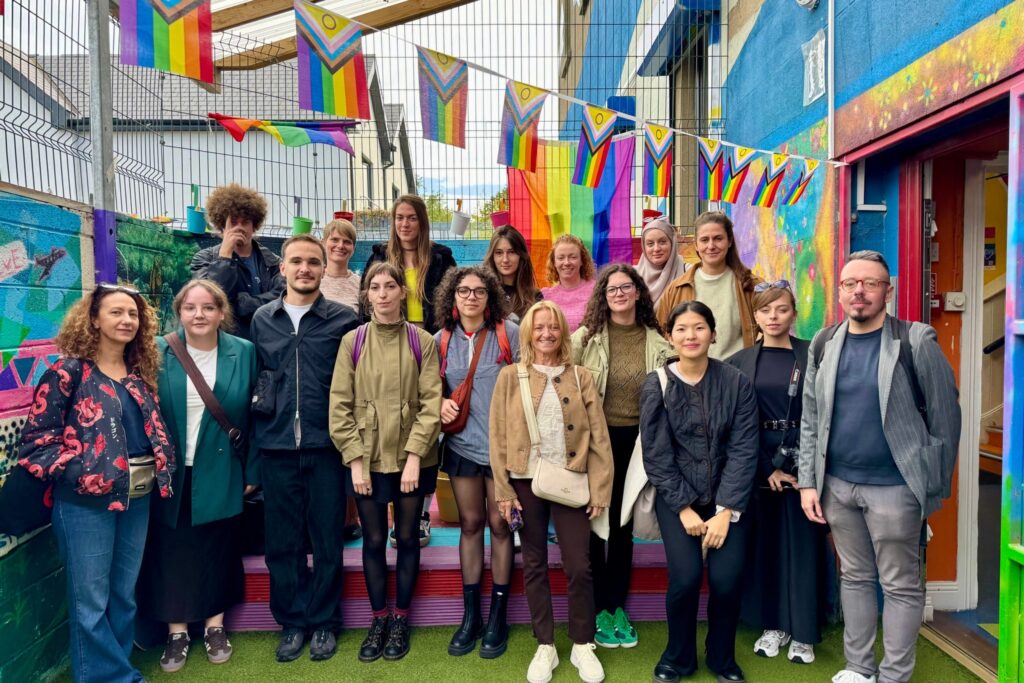
For LDA Mostar, democracy extends beyond political participation. It also means creating inclusive communities where everyone has the opportunity to contribute.
This commitment is reflected in programmes promoting gender equality and women’s leadership in line with the Women, Peace and Security agenda, as well as initiatives strengthening social cohesion, intercultural and interreligious dialogue, and connecting artistic, cultural and natural heritage with active citizenship. Across all its work, the organisation promotes one simple principle: citizens are not beneficiaries of development – they are its co-creators.
A local laboratory for European Democracy
The story of LDA Mostar is not simply the story of one organisation. It is the story of how local democratic innovation can generate wider regional and European relevance.
At a time when democratic resilience is becoming one of Europe’s strategic priorities, LDA Mostar’s experience offers an important lesson: sustainable democracy cannot simply be designed in policy documents or transferred through institutional reforms. It must be built patiently, locally and together with citizens.
For more than twenty years, the organisation has developed, tested and refined democratic approaches in one of Europe’s most complex political environments. In doing so, it has become far more than a project implementer. It serves as a trusted bridge between citizens and institutions, a reliable resource centre and a recognised Hub for Local Democracy, connecting local experience with wider regional and European democratic innovation.
Because some of Europe’s most important democratic innovations do not begin in institutions: they begin with people.