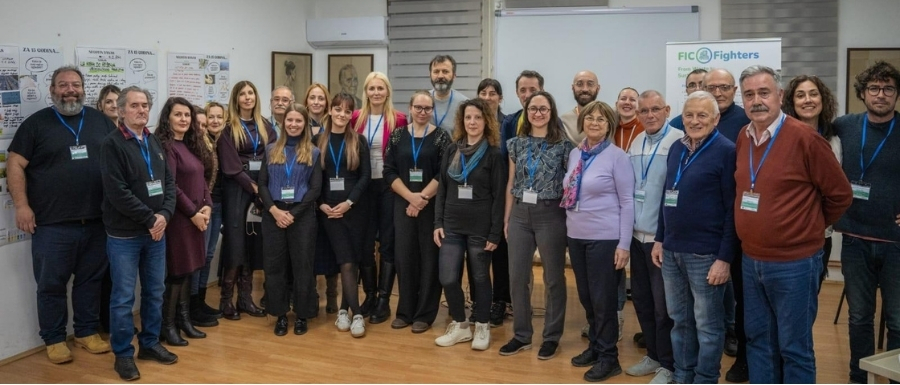
On 4 March 2026, ALDA, in cooperation with the University of Novi Sad and At Clave, successfully organised the third citizen engagement workshop within the framework of the EU-funded FIC-FIGHTERS project. This initiative aims to improve the management of phosphogypsum (PG) stacks through sustainable waste management practices, promoting circular economy principles across Europe and beyond.
The event, entitled “Voices for Change: Exploring Solutions for the PG Stack in Prahovo”, marked another important step in strengthening participatory approaches and local democracy in environmental governance.
The Prahovo Case Study
The phosphogypsum stack in Prahovo, Serbia, represents one of the six case studies of the FIC-FIGHTERS project. Located along the banks of the Danube River, Prahovo is a small industrial town characterised by its proximity to a significant industrial complex.
The PG stack, situated near the river, raises several environmental concerns among local residents. These include potential water contamination, pollution of surrounding agricultural land, and airborne dust affecting air quality. Such challenges have a direct impact on both the ecosystem and the daily lives of the community.
The workshop gathered 15 local citizens, creating a safe and inclusive space for dialogue.
Participants were encouraged to share their experiences and perspectives on how the PG stack affects their territory, while also contributing to the co-creation of possible future scenarios.
The workshop demonstrated the essential role of citizen participation in shaping sustainable and inclusive environmental solutions. Through guided discussions and technical insights, participants engaged in a constructive exchange that combined local knowledge with expert input.
Several critical issues emerged during the discussions:
- Environmental pollution affecting agricultural land, the waters of the Danube River, and air quality due to PG dust
- Social and economic impacts on the local community and neighbouring areas
- Insufficient monitoring and control of industrial activities by local authorities
- Limited transparency and inadequate communication regarding the risks associated with the PG stack
These concerns underline the need for stronger governance mechanisms and improved communication between stakeholders.
Future Scenarios and Citizens’ Expectations
Participants expressed a shared vision for a healthier environment and a more sustainable future for their community. Key expectations included:
- Enhanced citizen involvement in environmental decision-making processes
- Revitalisation of affected areas through sustainable practices
- Greater confidence in the potential reuse of phosphogypsum within a circular economy framework
The workshop highlighted a strong willingness among citizens to actively contribute to shaping local solutions.
Conclusion and Next Steps
Participants welcomed the opportunity to engage in meaningful discussions on an issue directly impacting their lives. The high level of awareness and engagement demonstrated the importance of inclusive platforms for dialogue and knowledge exchange.
Looking ahead, the next workshop will take place in Kutina, Croatia, in May 2026, focusing on another phosphogypsum case study. With a comprehensive agenda of activities, the FIC-FIGHTERS project continues to strengthen local democracy and participatory processes.
ALDA remains committed to fostering citizen engagement and supporting communities in addressing environmental challenges through collaborative and sustainable approaches.