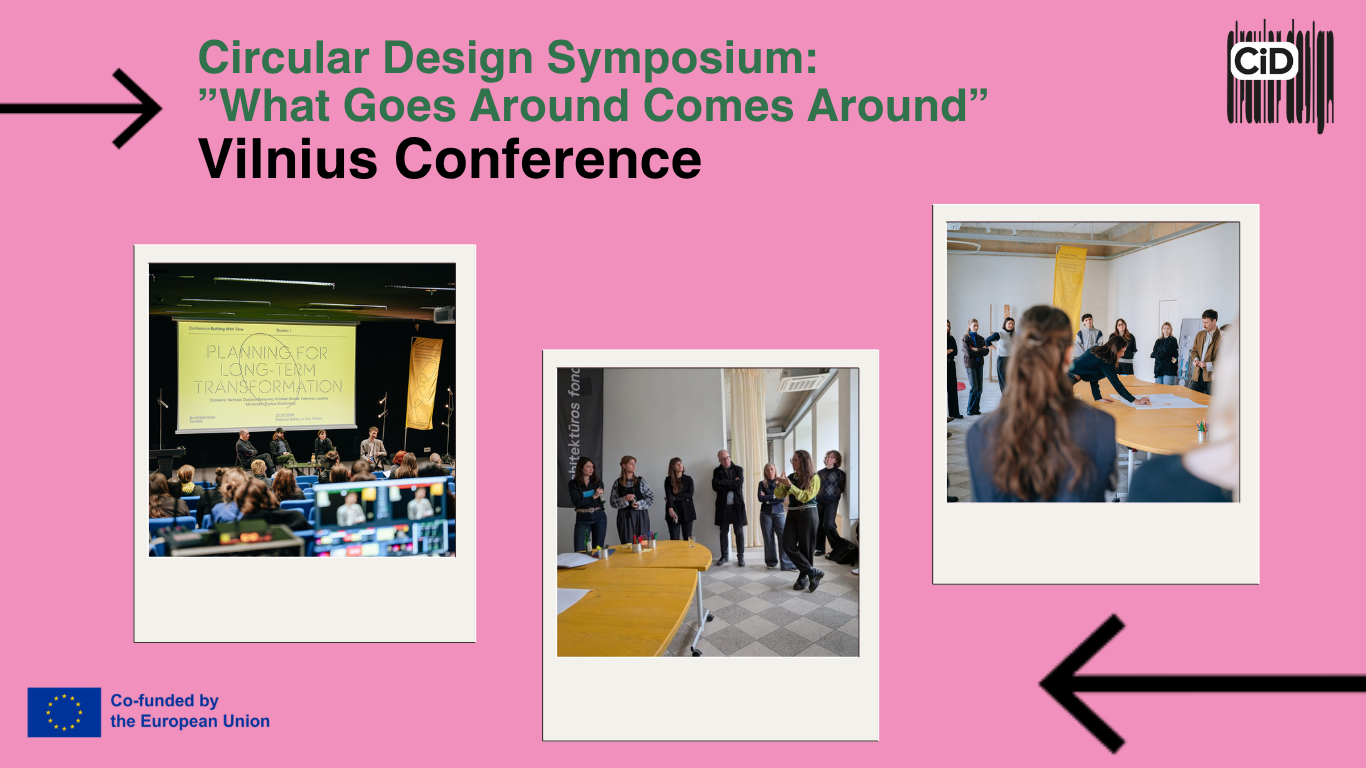
From 19 to 21 March 2026, the Circular Design Alliance (CiD) project—of which ALDA is a partner—organised the symposium “What Goes Around Comes Around” in Vilnius. The event took place at the National Gallery of Art and other venues across the city.
The event brought together a global network of architects, urban planners, researchers, and cultural practitioners to address the transition towards a circular built environment. By bringing critical discourse in urbanism and architecture into dialogue with artistic practice, the event approached circular design not only as a strategy of material reuse, but as a transformative framework for rethinking value, labour, energy, and continuity over time.
The conference explored practices that foreground time as a foundational concern of design, work with existing structures, cultivate regenerative approaches, and seek to repair relationships between architecture, territory, and society.
The first day opened with a workshop and discussion titled “How Continuous Education Can Enable Circular Construction”. During the session, participants reflected on the current challenges faced by circular design practitioners. Partners of the Circular Design Alliance (CiD) project presented the outcomes of the Continuous Education Programmes implemented over recent months.
These discussions enabled participants to exchange experiences, identify existing gaps in professional training, and explore how continuous education can better support architects, designers, and construction professionals in adopting circular practices. The session also emphasised the importance of strengthening interdisciplinary collaboration and knowledge exchange to accelerate the transition towards more sustainable and circular built environments.
On the second day, the conference continued at the National Gallery of Art with keynote presentations on circular architecture and urban transformation.
The session “Planning for Long-Term Transformation” explored how circular design principles can guide sustainable urban development and the future of the built environment. Speakers shared perspectives from architectural practice, urban governance, and spatial research, highlighting the need to integrate circular thinking into long-term planning processes. The discussion stressed the importance of designing adaptable buildings, promoting material reuse, and aligning architectural innovation with supportive urban policies
The second session, “Matters of Time,” further explored how temporal perspectives influence architectural design, building lifecycles, and material use. Through practical examples, speakers illustrated practical strategies such as building transformation, adaptive reuse, and material recovery. These approaches demonstrate how extending the lifespan of buildings and embedding flexibility into design can significantly reduce environmental impact while preserving cultural and material value.
In the closing keynote, “It’s About Time: The Architecture of Change,” Saskia Van Stein, Artistic and Managing Director of the International Architecture Biennale Rotterdam, reflected on the role of architecture in addressing contemporary environmental and societal challenges. She highlighted the need to move beyond short-term thinking and embrace systemic change in how buildings are designed, used, and transformed over time.
Alongside the conference, the National Gallery of Art hosted the exhibition “Invisible Labour” which will remain open until 19 of April 2026.
The symposium highlighted the growing momentum behind circular approaches in architecture and urban development, reaffirming the importance of collaboration, continuous education, and innovation in shaping more sustainable and resilient built environments.
In this context, the Circular Design Alliance (CiD) project exemplifies circular design in practice by fostering collaboration, continuous education, and knowledge exchange among architects, researchers, and cultural institutions. Initiatives such as this symposium demonstrate the project’s commitment to strengthening expertise and building the networks needed to advance circular practices across the built environment.