From 2 to 5 March 2026, the Civil Society Week, organised by the European Economic and Social Committee (EESC), brought together civil society organisations, EU institutions and stakeholders to reflect on the state of democracy in Europe. The event served as a key forum to address the growing challenges faced by democratic systems across the continent and to highlight the importance of strengthening democratic resilience through active civic participation.
As a member of the EESC Liaison Group with Civil Society Organisations, ALDA was pleased to renew its engagement in this important annual event. Throughout the week, discussions focused on the need to safeguard democratic values and to accelerate the implementation of the forthcoming EU Civil Society Strategy, recognised as a crucial framework for supporting civic space and strengthening the European democratic project.
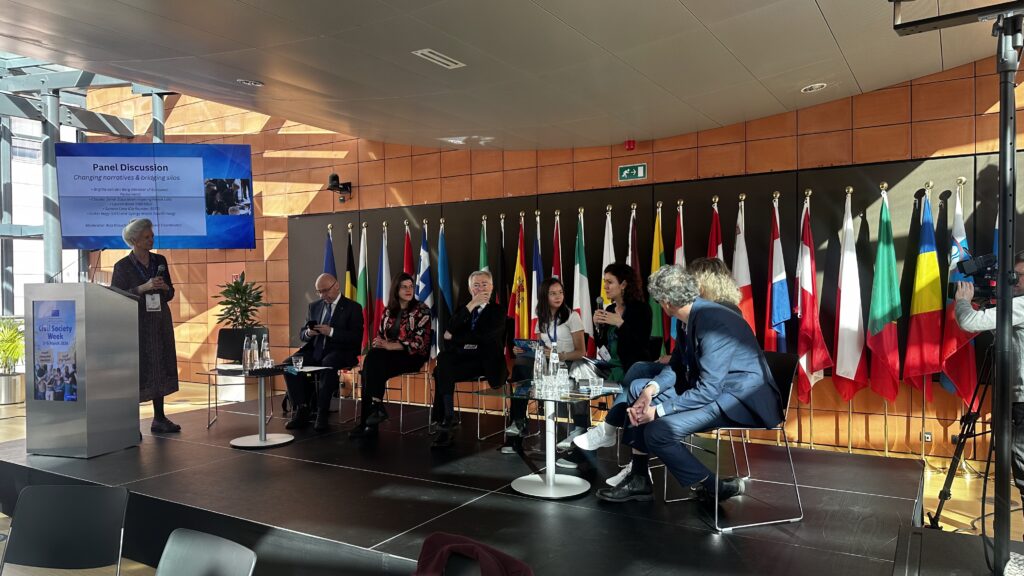
In this context, ALDA co-organised a session titled “Educating Citizenship for Resilient Societies”, in collaboration with the European Parents’ Association, EVBB, Inclusion Europe, the Lifelong Learning Platform, OBESSU, the Union of European Federalists (UEF) and the YES Forum. The session highlighted the strong interconnection between education, democratic participation and the role of civil society in shaping resilient societies.
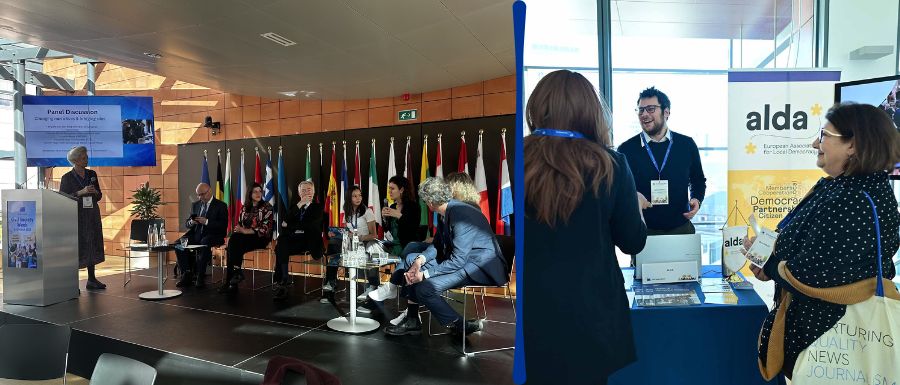
The discussion was opened by EESC Member Pavel Trantina (Group III) and Elisa Gambardella, President of the Lifelong Learning Platform, who underlined the importance of lifelong learning as a cornerstone of democratic health and civic engagement. The panel discussion that followed, moderated by Arja Krauchenberg from the European Parents’ Association, brought together a diverse group of speakers including MEP Brigitte van den Berg (Renew Europe, Netherlands), Claudio Dondi (Education Inspiring Peace Lab) and Lauren Bond (OBESSU), who explored the relationship between education systems, civic awareness and democratic participation.
During the session, Susana Carp, co-founder of ECIT Foundation and member of ALDA, presented the “ALL ON BOARD” European Citizens’ Initiative, highlighting its potential contribution to strengthening civic education and participation across Europe. The discussion was further enriched by contributions from Eszter Nagy (UEF) and György Miklós (Szülői Hang), who shared insights on the situation in Hungary and the challenges faced in defending democratic values and civic education in national contexts.
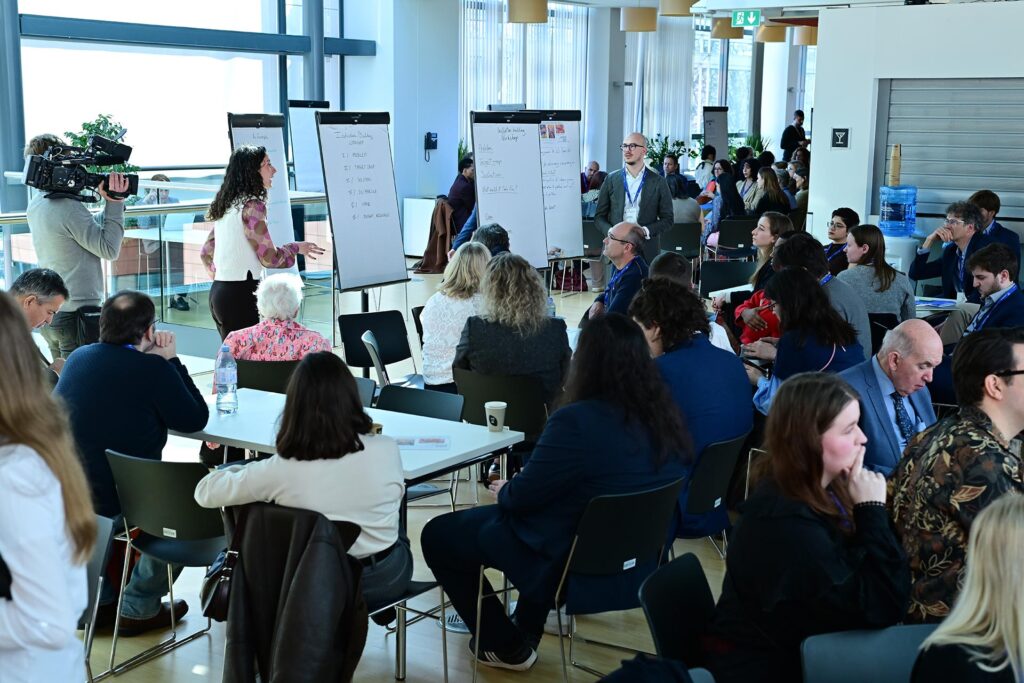
The session concluded with a series of parallel workshops organised by the hosting organisations. Together with the Union of European Federalists, ALDA facilitated an initiative-building discussion, encouraging participants to identify concrete solutions to address the persistent lack of civic education within school curricula.
The Civil Society Week is another occasion for organisations like ALDA to contribute to the agenda-setting of the European Economic and Social Committee, and through it, the other institutions of the European Union
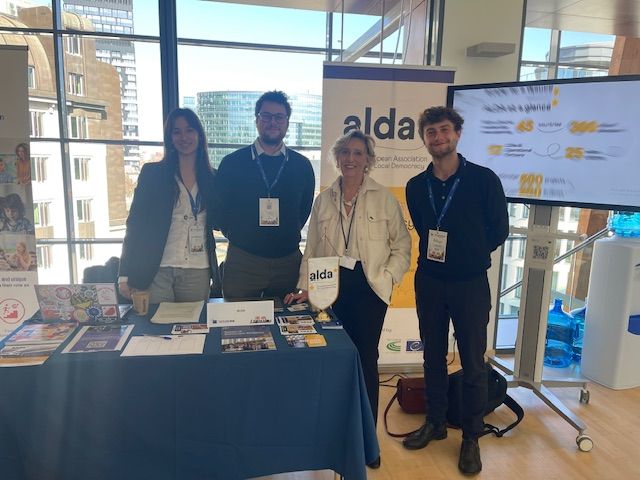
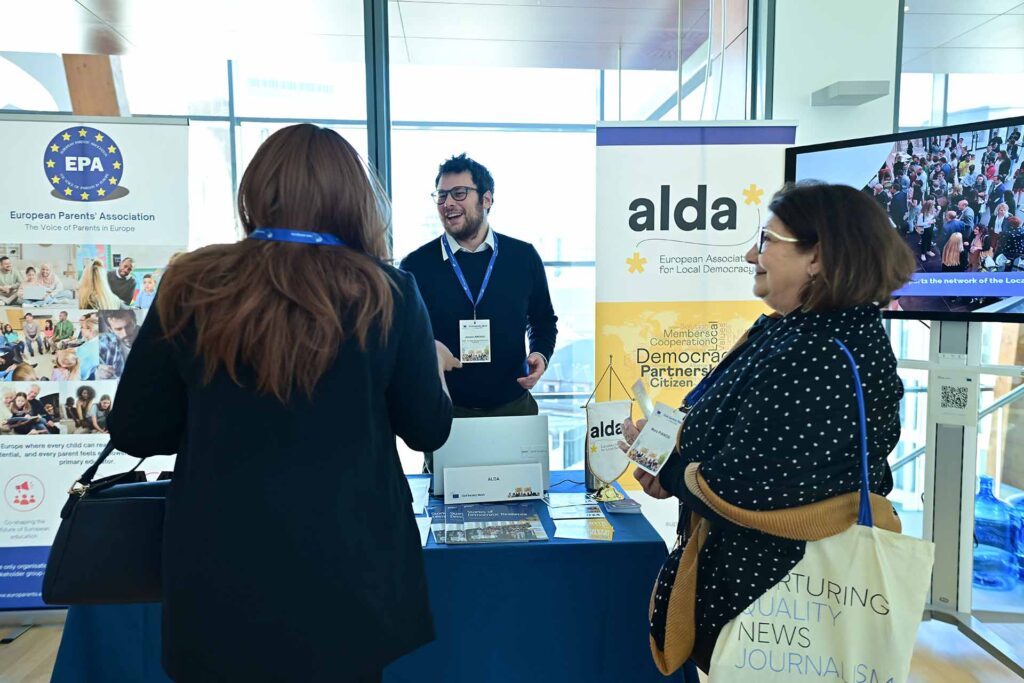
Throughout the week, ALDA was also present with an information stand in the event’s marketplace, where colleagues engaged with participants and presented the organisation’s activities, projects and upcoming initiatives aimed at strengthening local democracy and civic participation across Europe and beyond.
As every year, the Civil Society Week proved to be an important moment for European civil society organisations to exchange perspectives, connect with institutional stakeholders and contribute to shaping the European policy agenda. Throughout the week, participants discussed several key initiatives proposed by the European Commission to protect democratic values, including the European Democracy Shield and the forthcoming Civil Society Strategy.
The event also provided an opportunity to reflect on the future of funding for civil society organisations, particularly in light of the ongoing negotiations surrounding the 2028–2034 Multiannual Financial Framework (MFF). Discussions emphasised the need for stronger and more sustainable financial support for civil society actors, including both public funding mechanisms and increased collaboration with philanthropic donors.
Looking ahead, the Civil Society Week once again confirmed its role as a platform where organisations such as ALDA can contribute to the agenda-setting of the European Economic and Social Committee, and through it, to broader European policy discussions.
The conclusions emerging from the session on “Educating Citizenship for Resilient Societies” will be shared with EESC members and are expected to inform future opinions of the Committee.
As a member of the Liaison Group with Civil Society Organisations, ALDA will continue to actively engage with the EESC and European institutions to promote democratic participation, civic education and a vibrant civil society across Europe.
🔗 Find out more about Civil Society Week 2026: EESC Website
© Photos credits to EESC