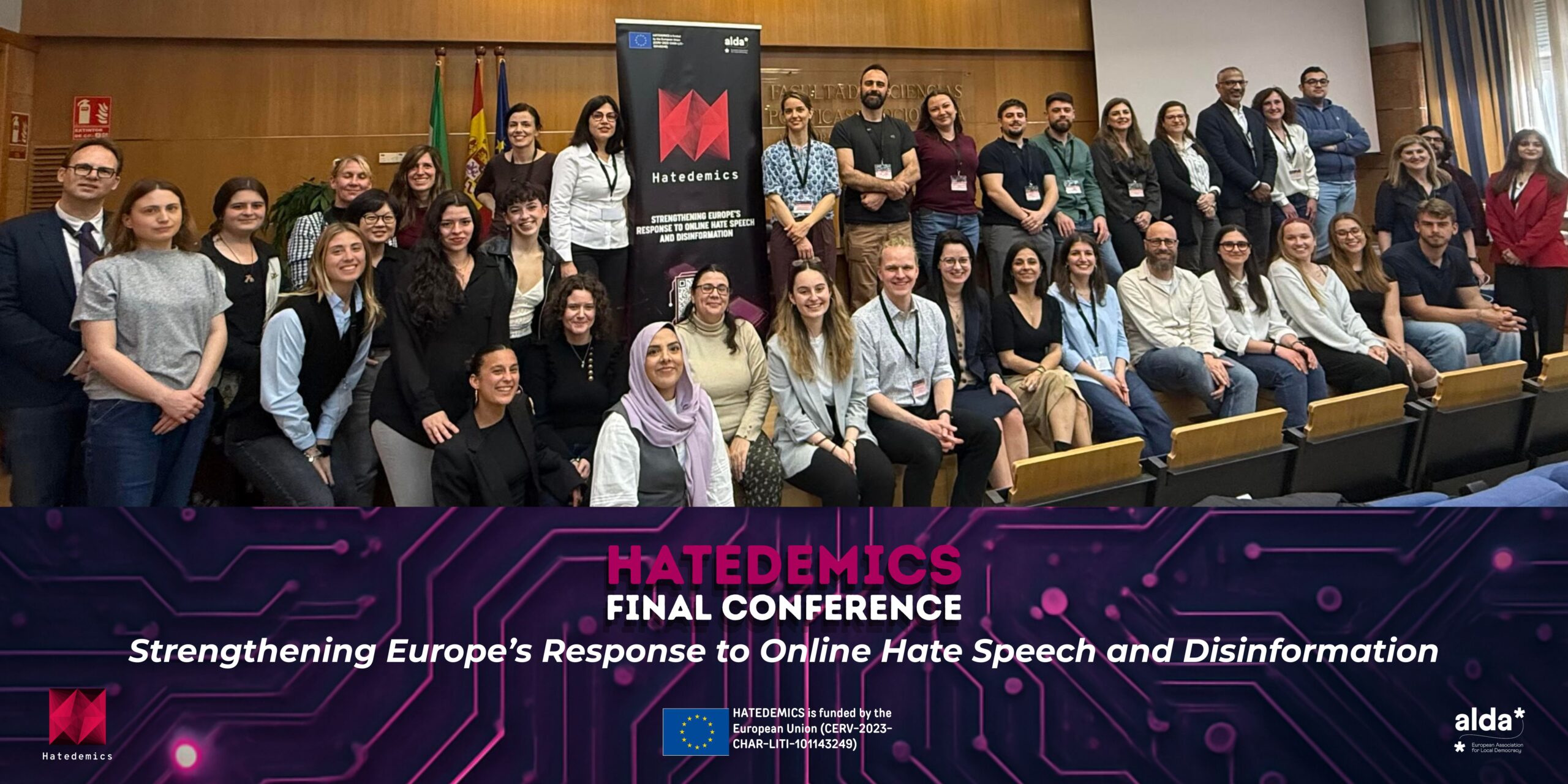
On 26 March 2026, the University of Granada hosted the final conference of the HATEDEMICS project, with more than 100 delegates from all over Europe attending. They included NGO employees, fact-checkers, researchers, public officials, and young activists – people who deal with hate speech and disinformation on a daily basis on different levels and contexts, and they all brought the same questions and motivations.
The event officially marked the end of two years of EU-funded work carried out in six Member States of the EU – Italy, France, Poland, Malta, Spain, and Estonia. Two years of building structured frameworks to detect and analyse harmful content, developing AI-based tools to assess hate speech and disinformation risks, crafting human-validated counter-narratives, and designing training resources grounded in EU values – all of it tested in real contexts and with real communities.
Yet, for those in the room, “end” was perhaps the last word that came to mind. Online hate speech and disinformation are not abstract policy issues. On the contrary, they determine the results of elections, silence minorities, and radicalise young people, and they’re getting worse: AI-generated content is spreading faster than ever before, while fact-checking capabilities are diminishing in an online world in which two-thirds of the global population is now connected, two opposite trends evolving simultaneously.
HATEDEMICS has always been about getting tools and frameworks into the right hands, not just creating them
The programme moved between reflection, success stories, and hands-on experience. The day started with a keynote from the Council of Europe, followed by two panel discussions that brought the kind of honesty that rarely makes it into official reports – the first on how the Hatedemics journey went from research to action, the second one on how to build a safer digital public sphere. Participants then heard the presentation of the HATEDEMICS Platform, a tool suite that brings together the expertise of all project partners, followed by the impact stories shared by practitioners from across the consortium.
The afternoon took on a different energy, turning the day into an interactive and participatory workshop where people worked with the tools directly and thought collectively about how to adapt them to their own realities. After a presentation of the Educational Toolkit and its contents, the platform was then tested by the participants. The workshop was designed for both students and experts, so that it could reach and train a wider audience. But the most important moments were the ones in between – the side conversations, the practitioners from different countries realising they were facing the same challenges, the young activists who came in skeptical and left with something they could actually use.
HATEDEMICS has always been about getting tools and frameworks into the right hands, not just creating them and the handover took place during the conference. This project ended, but not the fight against hate speech and disinformation.
If you want to know more about all the work carried out, check out the project website, or follow us on social media!