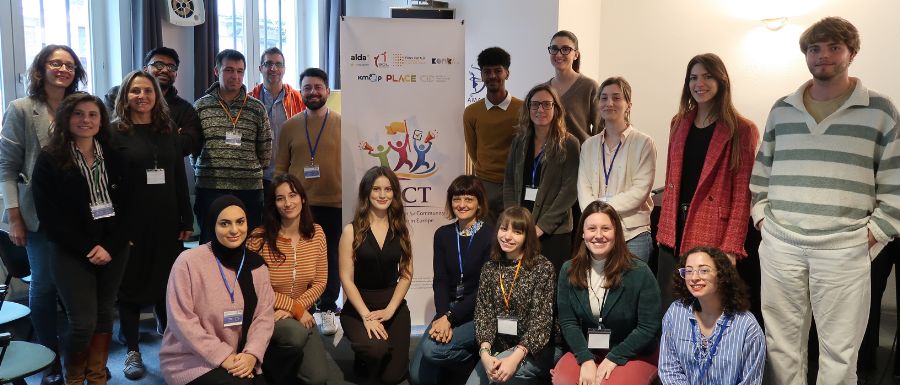
The PACT project officially started in Brussels with a 2-day international conference and workshop
On 10 and 11 March 2026, Brussels hosted an International Conference and Workshop entitled “Promotion of Minorities’ Participation in Multilevel Governance”.
It brought together experts coming from different realities, with a common goal: sharing good practices on how to promote inclusive participation of under-represented minorities, people with migratory background, refugees, Roma and other marginalised communities in local decision-making processes.
The Conference
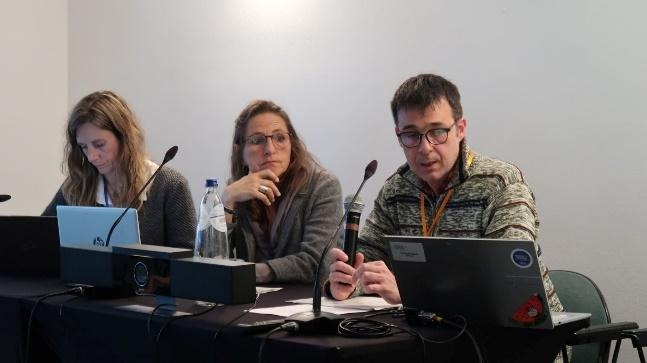
The event opened on the morning of Tuesday 10 March with 2 panels.
The first one – entitled “Minority Participation in Multilevel Governance: EU perspectives” – was moderated by Mohammed Mustafa (ALDA – European Association for Local Democracy) who introduced the main EU policy developments in the areas of anti-poverty and anti-discrimination, and migration, setting the tune of the conversation with the speakers:
Julie Pascoet (European Network Against Racism – ENAR) focused on the European Anti-Discrimination Strategy, highlighting how much this tool is necessary (but also how far it is to address the needs of the moment), and how civil society networks play a crucial role to bridge the gap between EU policy intentions and the lived experiences of marginalised communities.
Fernando Vasco Chironda (European Anti Poverty Network – EAPN) tackled the EU Anti-Poverty Strategy, underlying that – by excluding migrant people from vulnerability frameworks – the strategy risks deepening marginalisation of those most affected, and that local authorities are those with the responsibility to ensure inclusive participation spaces and adequate resources for people.
Mojib Atal (Migration Policy Group – MPG) focused on the Migrant Integration Policy Index, reporting a concerning stagnation in political participation across the EU, and highlighting how multilingual education could serve as a democratic tool by recognising linguistic diversity rather than privileging a single dominant language.
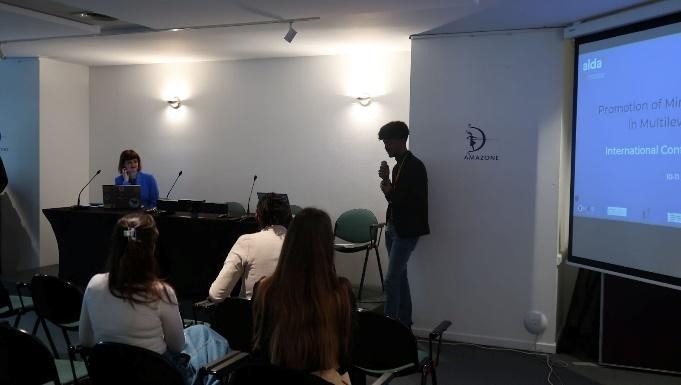
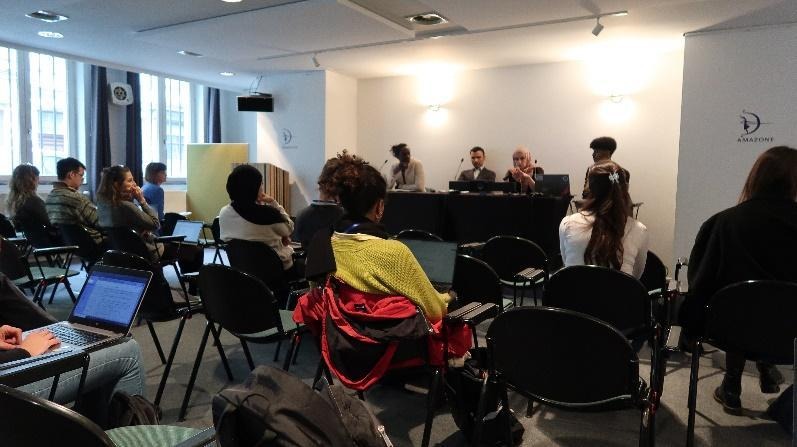
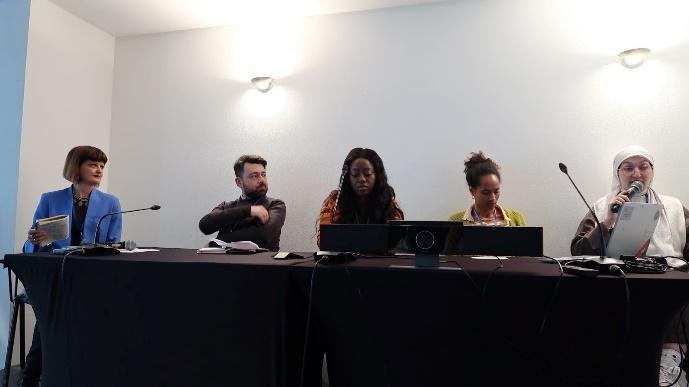
The second panel – “From Welcoming to Active Participation: Challenges, Practices and Power” – was moderated by Maddalena Alberti (ADL Zavidovici) and had the goal to hear from experts who exchanged ideas, perspectives and best practices for the inclusion of underrepresented minorities at a local level.
Anna Coulibaly (International Catholic Migration Commission – ICMC Europe) introduced the Community Sponsorship, a community‑led integration model where volunteers, supported by civil society and approved by governments, commit to hosting and supporting refugees for at least a year.
Loubna Reguig (European Forum for Youth with Lived Migration Experience – VOICIFY) urged how self‑led organisations are essential to defend the political participation rights of young people with migrant backgrounds, since they create spaces where youth feel included, exchange knowledge and pool resources.
Queenie Kessie (IOM Diaspora Advisory Board – DAB) showed how diaspora advisory structures can move beyond consultation and concretely ensure fair policies are good for migrant people and societies.
Ismail Alkhateeb (PLACE Network) brought the organisation’s extensive experience to show that the inclusion of migrant people in local participatory processes can happen only when institutions and local communities jointly define problems, design solutions and test them at micro‑level.
The Workshops
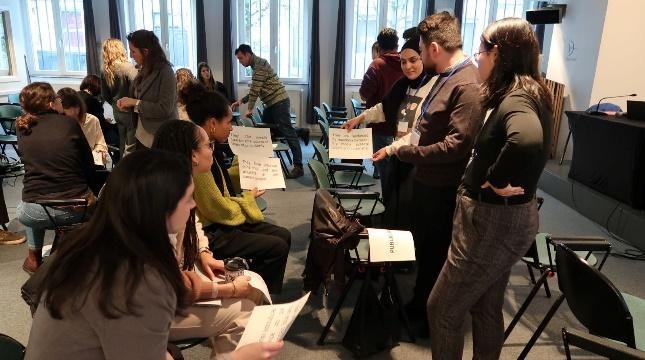
The second part of the event was animated by workshops held by some of the project partner organisations which proposed 4 interactive moments to directly engage participants.
- The Greek civil society organisation KMOP-Social Action and Innovation Center led an activity on how to co-design inclusive governance by sharing its experience on the topic and giving participants practical tools to identify barriers that can hinder participation and how to overcome them.
- The Spanish non-governmental organisation Fons Català proposed a workshop on social cohesion and citizenship approach by presenting practical cases promoted by local governance. Among them, the case of the city of Mataro (Spain), characterised by a significant cultural diversity, where women are taking the role of ambassadors to involve other women belonging to minorities in the local life and governance.
- PLACE Network, French migrant-led organisation, held an activity aimed at reflecting on how to strengthen inclusive participation of people with a migration background through collective learning and co-design. By bringing the concrete example of the Resilient Cities program, it focused on the importance of eliminating hierarchies between migrant and local people.
The Hungarian organisation Konkáv Alapítvány led a final workshop on inclusive participatory budgeting initiatives that make civic involvement accessible through childcare, simplified information, safe venues and intercultural outreach.
Conclusion
Hosted by Amazone asbl (Brussels) and co-organised by ALDA (France), ADL Zavidovici (Italy), KMOP (Greece), Center for Intercultural Dialogue (North Macedonia), PLACE Network (France), Fons Català (Spain) and Konkáv Alapítvány (Hungary), the event saw the participation of public authorities, policy makers, organisations, media, underrepresented minorities united by the wish to learn on how working together is possible for a fair and equal European policy system.