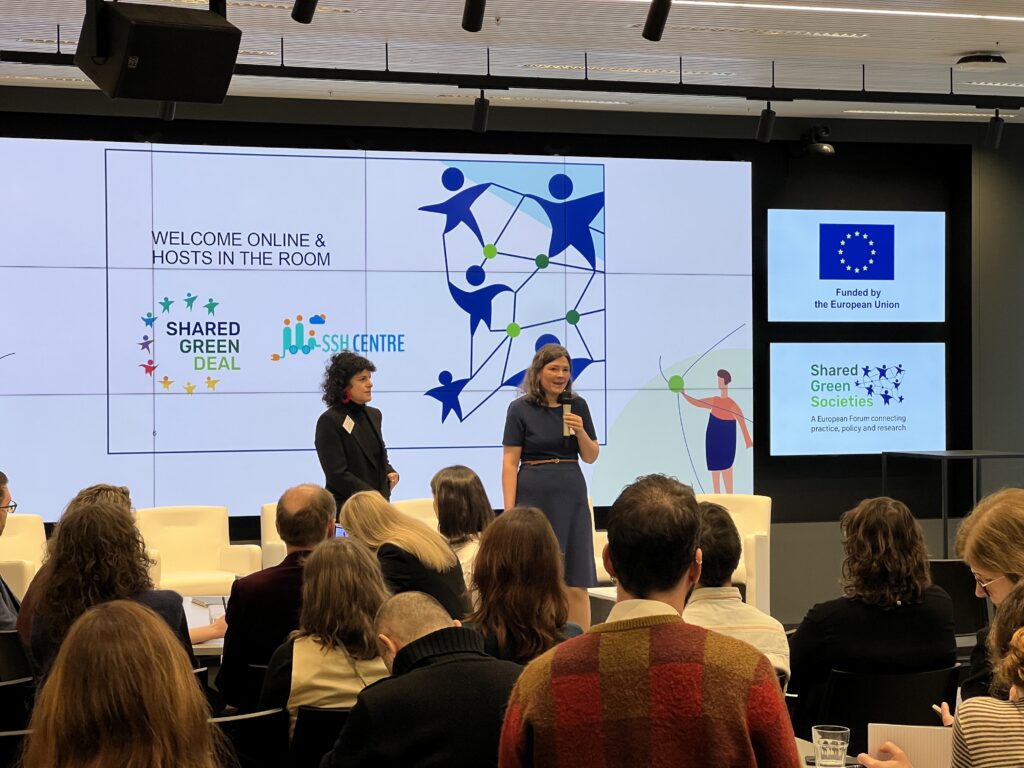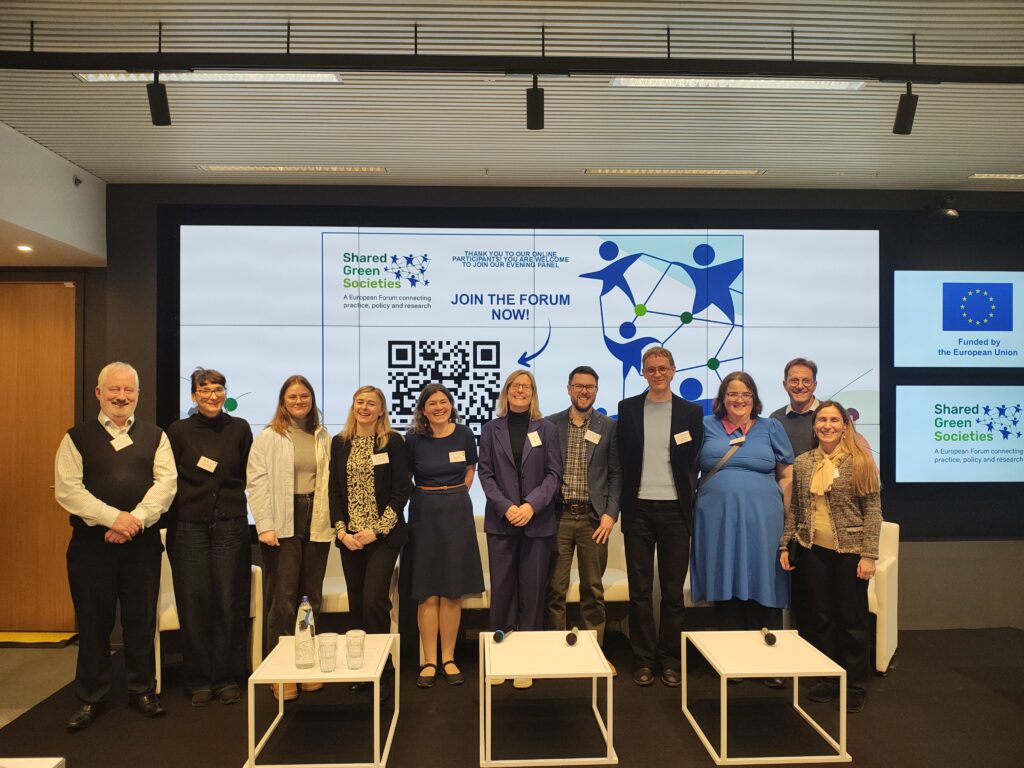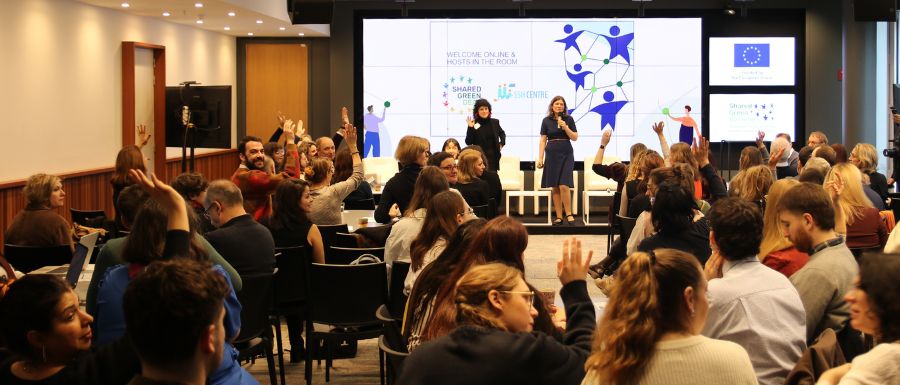
The Shared Green Societies Forum was officially launched on Wednesday 28 January 2026 during a full-day event in Brussels, bringing together Social Sciences and Humanities (SSH) researchers, local practitioners and policy-makers at both EU and local level.
The event celebrated this innovative European Forum that connects different actors and strengthens collaboration for an inclusive and just green transition grounded in local realities and citizens’ engagement. Forum participants will be part of a journey of sharing knowledge and understanding, events, discussions, advocacy and real-world impact.
Its added value lies in bridging SSH research and community practice. On one hand, it creates a space where NGOs and local actors can access findings, outputs and tools from SSH research to better support their communities. On the other, it facilitates constructive dialogue between researchers and those with lived experience on the ground, fostering mutual learning and more effective action.
The Forum is currently supported by the EU-funded Horizon 2020 SHARED GREEN DEAL project, which aims to foster a just green transition in Europe that works for and with people, providing SSH tools and knowledge to support the implementation of eight EU Green Deal policy areas and deliver behavioural change.
The Shared Green Societies Forum is now open to university departments and research institutes, civil society organisations, local and regional authorities, researchers and policymakers committed to shaping an inclusive and just green transition in Europe
Three types of participation are available: Forum Members, who engage actively in shaping the Forum’s activities; Forum Champions, who play a consultative or exemplary role by sharing experiences and inspiring others; and Friends of the Forum, who contribute through more occasional and supportive engagement.
The launch event brought together more than one hundred people from civil society representatives, researchers, local and regional actors and policymakers from across Europe to share the Forum’s vision and first steps.
The agenda reflected the three core goals of the Forum:
- supporting citizen and professional participation through well-designed community-led initiatives;
- promoting mutual knowledge flows between SSH research and local practice;
- advocating for inclusive public policies informed by both academic insight and grassroots experience.
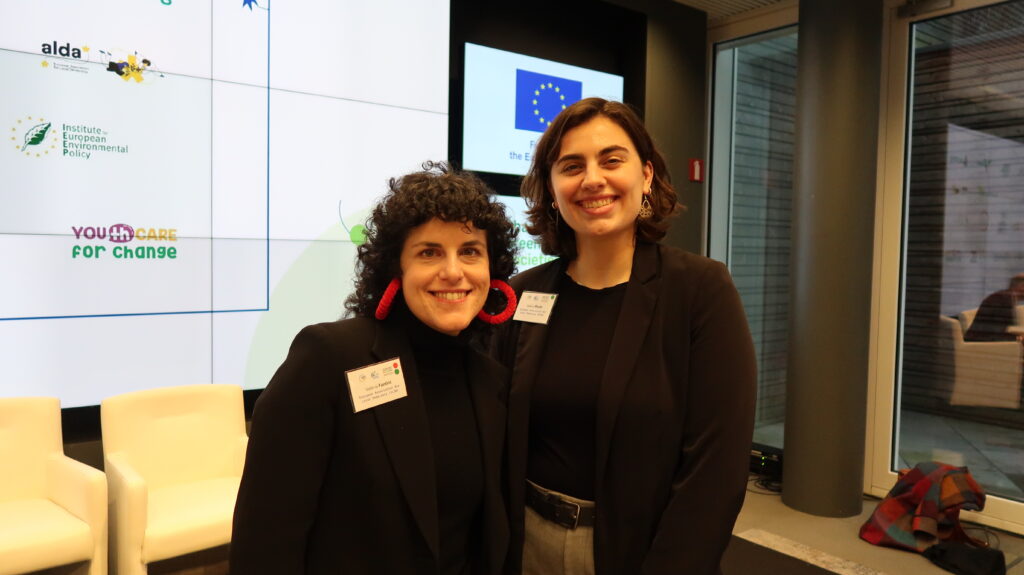
The event kicked off with an introduction on the activities and the forum, led by Professor Rosie Robison (Anglia Ruskin University) and Valeria Fantini (ALDA – HUB Environment & Climate)
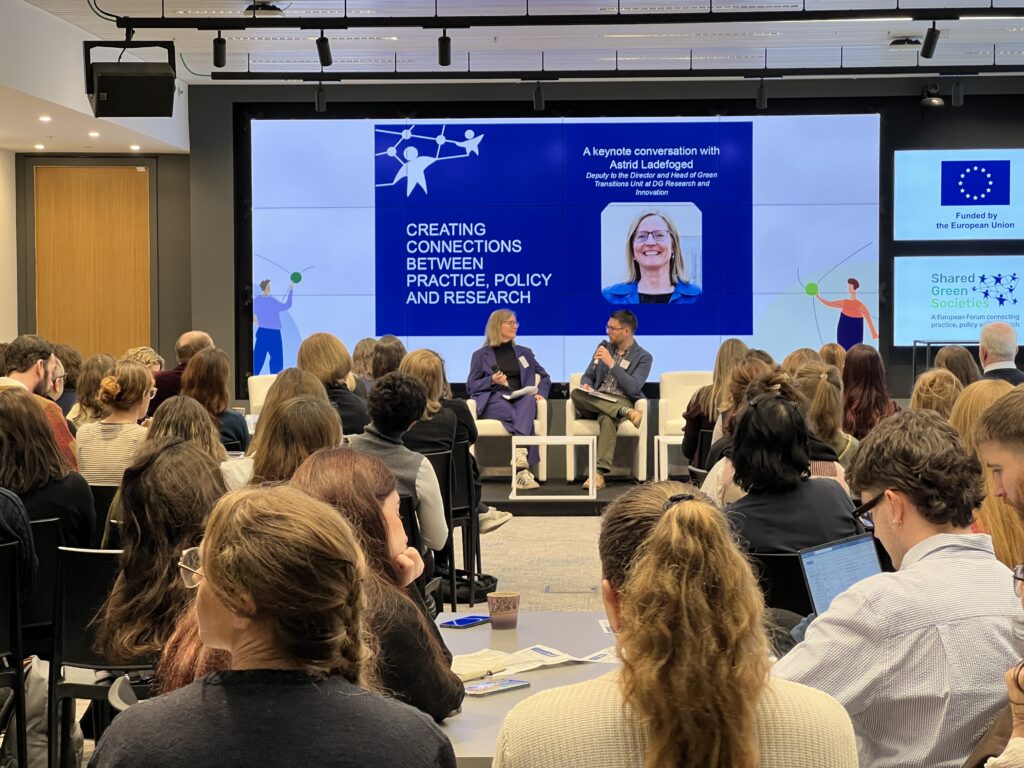
The first session featured a keynote conversation between Professor Chris Foulds (Anglia Ruskin University) and Astrid Ladefoged, Deputy to the Director and Head of Green Transitions Unit at DG Research and Innovation. She highlighted the urgency of aligning science, policy and on-the-ground practice to drive the green transition, stressing that social sciences and AI must work together to address public distrust and misinformation. Cities were identified as key implementers, and rebuilding public trust was framed as a matter of translating research into tangible, locally relevant solutions that address affordability and systemic inequalities.
The second session celebrated local ‘Champions’ of Shared Green Societies. Through an interview format, Kinga Kovacs from EnergyCities presented the work implemented by five of the 24 social experiments across 17 countries from the SHARED GREEN DEAL project: Pelle Bengtsberg (Reformaten), Rhiannon Laubach (Ballyhoura Development), Jean-Paul Grange (Val-de-Marne en Transition) and Filipa Corais (Braga Municipality). They shared their experiences of working with local communities to support the implementation of the European Green Deal, illustrating how SSH methods contributed to community learning, co-creation and trust-building. The example of these Forum Champions showed that change begins with people rather than top-down technical fixes, despite barriers such as short-term funding and political instability.
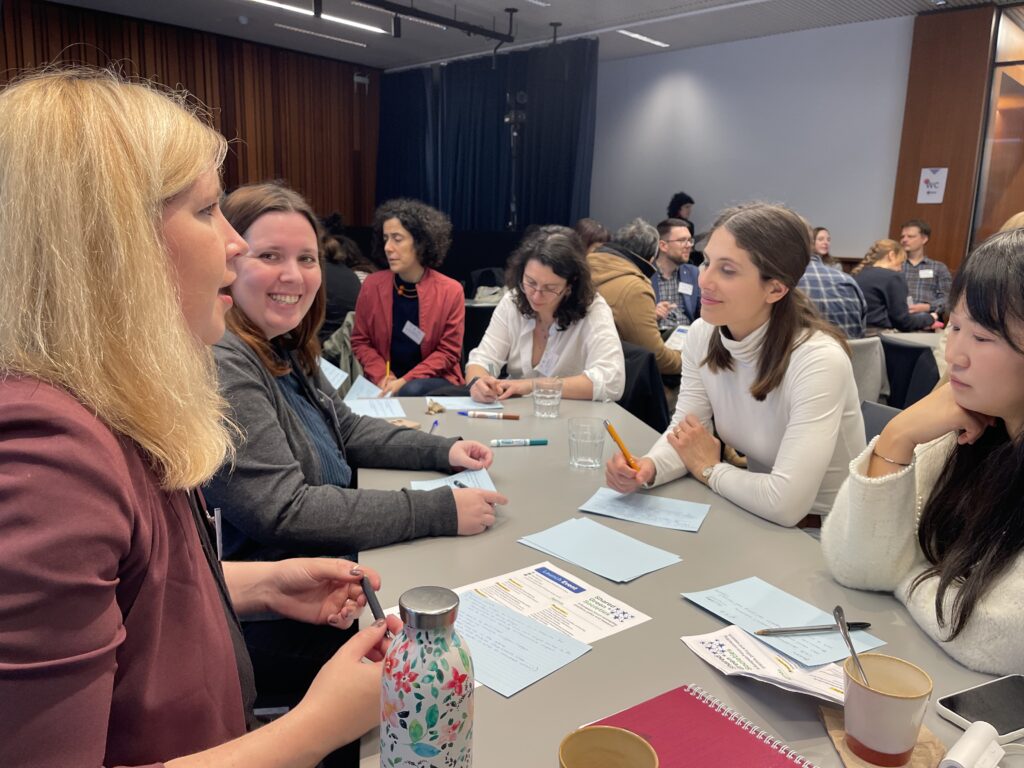
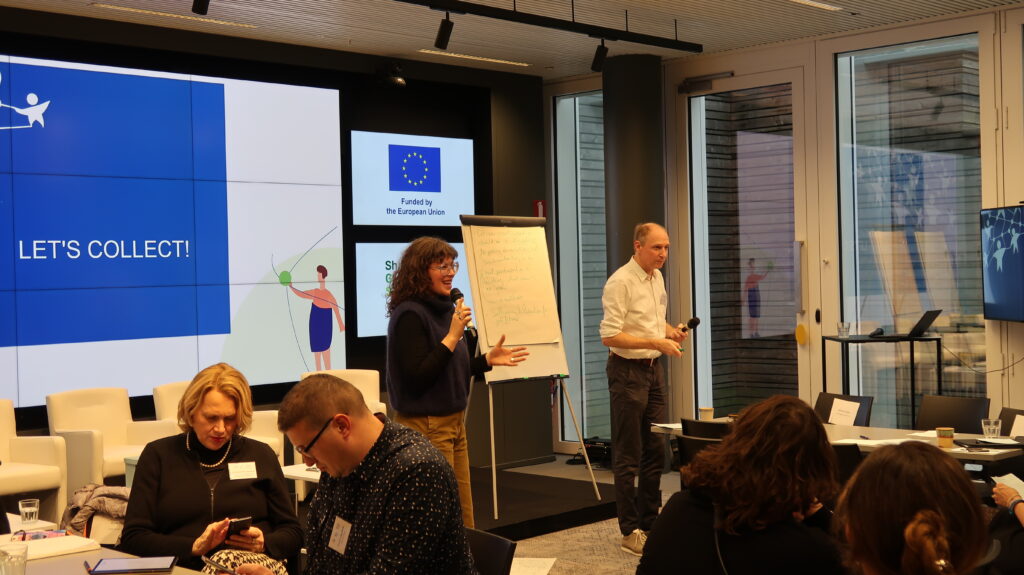
Participants then joined an interactive third session, “Building a shared voice on policy: Advocating for just and community-based public policies”, focused on developing a collective advocacy agenda and defining shared priorities for joint lobbying, research and funding collaboration. The session was led by Pia Wieser (WECF) and PJ Beers (Drift), with the special participation of Leida Rijnhout from Ecolise, who stressed the importance of local communities and a bottom-up approach to delivering systemic change — as showcased by ECOLISE’s Colibri approach to advocacy.
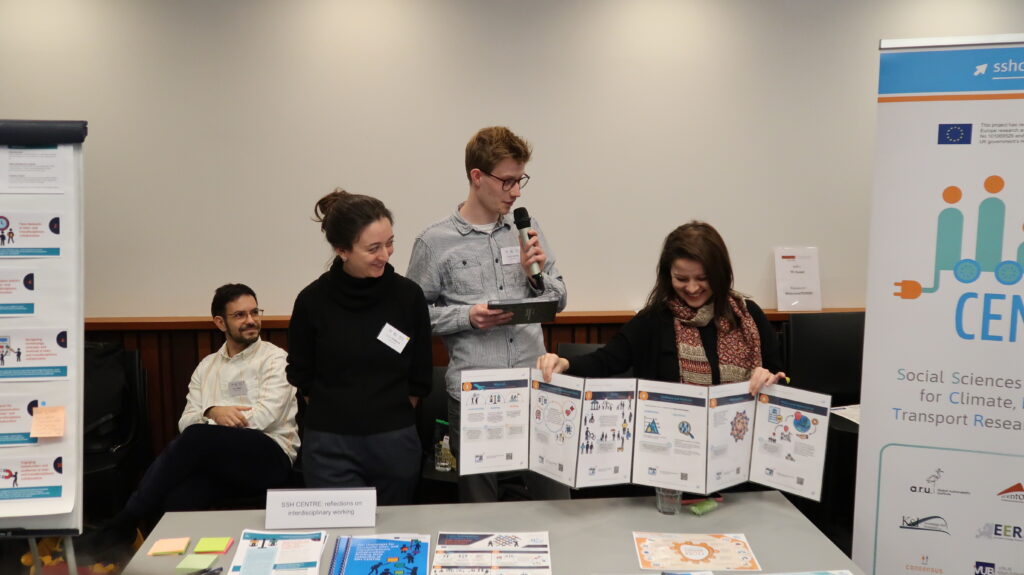
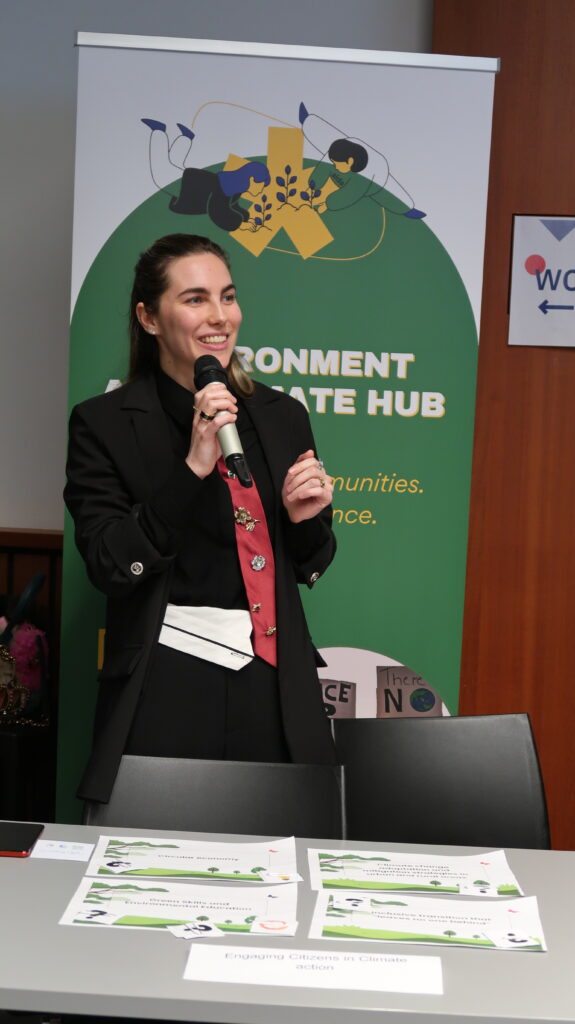
The day concluded with a Collaboration Hub, where 11 initiatives showcased their work, tools and insight from their experience in pursuing a just green transition in Europe, and the added value of connecting research and local communities in this joint effort. This session featured projects such as SSH CENTRE, Real Deal, PHOENIX, ACCTING, and YOU(th) CARE; organisations and initiatives such as the European Local Innovation Forum (ELIF) by AEIDL, the Environment & Climate Hub of ALDA, Local Green Deals by ICLEI, GreenDeal-NET by Vrije Universiteit Brussel, and the EU Cities Mission Platform by NetZeroCities (presented by EuroCities). Tools such as the Green Deal Barometer and the Green Economy Tracker were also showcased; and finally, the Shared Green Societies Forum presented its upcoming activities.
The Collaboration Hub has been followed by a final plenary, moderated by Valeria Fantini (ALDA) outlining the Forum’s next steps and officially opening registrations to become part of the Forum.
All eligible stakeholders are invited to join the Forum by completing this form!
To learn more on eligibility criteria, the objectives of the Forum and benefits of participation, check out the Forum Strategy for all the detailed information. You can read more about the co-creation process that led to the definition of the Strategy and the creation of the Forum itself here.
Forum’s activities are coming soon, including online workshops in March and April 2026 on how local actors can drive change from the ‘in-between’ (delivered in 5 different EU languages) and a Policy brief series on “Bottom-Up Solutions for Effective European Green Deal Governance”, which will be include five roundtables across Europe with different target audience.
Don’t miss news and updates on upcoming activities: follow Shared Green Societies on LinkedIn!
For questions or additional information you can contact team@sharedgreensocieties.eu
Find out more about the project here!