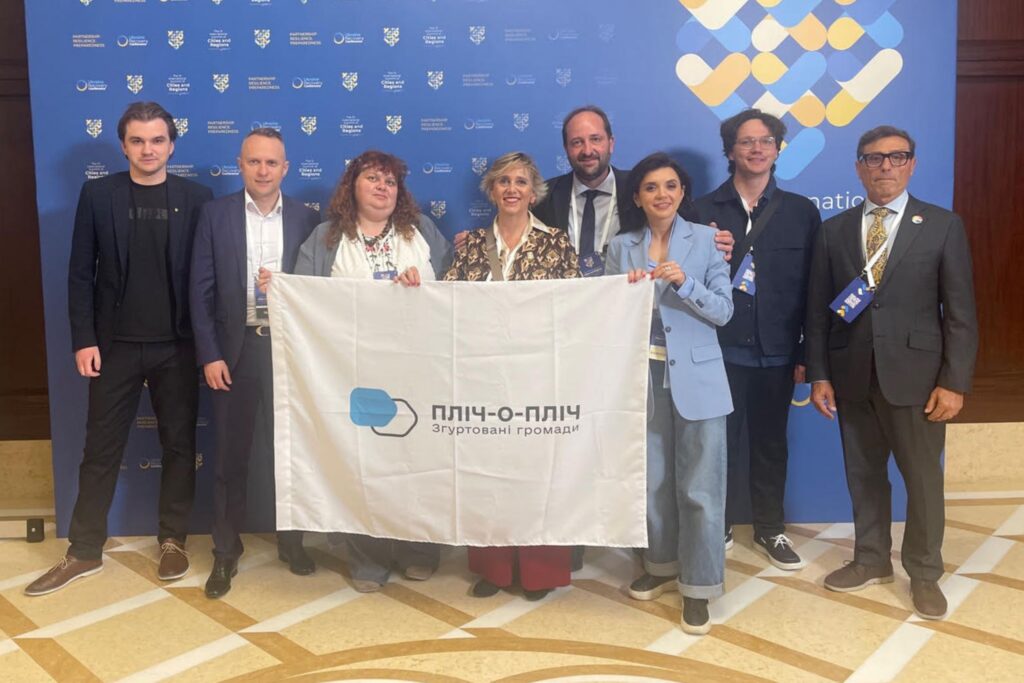
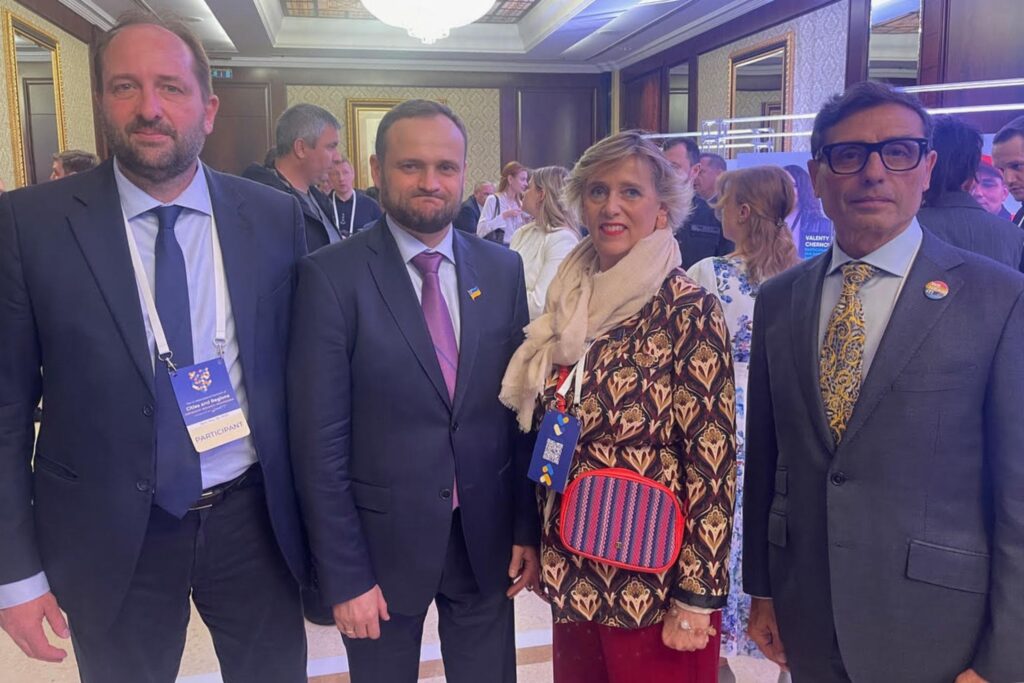
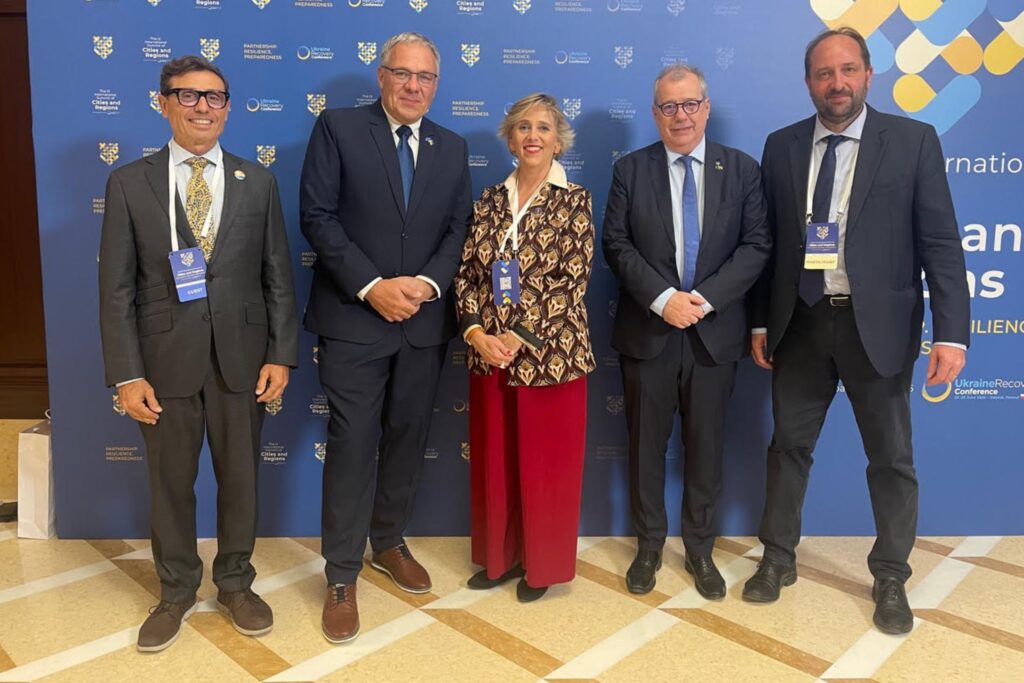
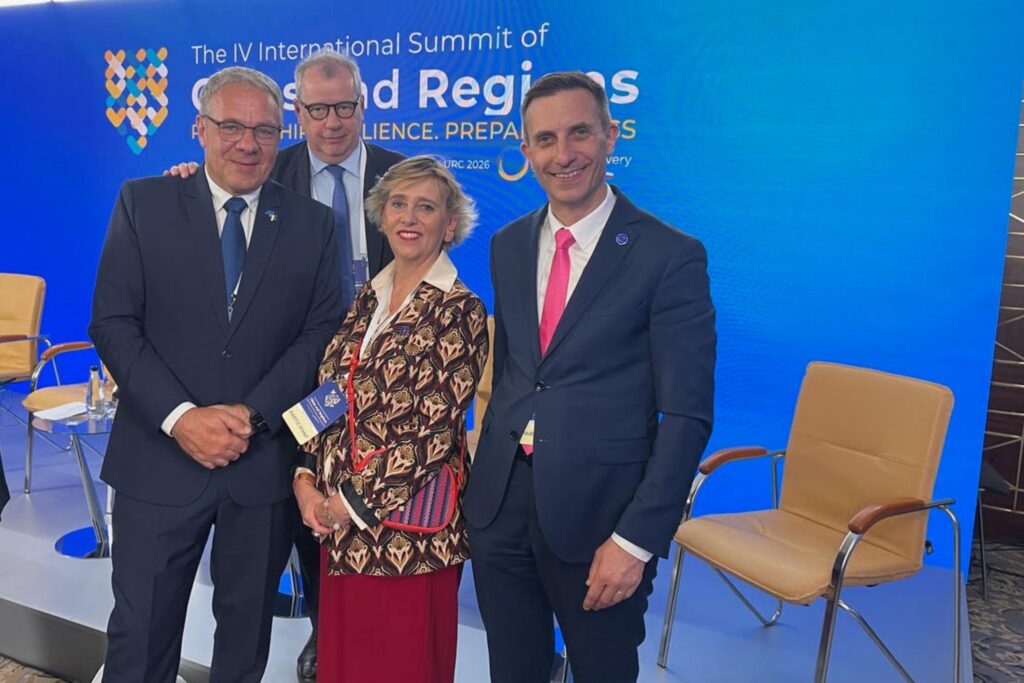
On May 25th, 2026, while attending the 4th International Summit of Cities and Regions in Kyiv, ALDA – represented by Antonella Valmorbida, ALDA’s Secretary General – paid a visit to the locations where the biggest nuclear disaster of Chernobyl took place in 1986.
Only a few weeks after the 40th anniversary of the disaster, happened on April 26th, 1986, ALDA had the opportunity to visit not only Chernobyl, Pripyat and the nuclear plant, but also the town of Borodyanka, sadly known for having been one of the main axis of the russian advance on Kyiv in 2022. The visit involved ALDA as well as the European delegations who were attending the Summit of Cities and Regions in Kyiv: a two-day meeting that brought together over 100 local and regional governments from across Europe sharing the same commitment of standing alongside Ukraine despite the ongoing conflict.
The Summit, organised within the framework of the national project “Shoulder to Shoulder: Cohesive Communities” with ALDA as a leading partner, aimed at offering concrete spaces of solidarity and cooperation, building partnerships between Ukrainian and European municipalities in order to co-design the pillars of Ukraine’s reconstruction.
The Summit’s intentions and goals emerged even more meaningfully after what happened just the day before its opening: on May 24th, in fact, Kyiv was the target of an overnight attack striking the very city centre, in a residential area. ALDA’s Secretary General Antonella Valmorbida witnessed the offensive: “When we went to see the wreckage, we could still smell the burnt houses”, she said.
The attack not only hit important infrastructures such as residential buildings, transport network buildings and one of the oldest food markets in the city, but also destroyed the Museum of Chernobyl, which was only recently reopened after a large-scale restoration. According to the Ministry of Internal Affairs, the museum lost about 40% of its collection due to the shelling.
A russian missile was found on the roof of the Museum’s building, demonstrating that these attacks do not operate on strategic and military areas only, but deliberately strike civic areas attacking Ukrainian citizens, culture and memory, in what clearly appears to be a war of terror.
These circumstances made ALDA’s visit to Chernobyl, Prypiat and Borodyanka even more meaningful and essential, physically bringing an agent of democracy to the places where the major disaster took place 40 years ago – the memory of which was severely attacked just the day before the visit – and to the town that suffered the consequences of the war as much as the neighbouring, most known Bucha.
Now more than ever it is of fundamental importance to show ALDA’s presence and support in the places that bring value to the Ukrainian culture and historical memory, witnessing the effects of the war on the country and bearing messages of peace, reconstruction and international cooperation. ALDA firmly stands by Ukraine through its presence and actions in the country and for the country, continuing its commitment towards a bottom-up approach as a tool of social change, sustainable development and international collaboration.
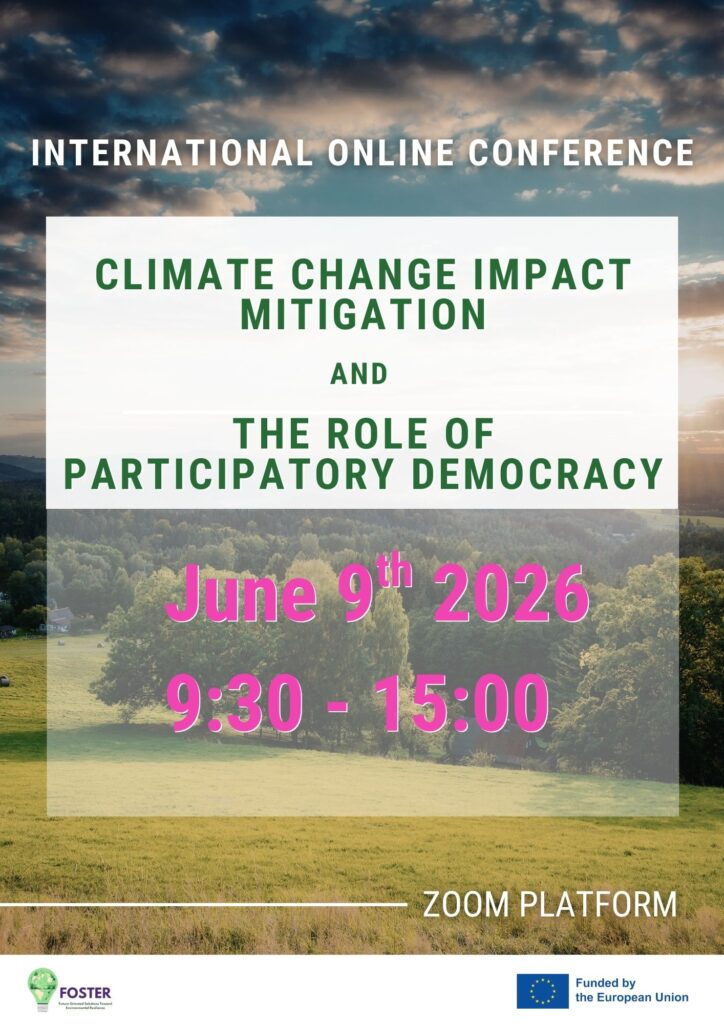
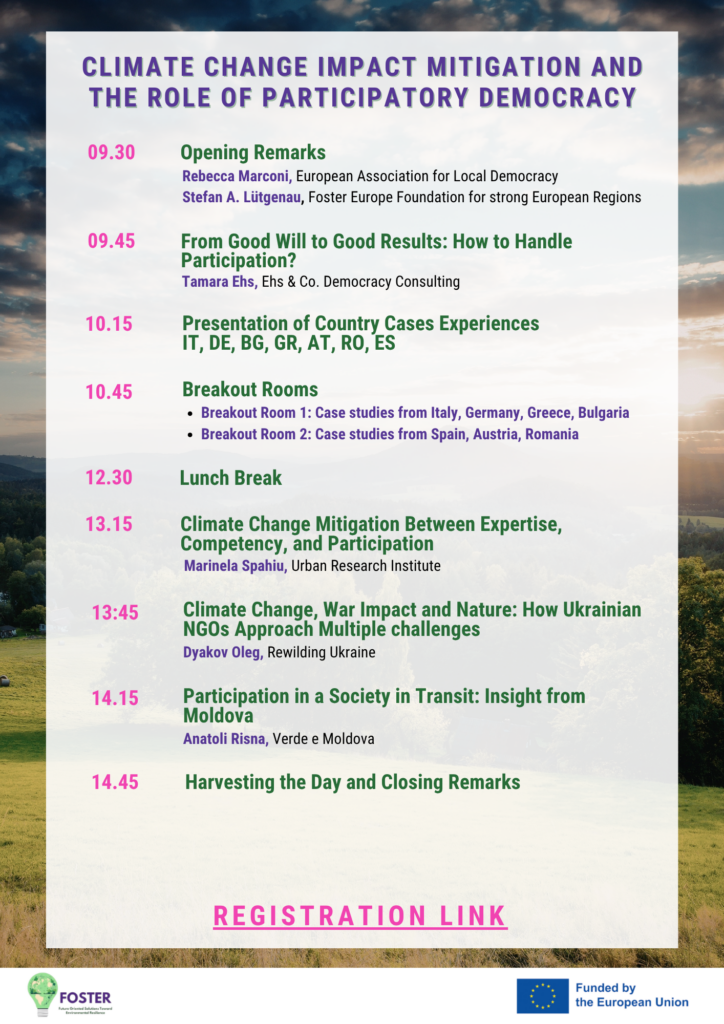
On 9 June 2026, an international online conference will take place within the framework of the FOSTER – Future Oriented Solutions Toward Environmental Resilience project. The event brings together stakeholders from across Europe to share experiences, present results, and discuss how local communities can better respond to the long-term impacts of climate change.
The conference is part of a two-year project funded by the European Union’s CERV programme, focusing on strengthening inclusive and forward-looking local governance. By combining strategic foresight with participatory approaches, FOSTER supports communities in anticipating future socio-economic challenges linked to climate change and in co-designing practical, locally grounded solutions.
Throughout the day, participants will gain insights into different national experiences, explore participatory approaches to climate governance, and engage in discussions on how expertise and citizen involvement can be effectively combined. The programme includes keynote inputs, country case presentations, and interactive breakout sessions, allowing for exchange across sectors and countries.
Special attention will be given to local pathways developed within the project, highlighting concrete examples from across Europe. The interactive sessions will also contribute to the development of a practical toolkit aimed at supporting future-oriented and participatory local climate governance.
The conference is open to civil society organisations, local and regional authorities, researchers, and all interested citizens.
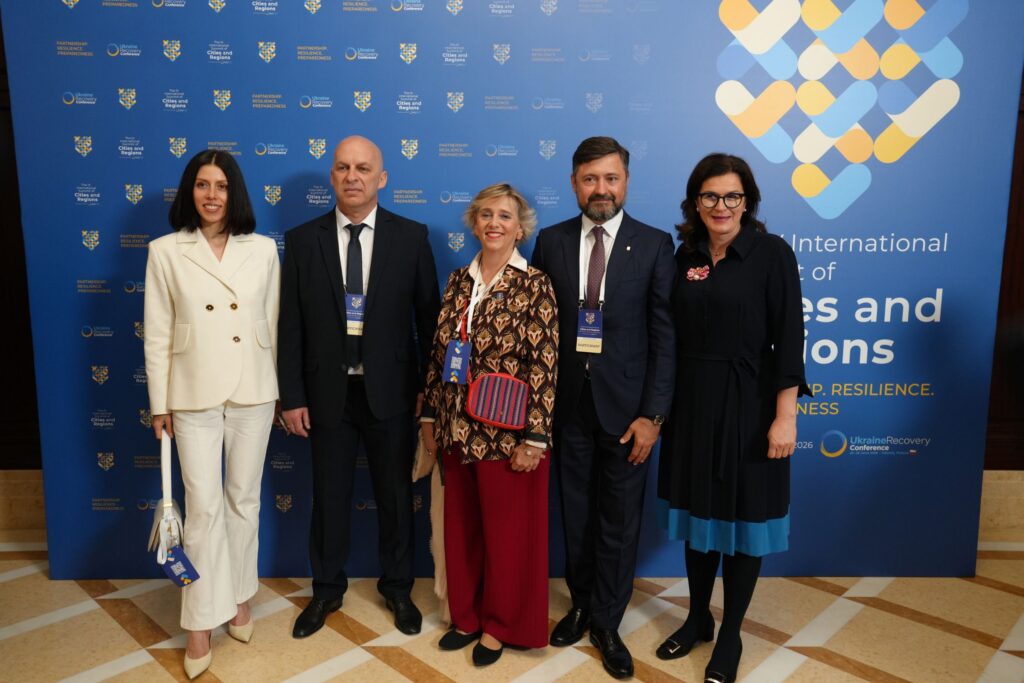
Kyiv, 26 May 2026 – The 4th International Summit of Cities and Regions brought together over 100 local and regional governments from across Europe in Kyiv, reaffirming the commitment of local authorities to stand alongside Ukraine despite the ongoing conflict. The summit represents a key moment for local and regional governance, offering a platform for solidarity, partnership, and concrete cooperation.
The determination of all participants was particularly significant given the circumstances: the day before the summit, a major attack struck the centre of Kyiv, and Russian threats to evacuate the city were in circulation. Despite this, not a single delegation departed.
The Summit
Organised within the framework of the national project Shoulder to Shoulder: Cohesive Communities, the Summit saw ALDA as an active partner in driving the initiative forward. In close coordination with the Ministry for Development of Communities and Territories of Ukraine, ALDA took on a facilitating role, guiding European municipalities through the process of establishing meaningful, lasting ties with Ukrainian counterparts. The occasion served as a concrete expression of how decentralised cooperation and territorial solidarity can become structural pillars of Ukraine’s reconstruction process.
Partnership signatures: building concrete cooperation
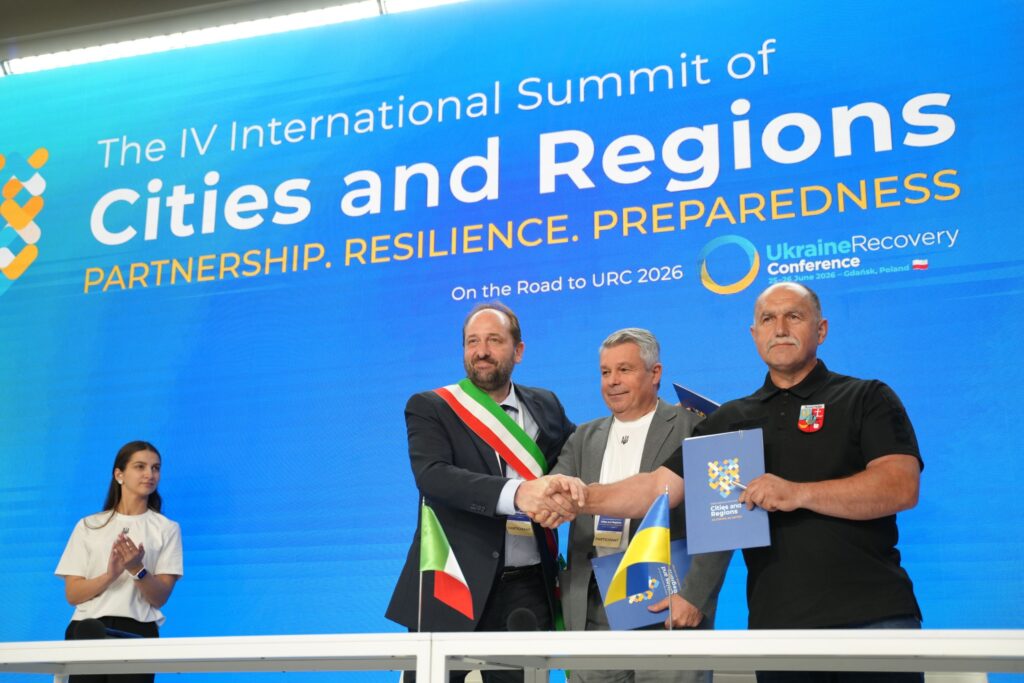
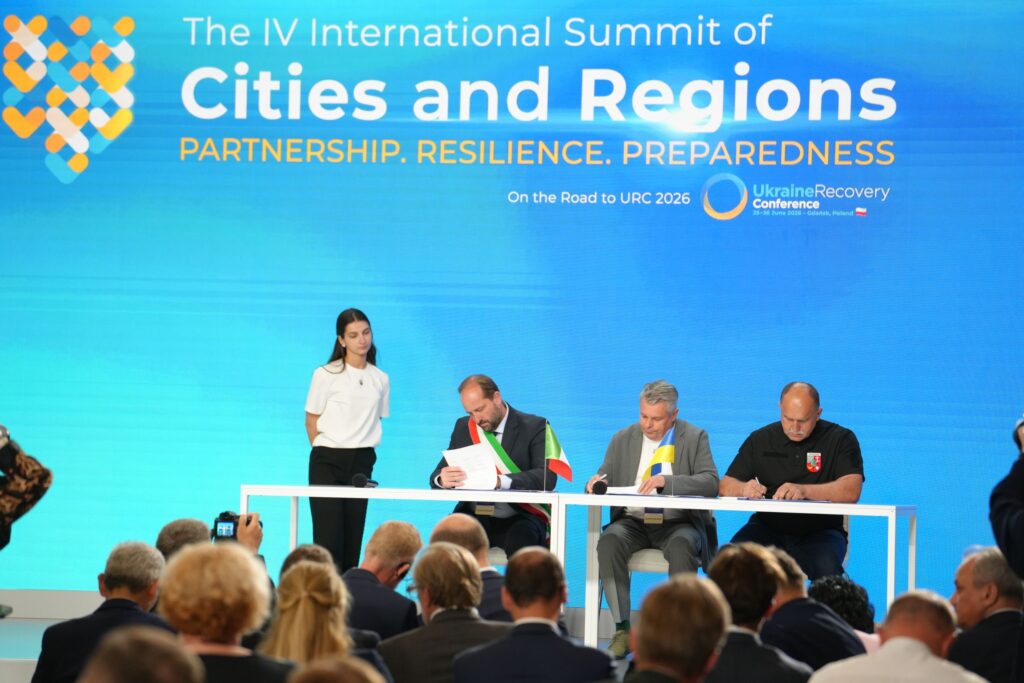
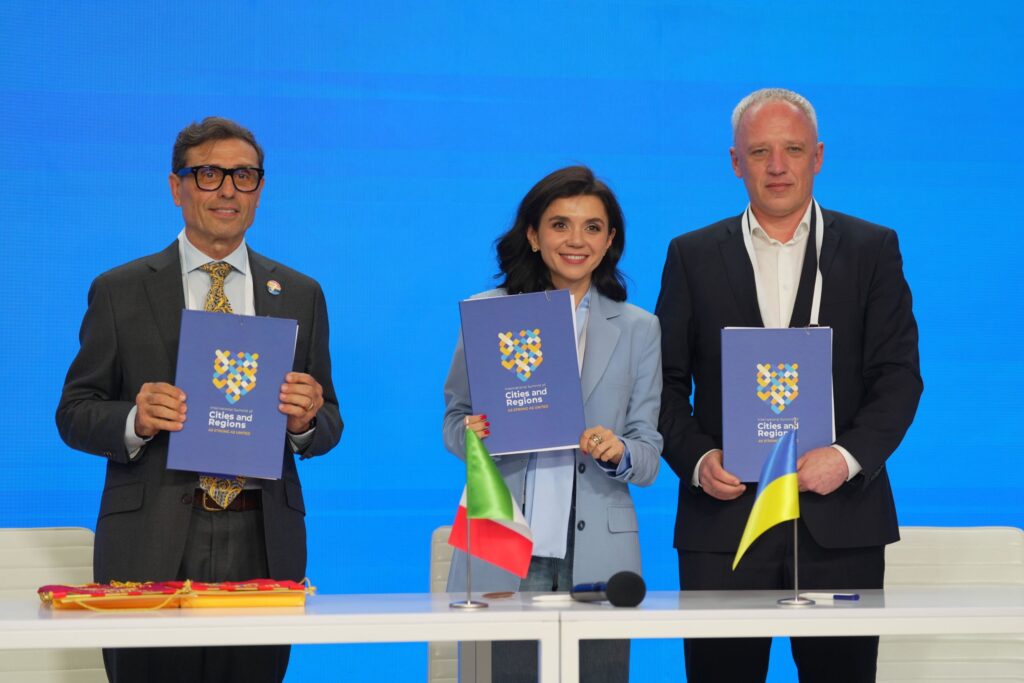
Among the most tangible outcomes of ALDA’s involvement was the preparation and signing of two Letters of Intent with the Italian delegation it accompanied. The Municipality of Bergamo formalised a cooperation framework with the cities of Chernivtsi and Zaporizhzhia, while the Municipality of Bonate Sopra entered into partnership with the Zolochiv community in the Kharkiv region and its namesake community in the Lviv region. Both agreements are oriented toward shared work in areas including local governance, community reconstruction, social cohesion, and the mutual exchange of administrative expertise.
These signatures build on groundwork already laid earlier in the year. In April, ALDA had supported a previous round of partnership agreements in Kyiv, bringing together the Municipality of Cubelles from Spain and the Italian municipalities of Thiene and Zugliano with several Ukrainian communities. These efforts represent a growing network of municipal diplomacy in which ALDA serves as a bridge between European and Ukrainian local authorities.
Strengthening institutional ties
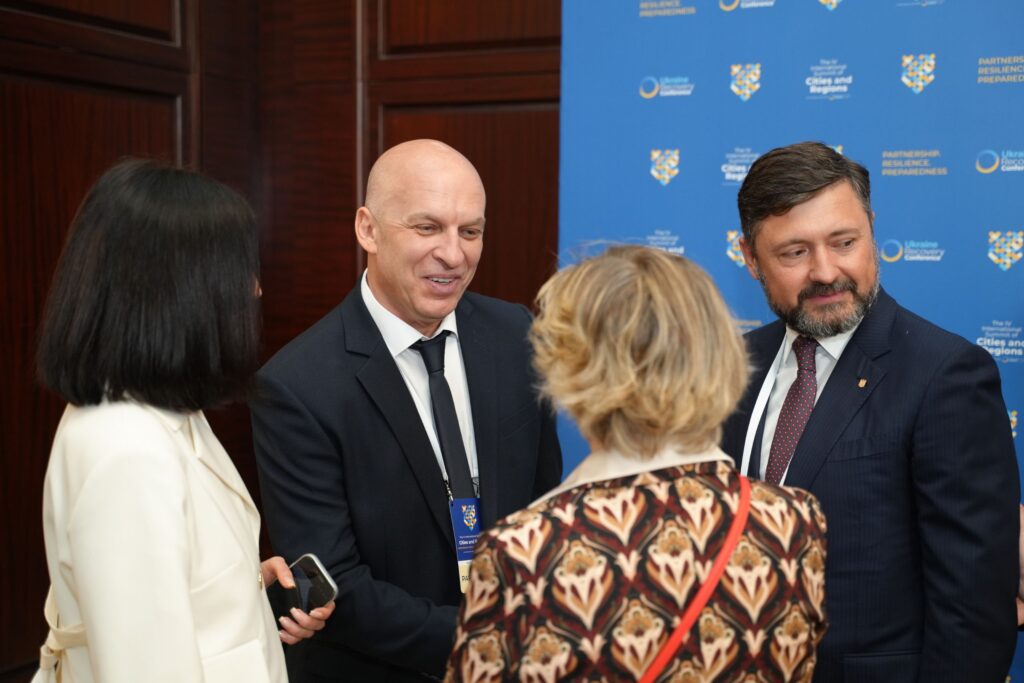
The summit also provided an important opportunity to strengthen institutional ties. ALDA was accompanied by two prominent member organisations: Region Grand Est and Christian Debève, member of ALDA and partner of the Local Democracy Agency (LDA) Kharkiv. Patrick Molinoz also attended, representing both the European Committee of the Regions and the Bourgogne-Franche-Comté region in connection with the LDA Vinnytsia partnership. On the institutional front, ALDA further deepened its cooperation with the Congress of the Council of Europe through a meeting with Mathieu Mori, building on the recent renewal of the cooperation agreement between the two organisations. The Italian delegations also had the opportunity to meet with Minister Oleksii Kuleba, organiser of the summit.
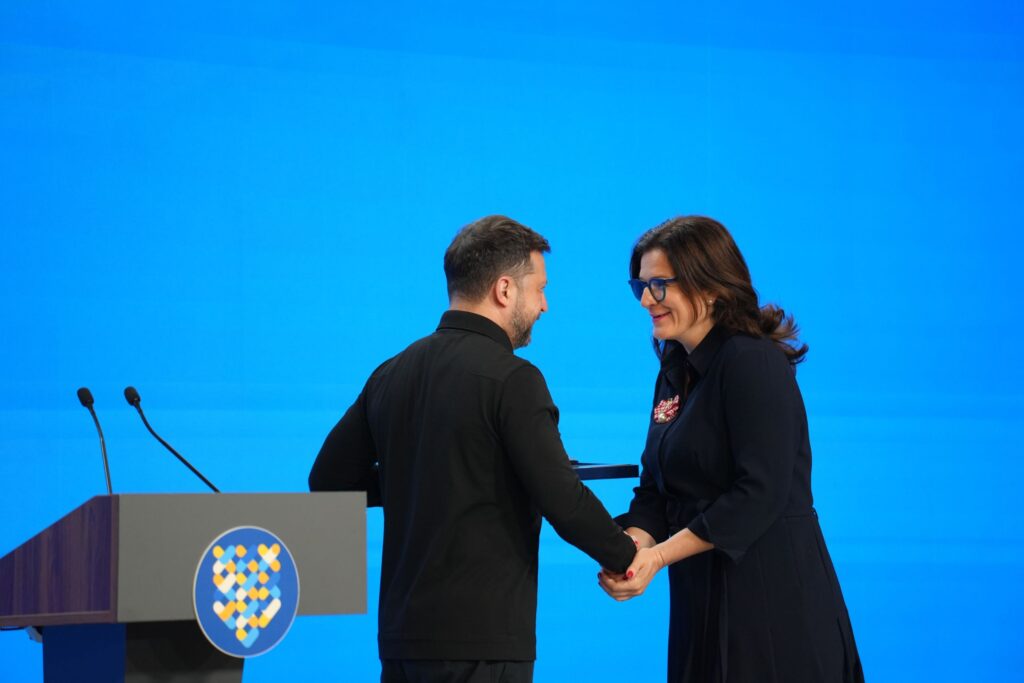
Finally, the Summit celebrated the outstanding commitment of Aleksandra Dulkiewicz, Mayor of Gdańsk, who received an award from President Volodymyr Zelensky in recognition of her city’s support for Ukraine. The City of Gdańsk is also set to host the Ukraine Recovery Conference (URC) 2026.
ALDA’s engagement at the Summit reflects a broader and long-standing commitment to Ukraine encapsulated in its flagship initiative. As the war continues to damage fundamental structures of Ukrainian society and governance, ALDA firmly believes that lasting reconstruction must be built from the ground up. Common action, a bottom-up approach, and sustained support to local and regional authorities and civil society organisations, those who remain active on the ground to ensure that basic services continue to reach people, will ultimately shape the future of Ukraine. It is this conviction that drives ALDA’s continued presence and action in the country.
Restorative Outreach For Youth and Territorial Engagement
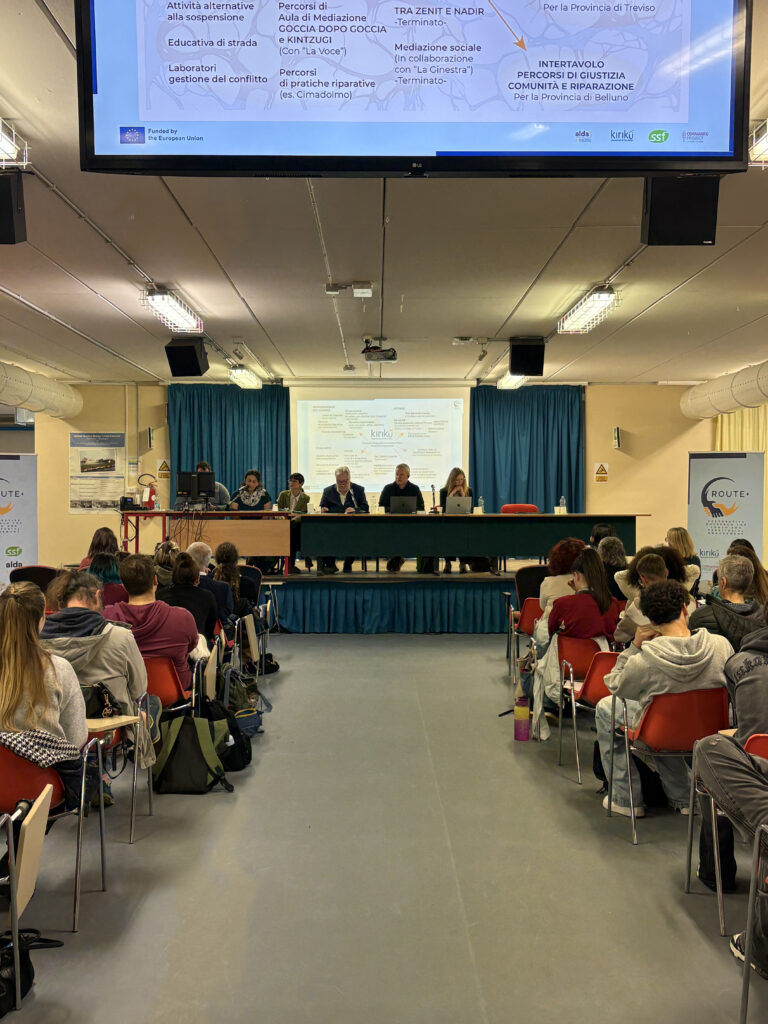
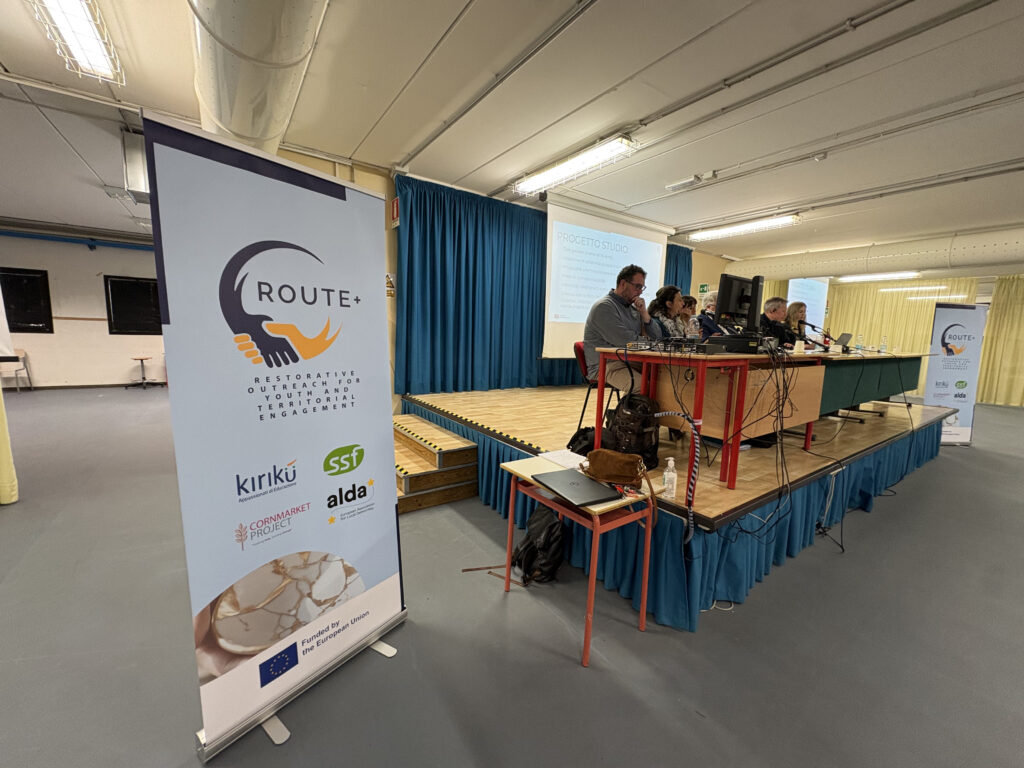
Montebelluna – Tuesday, 12th of May. Leading experts, educators and stakeholders from Italy, Finland, and Ireland gathered together to present the outcomes of intensive months of transnational work and cooperation.The main objective of this European-funded initiative was to promote innovative frameworks and strengthen the capacities of professionals, supporting them in transforming interpersonal and systemic conflicts into robust opportunities for youth social inclusion. Through training sessions and interactive activities, the project encouraged the exchange of different approaches and promoted constructive dialogue between public institutions and citizens.
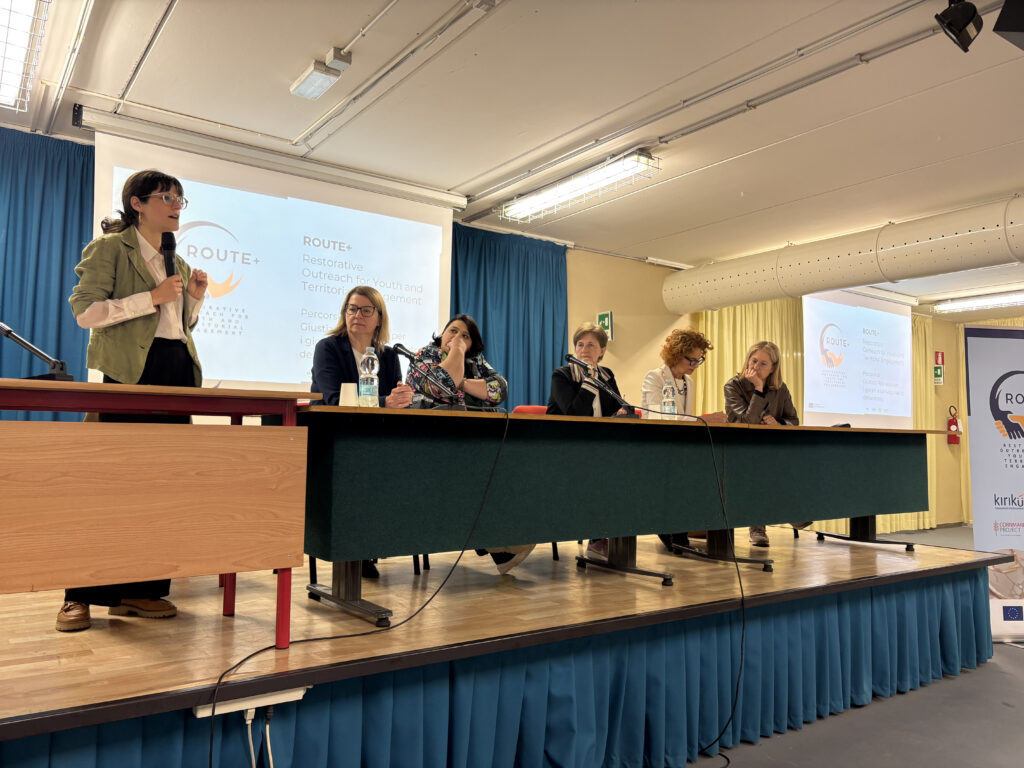
The final event of the ROUTE+ (Restorative Outreach for Youth and Territorial Engagement) project successfully concluded at “Einaudi Scarpa” Higher Education Institute, hosted specifically on the Luigi Einaudi ITS campus in Montebelluna, Italy. The project represented a dynamic partnership between organizations and experts from Italy (Cooperativa Kirkù) Finland (Finland’s Forum for Medling – Finnish Forum for Mediation), Ireland (Wexford Local Development), and France (ALDA).
Partners, in collaboration with one another, carried out field research, strategic workshops, local trainings and collaborative piloting. The goal was to present the milestones achieved in the area of work of Restorative Justice practices across Europe. Since its launch, the ROUTE+ project aimed to significantly strengthen the core competencies of educators, social workers, and public actors, actively promoting an educational culture centred on dialogue, trust, and relationship-building, where school actors are empowered to work with students using a restorative approach.
Each country had its own distinct line of work, where they were able to make the best out of their social framework, specializing in distinct operations.
The Finnish Team focused primarily on the educational ecosystem, integrating restorative dialogue into schools.
The Irish Team addressed the judicial field directly, exploring how diversionary restorative practices can prevent youth recidivism within the legal system.
The Italian Team concentrated on the community level, building strong local support systems and various civic networks to engage vulnerable young people and create a restorative culture, starting with new generations.
The first session of the event concentrated on presenting the main outputs of the ROUTE+ project. Central to these achievements was the creation of specialized training programs tailored to the distinct socio-political and legal contexts of the different national partners.
Additionally, the partnership created ane-Toolkit, both in English and Italian. This digital resource integrates theoretical frameworks with practical, on-the-ground case studies. It was created with the aim of promoting restorative practices more widely and to be shared with participants involved in the trainings and workshops, and more in general for anyone who has an interest in the topic.
The event hosted several distinguished figures, who shared invaluable technical contributions. Opening the formal presentations was Tim Chapman, a globally renowned expert, former president of the European Forum for Restorative Justice (until 2022), and an esteemed lecturer at Ulster University.
“Restorative justice is not a soft option; it is a rigorous process that demands accountability while preserving the human dignity of all parties involved.”
Chapman remains a leading figure in the field of restorative justice, as today, due to his role in implementing those mechanisms in Northern Ireland. His work proved that this empathetic approach can support reconciliation and peacebuilding, even in environments historically defined by extreme violence and deep-seated social division. Furthermore, his extensive research heavily contributed to drafting the Council of Europe’s official guidelines on restorative justice in criminal matters.
The event continued focusing on the detailed presentations from the representatives of each pilot nation, showcasing their personal and local success stories, and which approach they decided to use for implementing such practices in their counties. The day concluded with an interactive round table discussion dedicated to local stakeholders, focusing on future legislative developments and exchanging views and questions with the partners.
The closing event highlighted the long-term impact that restorative practices can have on local communities and social policies, not to mention the commitment to continue this work with great passion. In a joint closing statement, the project partners emphasized the meaning behind their cooperation:
“Today’s event does not just mark the end of a technical journey. Instead, it is the celebration of a vision of justice that is inherently more human and is capable of generating collective growth, healing communities, and fostering genuine solidarity starting directly from the resolution of conflict.“
From 20-23 April 2026, ALDA took part in the Global Sustainable Islands Summit 2026 in Gran Canaria, Spain, as part of the MED-Hubs consortium, joining a truly global community working towards more sustainable and resilient island and coastal territories.
This year’s Summit gathered participants from 67 countries and territories, making it one of the most geographically and professionally diverse editions to date. Across three days, 110 speakers, including government representatives, private sector leaders, researchers, and civil society organisations, contributed to discussions and exchanges shaping the future of island sustainability. The event confirmed the growing importance of international collaboration and the strength of a network bringing together actors committed to turning ideas into action.
For ALDA, participating in such a global setting represented an important opportunity to connect with stakeholders, policymakers, innovators, and development actors from around the world.
Our participation was mainly linked to the MED-Hubs project and its mission of promoting innovation in the blue economy. Throughout the Summit, ALDA and the consortium maintained a shared presence through the MED-Hubs networking stand, creating space to promote the project, exchange ideas, and build new connections.
One of the key highlights was the Global Blue-Tech Innovation Showcase organised by MALTAccelerate and delivered in partnership with the MED-Hubs Initiative and its network of organisations. The session featured startups presenting innovative solutions addressing challenges and opportunities across marine and coastal ecosystems to an audience of policymakers, investors, and development partners.
A particularly important contribution from MED-Hubs and the consortium was the support provided to the selected startups participating in the showcase, with MALTAccelerate playing a driving role both as a MED-Hubs partner and as a co-sponsor of GSIS 2026. Through this joint effort, ALDA contributed to creating visibility and opportunities for innovators to pitch their ideas, connect with key stakeholders, and engage with an international ecosystem focused on sustainability and blue innovation.
Beyond the showcase itself, the Summit offered several discussions that were particularly relevant to ALDA’s work and mission. Among them, Blue Governance for a Changing Ocean explored themes such as marine spatial planning, fisheries transitions, sustainable aquaculture, maritime innovation, and governance approaches for resilient ocean economies.
Another particularly valuable discussion was Island Governance for 2030: Policy, Collaboration & EU Alignment, which addressed governance challenges, EU frameworks, and opportunities for stronger collaboration across territories.
These conversations strongly resonated with ALDA’s work on local governance, participatory approaches, citizen engagement, and sustainable territorial development. They also reinforced the importance of creating stronger links between policy, innovation, and community-led solutions.
Participating in GSIS 2026 was a valuable opportunity to strengthen partnerships, exchange ideas, and position ALDA and MED-Hubs within an increasingly global conversation on sustainability and innovation. We look forward to building on the connections created during the Summit and continuing to support initiatives that bridge local action and international collaboration.
L’8 maggio 2026, in occasione della Giornata dell’Europa, Villa Fabris ha ospitato un ricco programma di iniziative promosso da ALDA Italia APS, con il patrocinio e il contributo del Comune di Thiene. La ricorrenza è legata alla Dichiarazione Schuman del 9 maggio 1950, considerata l’atto di nascita del processo di integrazione europea, e rappresenta un momento simbolico dedicato ai valori di pace, cooperazione e solidarietà tra i popoli europei.
Nel pomeriggio, alunne e alunni di Thiene hanno partecipato a giochi e attività formative sull’Unione europea. Si è iniziato con una caccia al tesoro e con dei quiz sui Paesi membri e sui gruppi politici europei. Dopo una spiegazione sul funzionamento del Parlamento europeo, è stata organizzata una simulazione semplificata di dibattito parlamentare, pensata per avvicinare i più giovani ai meccanismi della democrazia europea in modo partecipativo e coinvolgente.
La serata si è poi aperta con il talk “Thiene e l’Europa – Prospettive a confronto”, moderato da Marco Scorzato, vice caporedattore del Giornale di Vicenza. Sono intervenuti Paolo Graziano, docente di Scienze politiche presso l’Università di Padova ed esperto di politiche europee, e Marina Maino, assessora ai bandi europei del Comune di Thiene. In apertura, il saluto di Antonella Valmorbida, Segretaria Generale di ALDA. Al centro del confronto il ruolo dell’Unione europea nei territori, le opportunità offerte dai fondi comunitari e le sfide che attendono l’Europa sui temi della pace e della coesione sociale.
A concludere la serata, un aperitivo a cura di ENGIM Sanga Bar e lo spettacolo teatrale e musicale “Fola de Raisa – Racconti di radice” di Eleonora Fontana e Davide Peron, dedicato alle tradizioni popolari locali del primo Novecento. Un momento culturale che ha evidenziato come la valorizzazione delle proprie radici possa rappresentare un punto di partenza per costruire una cittadinanza europea più consapevole.
Un evento che ha unito educazione civica, dialogo e cultura locale, rafforzando la relazione tra comunità e valori europei.
The meeting, initiated by LDA Odesa Region in cooperation with ALDA, aimed to strengthen international humanitarian cooperation and reinforce solidarity and local democracy initiatives in the Odesa region.
Discussions focused on the current humanitarian situation and the most urgent needs of vulnerable groups, including internally displaced persons, veterans, people with disabilities, and children affected by the war.
Particular attention was dedicated to several strategic priorities for local communities and institutions, including:
preparation for the winter period;
ensuring stable water and heat supply;
strengthening energy resilience for communities and social institutions;
developing sustainable solutions in the field of water management;
rehabilitation programmes and mental health support;
support for children and families, including opportunities to organise solidarity and rehabilitation stays for Ukrainian children in Italy.
Representatives of the Odesa Regional Military Administration expressed their sincere gratitude to the Italian partners for their continued solidarity with Ukraine, their concrete support to local communities, and their willingness to contribute to humanitarian initiatives in the region during this challenging period.
The meeting also reaffirmed the importance of international partnerships and people-to-people cooperation in supporting Ukrainian communities affected by the war. Through initiatives such as this, ALDA and LDA Odesa Region continue to facilitate dialogue, cooperation, and coordinated action between European civil society organisations and Ukrainian local authorities.
As Ukraine continues to face the consequences of the war, strengthening long-term partnerships, reinforcing local resilience, and supporting democratic local governance remain essential priorities for ensuring sustainable recovery and community wellbeing.
On 6 May 2026, the city of Luleå, Sweden, hosted the final event of the NEVERMORE project, a moment to reflect on four years of intensive collaboration and activities. The event, co-organised by ALDA, was held in a hybrid format to engage stakeholders across Europe and welcomed more than 300 participants, both online and in person.
Valeria Fantini, ALDA Project Manager, opened the event alongside the host, Lina Widenmo from Energikontor Norr, warmly welcoming participants. Following the opening remarks, Project Coordinator Alessia Torre from Fondazione Bruno Kessler (FBK) and Technical Lead Ivan Ramos from CARTIF Technology Center presented the core vision of NEVERMORE, highlighting how transnational collaboration and technical integration have been essential in translating complex climate science into concrete solutions.
The morning session, titled “Reading the Signs”, was led by Stelios Karozis from the National Center for Scientific Research Demokritos (NCSRD). He emphasised a key project principle: the challenge today is no longer simply collecting climate data, but localising it and transforming it into evidence-based policy decisions capable of generating tangible territorial impact.
This practical approach also guided the presentation of the advanced models developed by the consortium. Gonzalo Parrado from the University of Valladolid demonstrated the WILIAM Integrated Assessment Model and its ability to simulate complex interactions within food systems, while Sara Barilari from CARTIF explored the Local SD (System Dynamics) Model through analyses of crop sensitivity and water demand, showing how technology can support more resilient agricultural resource management.
Alongside physical modelling, the project developed digital solutions to strengthen the dialogue between science and policy. Sara Barilari and Chiara De Notaris from the Centro Euro-Mediterraneo sui Cambiamenti Climatici (CMCC) presented the ICT Toolkit, designed to bridge the gap between academic research and policy-making. Within the toolkit, instruments such as the Catalogue Explorer and the Case Study Tool provide practical support for decision-makers, while the Storylines presented by Chiara offer tailored scenarios to strengthen local adaptive capacity. The session also introduced the innovative Gamification Tool, aimed at raising awareness and fostering public engagement through interactive approaches.
The success of NEVERMORE, however, extends beyond technology and lies strongly in the power of participation. Eleonora Mencarini from FBK chaired a dedicated session on social impact and co-creation, showcasing the vital role of the project’s Local Councils. Throughout the project, these councils actively involved citizens, experts, and local decision-makers across five key European case studies: Sitia (Greece), Trentino (Italy), Norrbotten County (Sweden), Murcia (Spain), and the Danube Delta (Romania).
A powerful testimony to this participatory framework was shared by the Mayor of Aledo, Javier Andreo, who presented concrete examples of how local communities collaborated directly with researchers to shape the project’s outcomes.
The collaborative spirit of NEVERMORE was further highlighted during an afternoon panel featuring sister and mission projects such as DISTENDER, KNOWING, SPONGESCAPES, and PATHWAYS2RESILIENCE, all contributing to the broader EU Mission Adaptation framework and underscoring the importance of European synergies.
The event concluded with final reflections and closing remarks from Alessia Torre, who expressed sincere gratitude to all consortium partners, researchers, and local stakeholders for their dedication and commitment throughout the project.
The event proved highly participatory both online and in person, with several Q&A sessions moderated by Manal Snidi, ALDA Communication officer, promoting exchanges between researchers, policymakers, practitioners, and citizens.
The Luleå meeting does not mark the end of NEVERMORE, but rather the beginning of a new operational phase: from today, the project’s tools and resources are available to all those committed to building a more sustainable and climate-resilient future.
To explore the project’s results and access materials and MOOCs, please visit the official website of the NEVERMORE project.
Young emerging artists from Germany, Italy and Portugal are invited to apply for the new open call launched by the European cooperation project CLIMART-D – Art for Democracy in Climate Action. The initiative brings together art, democracy and climate action through an international collaborative programme focused on participatory digital artistic creation.
This project invites artists to explore a central question: Why do we need democracy for climate action?
Climate action is not only a scientific or technological issue, but also a democratic one. Participation, dialogue, inclusion and collective decision-making are essential to addressing today’s environmental challenges. Through CLIMART-D, art becomes a space to critically and creatively investigate these connections, opening new possibilities for public engagement and collective reflection.
Selected artists will join two transnational “Artist Capsules” composed of participants from Germany, Italy and Portugal. Over several months, the groups will collaboratively develop participatory digital artworks exploring democracy, climate action, collective responsibility and social change. The artistic outcomes will then be presented in public exhibitions across Europe, as well as through an international online exhibition platform.
The call is open to artists aged between 18 and 35 who are based in or near Würzburg (Germany), Vicenza (Italy) or Braga (Portugal). Applicants from diverse artistic disciplines (including visual arts, theatre, music, digital media arts and interdisciplinary practices) are encouraged to apply, especially those interested in collaborative creation, civic participation and socially engaged art.
The programme will run from June 2026 to April 2027 and will include online collaboration, mentoring sessions with international experts, and three in-person meetings in Portugal, Italy and Germany. Public exhibitions will take place in Braga, Vicenza, Copenhagen and Würzburg between January and April 2027.
Applications must be submitted by 24 May 2026 through the official application form.
More information on the call can be found at this link.
CLIMART-D also launches a call for international mentors
Alongside the open call for emerging artists, CLIMART-D is also seeking two international mentors with expertise in climate action and democratic participation.
The project invites experienced artists, facilitators, researchers and practitioners working at the intersection of art, democracy and climate action to accompany and support young artists throughout the programme.
Mentors will contribute through:
Capacity-building activities on climate action and democracy;
Research and concept development support;
Guidance during international meetings and online mentoring activities.
Activities will take place both online and in person across Portugal, Italy and Germany between June 2026 and April 2027.
The mentorship programme represents a key component of CLIMART-D’s collaborative methodology, fostering intercultural exchange, participatory learning and creative experimentation across Europe. For more information and to apply, please send your CV in English and contact details to: silvia.pasetto@aldaintranet.org
A retribution will be provided to mentors, and travel, accommodation and food expenses for the three international meetings will be covered by the project.
Applications for mentors are open until 26 May 2026.
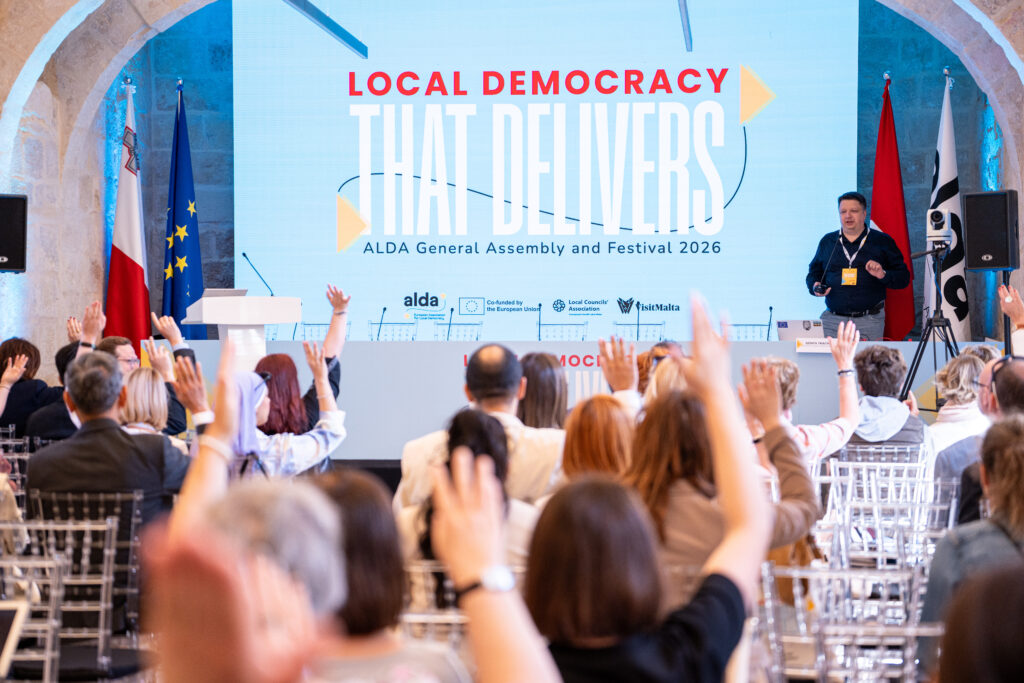
The third and final day of the ALDA Assembly and Festival 2026 “Local Democracy that Delivers” brought together local authorities, civil society organisations, researchers, practitioners, and international experts for a dynamic programme of discussions, workshops, and collaborative sessions focused on the future of democracy at local level.
The final day explored some of the most pressing challenges and opportunities facing democratic governance today — from artificial intelligence and youth participation to EU enlargement, water governance, and partnership-building.
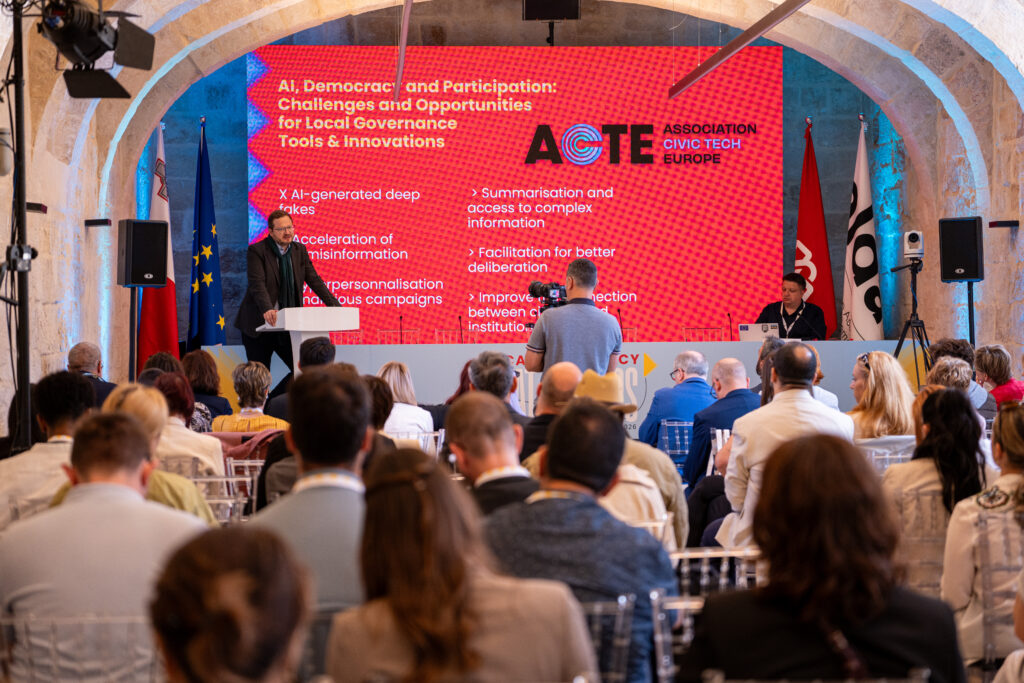
AI, Democracy and Participation: Challenges and Opportunities for Local Governance
The day opened with a high-level discussion on the relationship between artificial intelligence and democracy, building on ALDA’s growing work within the Digital & Innovation Hub and recent initiatives such as the March 2026 workshop “Ethical AI in Local Governance”. Moderated by Denys Tkachov, Member of the ALDA Scientific Committee, the session explored how AI is already transforming local governance, citizen participation, and public services, while also raising critical concerns around bias, disinformation, polarisation, and democratic accountability.
Opening remarks by Nataša Vučković, President of ALDA, highlighted the importance of ensuring that technological innovation remains human-centred and aligned with democratic values. Participants discussed the implications of the EU AI Act, the role of initiatives such as the Democracy Shield, and practical experiences from ALDA projects including Hatedemics and Media4EU. Experts including Patrick Molinoz, Alexis Prokopiev, Marco Guerini, Nino Tvaltvadze, Eszter Hartay, and Ivana Velkova contributed to discussions on democratic safeguards, ethical digital transformation, and the need for inclusive AI governance frameworks.
The session concluded with reflections on the creation of an ALDA AI Task Force and future international cooperation opportunities linked to global discussions on AI and democracy.
Designing ALDA’s Youth Political Agenda 2026–2028
At the same time, ALDA’s Youth Empowerment & Education Hub led a participatory session dedicated to shaping ALDA’s Youth Political Agenda for 2026–2028. Facilitated by Alexandre Météreau, ALDA’s Coordinator of the Youth Hub & Policy Officer,the session focused on strengthening the political voice of ALDA’s network on youth participation, civic engagement, and education at European level. The discussion featured contributions from Ana Maria Rodrigues, Deputy Mayor of Valongo and ALDA Youth Hub Co-Chair; Rareș Voicu; and Miriam Teuma, CEO of Malta’s Youth Agency.
Participants worked collectively to identify advocacy priorities, map strategic alliances, and establish the foundations for a structured Youth Hub Advocacy Committee, reinforcing ALDA’s commitment to youth participation in democratic processes.
Local Democracy Shaping Europe’s Next Enlargement
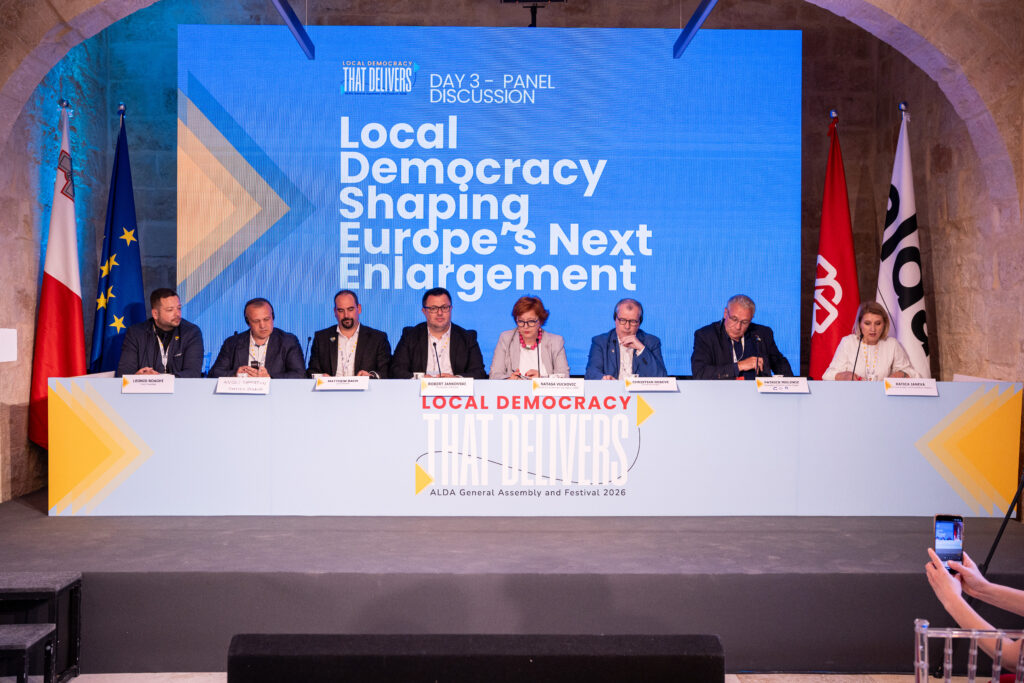
Another key session of the day focused on the future of EU enlargement and the role of local authorities in supporting democratic transformation and European integration. Moderated by Katica Janeva, Head of Unit Western Balkans, the panel brought together speakers from the Western Balkans, Ukraine, Moldova, and European institutions to discuss how local governance reforms, decentralisation, and multilevel cooperation can strengthen democratic resilience across candidate countries.
The session highlighted the importance of cooperation between local authorities, civil society, and European institutions in supporting democratic reforms and strengthening local governance capacities throughout the enlargement process.
Building Partnerships and Networking – Meet, Connect, Collaborate
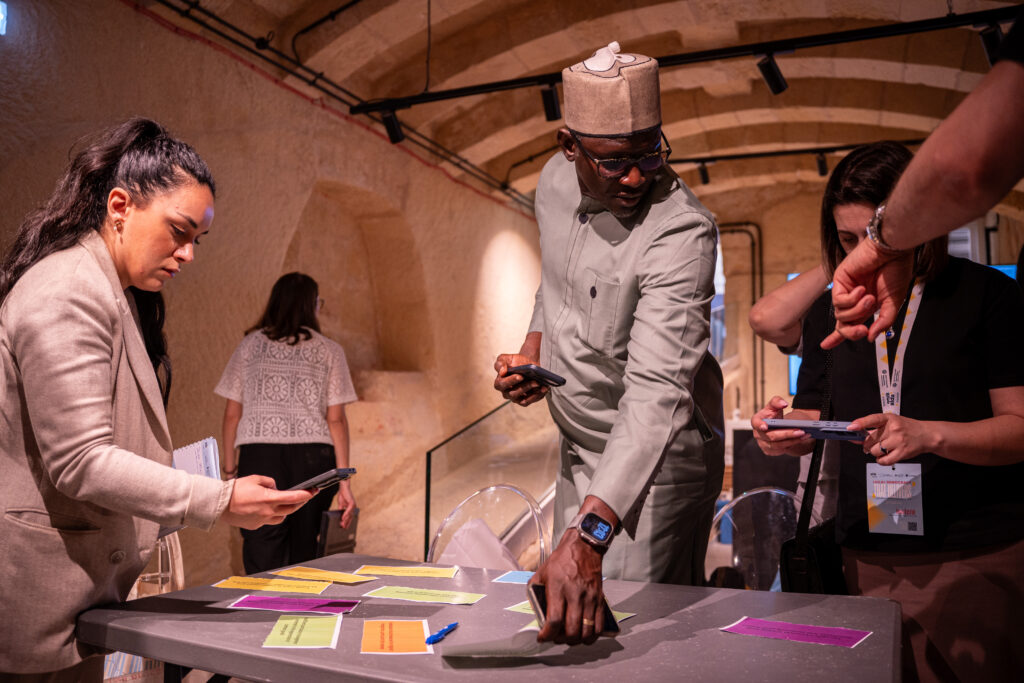
The afternoon continued with an interactive networking and project design session led by ALDA’s Fundraising and Project Design Department. Facilitated by Marco Boaria, Executive Director and Deputy Secretary General of ALDA, Anna Ditta, Head of the Fundraising & Project Design Department and ALDA project designers Deborah Anzile, Silvia Anselmi, Alma Bustamante, and Linda Rombolà, the workshop encouraged participants to transform shared territorial challenges into collaborative project ideas.
Through participatory exercises, matchmaking activities, and project pitches, participants explored opportunities for future partnerships, funding, and cross-sector cooperation.
From Blue Economy to Local Democracy: Engaging Communities in Water Governance
The Environment & Climate Hub hosted a session dedicated to participatory approaches to water governance and sustainable blue economy development. Introduced by ALDA Project Manager, Valeria Fantini and moderated by Alice Fantin, the discussion explored how local communities can play a central role in shaping environmental governance and sustainable resource management. Speakers included Alessandro Silvestri, Elisa Volpin, and Dženana Dedić, who shared experiences related to innovation ecosystems, community-led water governance, and the preservation of water heritage.
AI in Local Governance Training: From Smart Cities to Wise Cities
The final workshop of the day returned to the topic of artificial intelligence with a practical training session entitled “Wise Cities, Not Just Smart Cities: Turning AI Challenges into Local Opportunities.”
Led by Denys Tkachov and Kirsi Verkka, ALDA Advisory Board member, the interactive training encouraged participants to reflect on how AI can strengthen democratic participation, transparency, inclusion, and trust at local level. Through simulations, debates, and thematic workshops connected to ALDA’s thematic hubs, participants worked on concrete democratic challenges linked to civic engagement, migration, youth participation, gender equality, climate transition, and territorial development. The session also contributed to the drafting of ALDA’s emerging Local Democracy AI Manifesto.
Strengthening International Cooperation
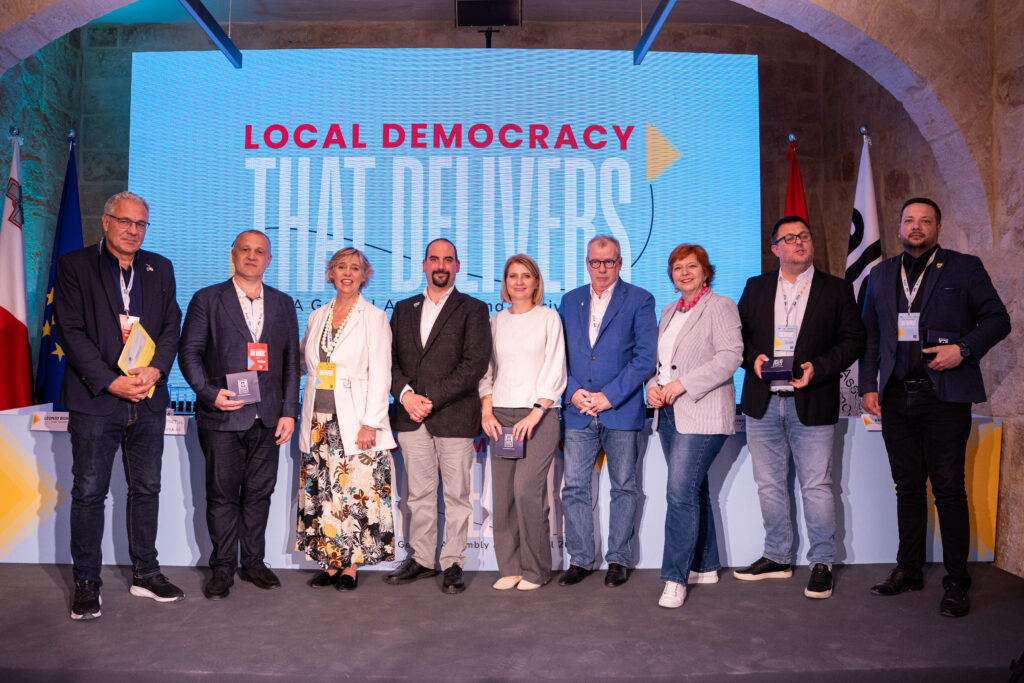
Another important milestone of the final day was the official signature of two Memorandums of Understanding between ALDA and ICLEI Europe, as well as with ACTE, Association Civic Tech Europe.
These agreements mark an important step in reinforcing strategic cooperation and building new synergies around sustainable local development, democratic innovation, citizen participation, and territorial cooperation. By strengthening partnerships with key European networks, ALDA further expands its collaborative ecosystem and its capacity to support local authorities and civil society actors across Europe and beyond.
Closing Remarks
The third day, and the ALDA General Assembly and Festival 2026 as a whole, concluded with closing remarks by ALDA Secretary General, Antonella Valmorbida, who thanked participants, speakers, partners, and members for their active engagement throughout the event.
She highlighted how the discussions, ideas, and collaborations developed over the three days demonstrated the strength and diversity of the ALDA network, reaffirming the organisation’s collective commitment to democracy, participation, cooperation, and local governance.
As the Festival came to a close, one message clearly emerged: local democracy continues to be one of the strongest spaces for resilience, innovation, and hope in Europe and beyond.
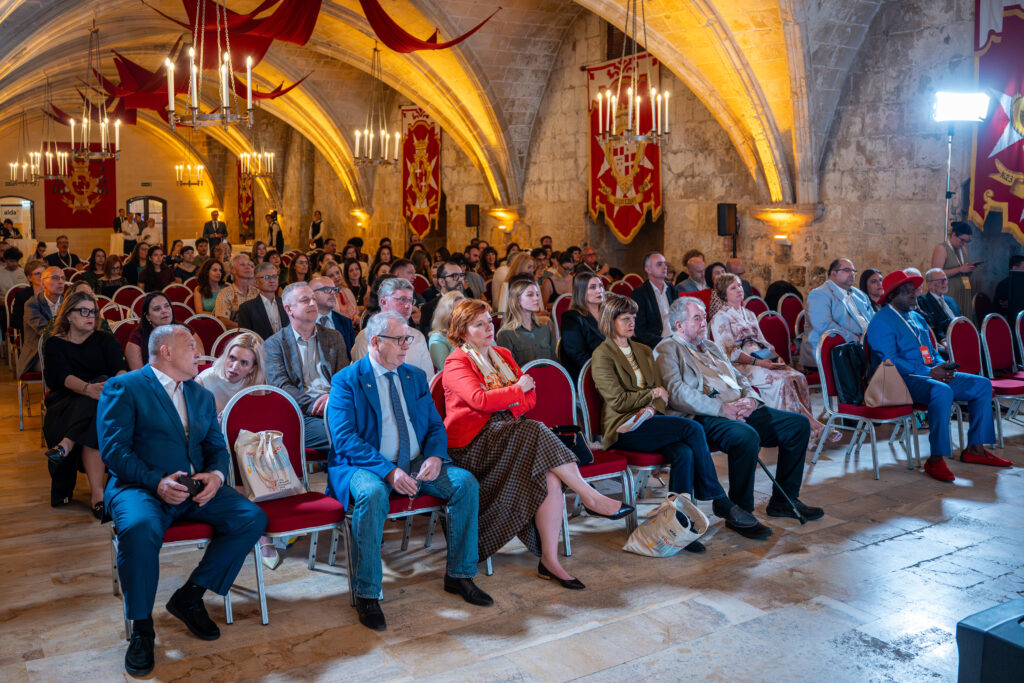
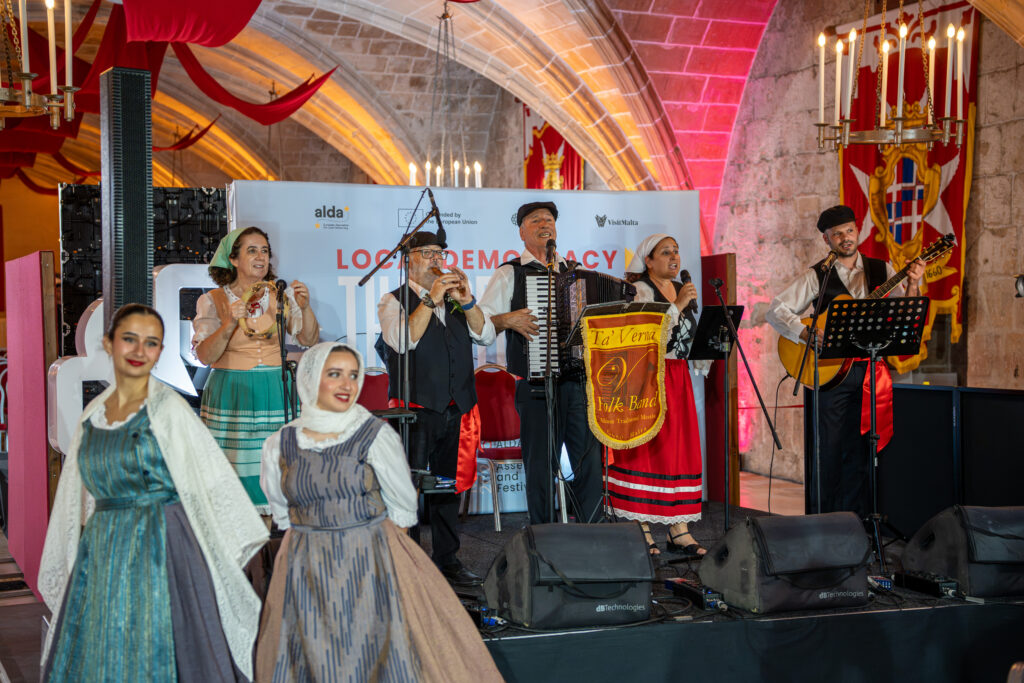
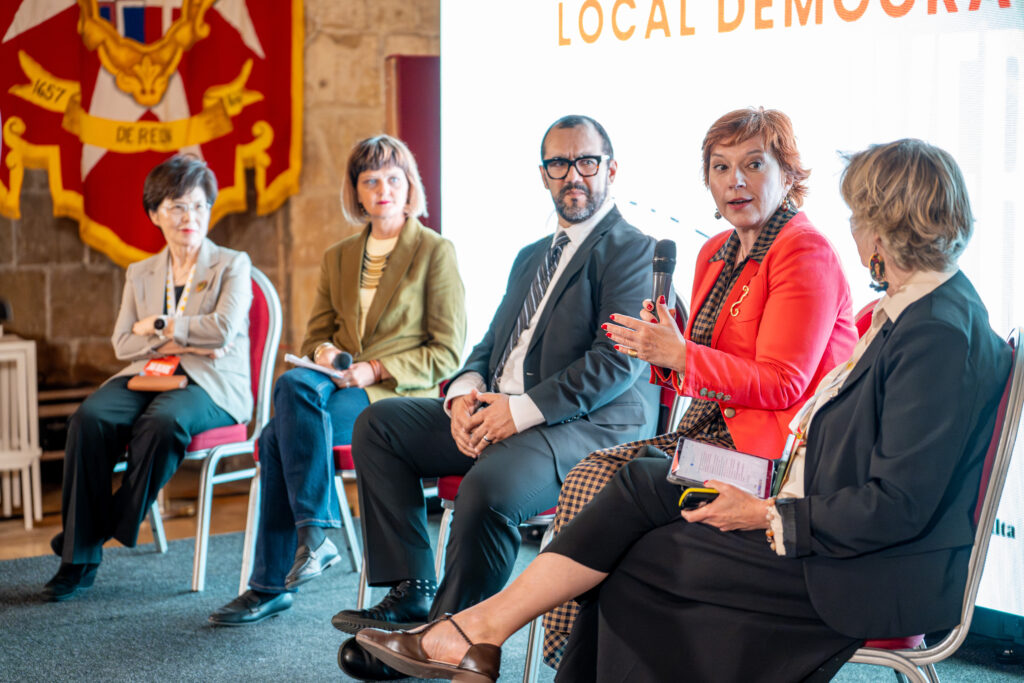
The evening of 13 May 2026 marked a particularly significant moment for ALDA. In the prestigious setting of the Mediterranean Conference Centre in Valletta, and within the framework of the ALDA General Assembly and Festival 2026 “Local Democracy that Delivers”, ALDA officially launched its new Centre of Expertise on Participative Local Democracy.
This milestone represents a new chapter in ALDA’s journey, building on nearly 30 years of experience in promoting local democracy, citizen participation, and civil society empowerment across Europe and beyond. Since its establishment, ALDA has implemented more than 600 projects in over 45 countries, becoming one of the leading international networks working to strengthen participatory governance and build more inclusive, transparent, and resilient local democracies.
The new Centre aims to become a transversal platform connecting ALDA’s thematic and regional hubs, while reinforcing the organisation’s advocacy, training, project implementation, and knowledge-sharing capacities. The initiative will also strengthen links with the Local Democracy School and support the launch of a dedicated alumni network, further expanding ALDA’s democratic community.
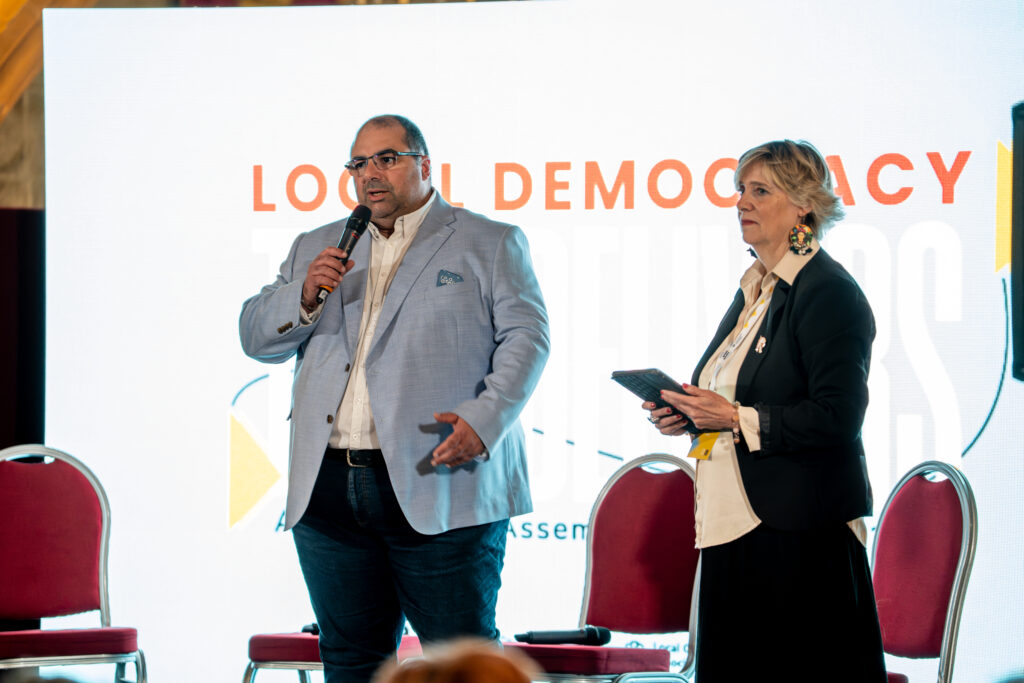
The event was opened by Antonella Valmorbida, Secretary General of ALDA and Mario Fava, President of the Local Councils’ Association Malta, who highlighted the importance of strengthening democratic participation at local level in a time marked by growing social and political challenges.
During her intervention, Antonella Valmorbida underlined how local democracy today represents one of the strongest spaces of democratic resilience:
At a time when democracy is facing increasing pressure both from within and outside Europe, local democracy remains one of the strongest spaces of resilience. Through this Centre, ALDA aims to bring together experiences, practices, and people committed to strengthening participatory democracy and inclusive governance.
The event also featured video messages from Roberta Metsola, President of the European Parliament, and Anu Juvonen, Executive Director of Demo Finland and President of the European Partnership for Democracy, both reaffirming the importance of civic participation, democratic innovation, and multilevel cooperation in safeguarding democratic values across Europe and globally.
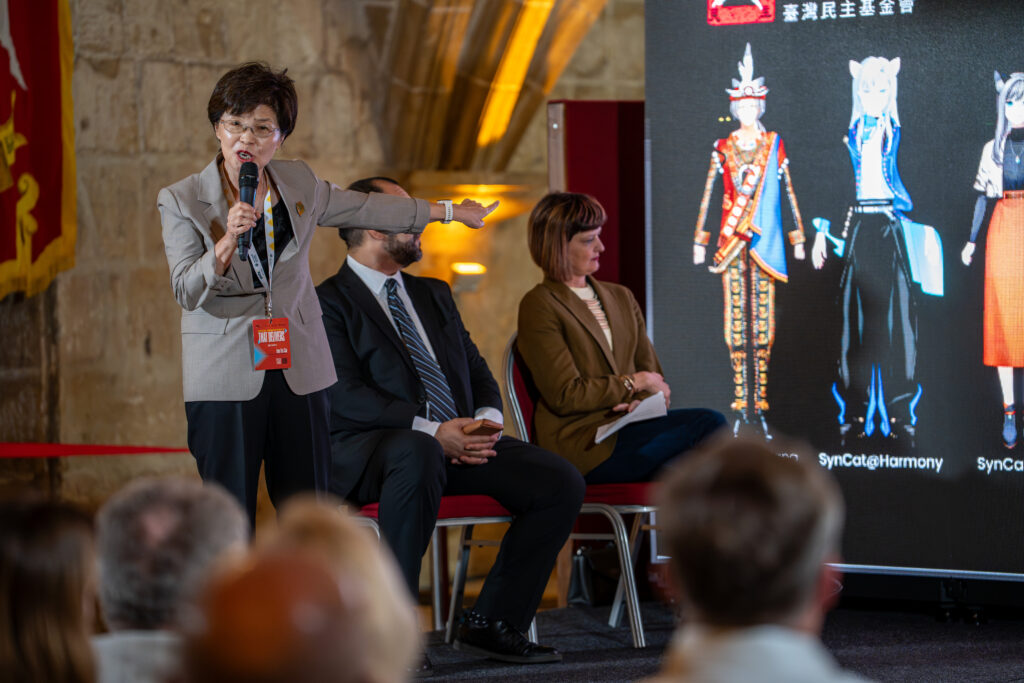
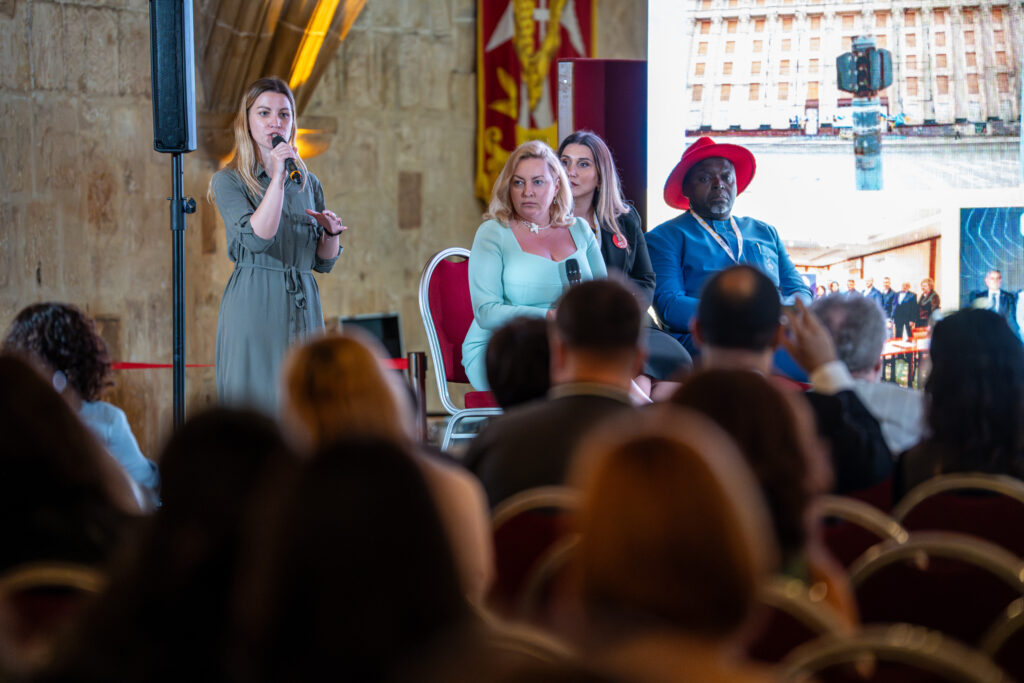
The event gathered a distinguished panel of high-level speakers from international institutions, local authorities, academia, and civil society organisations worldwide. Among them were Nataša Vučković, President of ALDA and Director of the Center for Democracy Foundation; Enrique Bravo-Escobar, Senior Programme Officer for Core Strategy and Engagement and Democratic Governance and Participation Lead at the National Endowment for Democracy; Maddalena Alberti, Director of ADL a Zavidovići; Liao Da-Chi, President of the Taiwan Foundation for Democracy; Roger Tafam, Mayor of Bafoussam and President of IOPD Africa; Nazlı Akyüz, Chairperson of the EU and Foreign Relations Commission of the Istanbul Metropolitan Municipal Assembly; Tetiana Yehorova-Lutsenko, President of the Kharkiv Regional Council and President of UAROR – Association of Regional Councils and Districts of Ukraine; Kirsi Verkka, Citizens Engagement Officer of the City of Helsinki; and Paolo Graziano, Professor at the University of Padova, Faculty of Political Science.
Through the launch of the Centre of Expertise on Participative Local Democracy, ALDA strengthens its long-standing commitment to democratic innovation, citizen participation, and inclusive governance. More than a new initiative, the Centre represents a collective space for knowledge, exchange, and action, designed to connect experiences, empower local actors, and reinforce democratic resilience across Europe and beyond.
The second day of the ALDA General Assembly and Festival 2026, “Local Democracy that Delivers”, officially opened with the Ordinary General Assembly of ALDA. The Assembly represents a key moment for the Association and an important opportunity to collectively reflect on the future of local democracy in Europe and beyond.
The session kicked-off with welcoming remarks from Nataša Vučković, President of ALDA, Antonella Valmorbida, ALDA Secretary General, and Mario Fava, President of the Local Councils’ Association Malta and co-organiser of the event. ALDA President introduced the Manifesto for a Local Democracy that Delivers, a strategic and political document reaffirming the importance of local governance, citizen participation, and democratic resilience in an increasingly complex global context.
The opening session also featured high-level institutional contributions, including a video message from Glenn Micallef, Maltese Commissioner responsible for intergenerational fairness, youth, culture and sport alongside speeches by Patrick Molinoz, Vice-President of the Region of Bourgogne-Franche-Comté – Member of the European Committee of the Regions and Konstantinos Koukas, Vice-President of the Congress of Local and Regional Authorities and Rapporteur on the New Democratic Pact for Europe at the Council of Europe. Their interventions highlighted the essential role played by local authorities and civil society organisations in safeguarding democratic values, fostering participation, and responding to today’s societal challenges.
As highlighted by Konstantinos Koukas:
The link between the Congress and ALDA is both historic and strong. The Congress supported the creation of the first Local Democracy Agency in 1993, laying the foundations for a network dedicated to rebuilding trust and fostering democratic governance at local level. This founding vision remains highly relevant today.
He further stressed the importance of democratic innovation in strengthening citizens’ trust in institutions:
Democratic innovation is not an abstract concept. It is needed to bring governance closer to citizens, make it more responsive, and build trust. This is exactly what ALDA has been promoting for years. Through its network of Local Democracy Agencies, ALDA has supported participatory governance, civic engagement, and cooperation between local authorities and civil society.
Throughout the morning, ALDA members reviewed and approved the organisation’s institutional and financial documents, including the Minutes of the 2025 General Assembly, the 2025 Activity Report, the Treasurer’s Report, and the Programme and Budget for 2026. A video presentation showcased key achievements and activities carried out throughout 2025 across ALDA’s network, regional hubs, and thematic hubs, reflecting the association’s continued growth and impact in promoting local democracy and citizen participation across Europe and neighbouring regions.
Particular attention was devoted to the implementation of ALDA’s 2024–2028 Strategy, presented by Antonella Valmorbida, Secretary General of ALDA. The presentation outlined the organisation’s strategic priorities for the coming years, with a focus on democratic resilience, youth engagement, inclusive governance, civic participation, and strengthening cooperation between local authorities and civil society ecosystems.
The Extraordinary General Assembly followed the Ordinary one, and addressed amendments to ALDA’s Statute, reinforcing the Association’s governance framework and supporting its continued evolution as a growing international network.
One of the most significant moments of the Assembly was the approval of the Manifesto for a Local Democracy that Delivers, reaffirming ALDA’s collective commitment to democracy, participation, inclusiveness, and multilevel cooperation. The document emphasises that democracy must deliver tangible results for citizens and that local governance remains one of the most effective levels for rebuilding trust between institutions and communities.
The event also marked the official signature of membership with UAROR – Association of Regional Councils and Districts of Ukraine, represented by its President Tetiana Yehorova-Lutsenko. This important step further strengthens ALDA’s longstanding commitment to supporting democratic resilience, decentralisation, and local governance in Ukraine.
The Assembly concluded with the delivery of membership certificates to new members joining the ALDA network, further expanding a community that today counts more than 300 members across over 45 countries.
Through this General Assembly, ALDA once again reaffirmed its role as a key actor promoting local democracy, citizen participation, and cooperation between local authorities and civil society, at a time when democratic values require renewed commitment and collective action.
Yesterday marked the vibrant opening of the ALDA General Assembly and Festival 2026. Under the overarching theme of “Local Democracy that Delivers”, more than 200 delegates, experts, and local administrators from over 28 countries gathered at MICAS, Malta. The event kicks off three days of debate and participation that will shape perspectives on local democracy across Europe and the world. From the very outset, the assembly has demonstrated that “being together” is not merely a choice, but a strategic necessity for building resilient communities.
Shared Experiences: Housing and Gender Inclusion
The morning sessions addressed the fundamental rights that underpin stable societies. The Territorial and Local Development Hub delved into the housing crisis, shifting the focus from simple “affordability” to the broader concept of “livability.”
“People do not always aim to own, but they aim to live in a lively, vibrant, safe, and healthy place,” noted Matthew Zerafa, CEO at the Malta Housing Authority and member of the Housing Advisory Board of the EU Commission, highlighting that housing serves as the gateway to all other rights. This dialogue was guided by Rebecca Marconi, Project Manager at ALDA and further enriched by the expertise of Daniela Ciaffi, TeLD Hub co-chair and Vice-President of Labsus; Mikel Berra, Project Officer for Digital Metropolis at Àrea Metropolitana de Barcelona; Mihai Cebotar and Bogdan Cazacu of Primăria Municipiului Chișinău; Daniela Patti, Managing Director of Eutropian; and Siro Ciarimboli, Research Collaborator at the Istituto per la Ricerca Sociale (IRS).
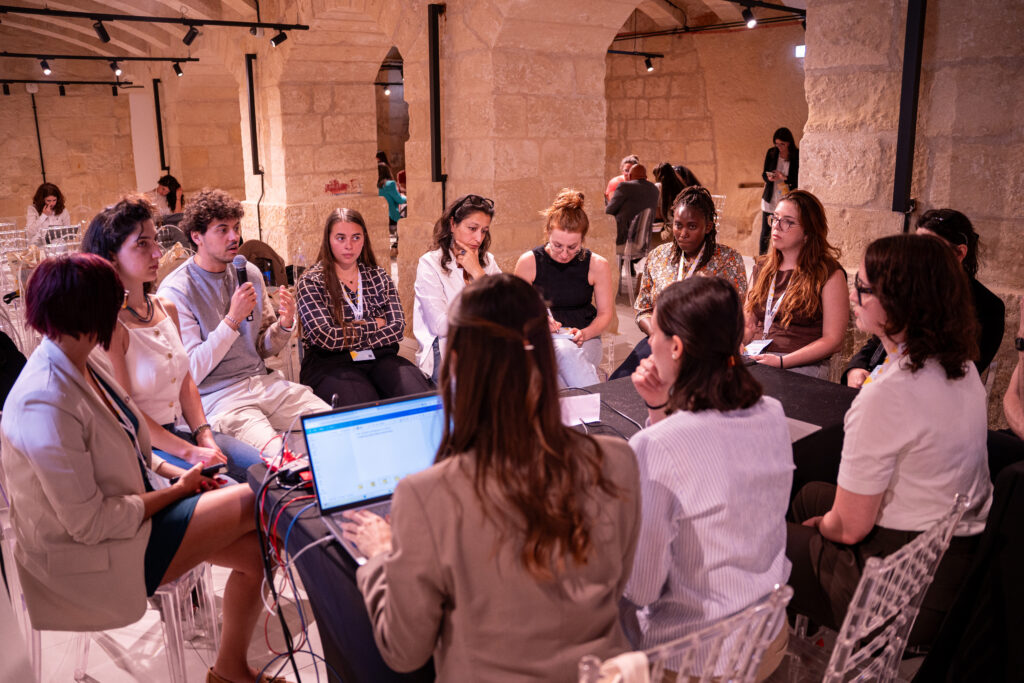
Simultaneously, the Gender, Inclusion, and Human Rights Hub broke down the “invisible barriers” within institutions through a dynamic workshop format that encouraged peer-to-peer exchange. Participants explored practical toolkits for equity, reinforcing the message that inclusion must be embedded across every department. This session featured key insights from representatives of the Diputaciò de Barcelona, alongside Camilla Vedovato, Dorothee Fischer, Marzia Cescon, and Sara Afendi.
Migration, Youth, and Resilience: from apathy to empowerment
In the afternoon, the Migration Hub championed a rights-based approach where local authorities act as the primary engines of integration. The discussion featured Geraldine Guille from the European Union Agency for Fundamental Rights (FRA), Jordi Cuadras of the Fons Catala for Cooperation and Development (FCCD), Dr Cristiana Di Pietro from LUMSA University, Palina Brodzik, Director of the Free Belarus Centre, and Mohammed Mustafa from ALDA. “Migration governance works best when grounded locally and built on a multi-stakeholder approach,” Cuadras emphasised.
In the Youth Empowerment & Education Hub, the tone was one of urgent transformation. While Katica Janeva, ALDA Coordinator for the Western Balkans, warned of the dangers of institutional apathy in that region, and Fanny Dabertrand, from the European Commission, explained the youth programmes, voices from Yuliya Ralko of the Belarusian National Youth Council “RADA”, and Giulia Sostero, Project Manager at ALDA for the ASWAT Hub, highlighted how young people are innovating even in exile or under crisis. They demanded a seat at the table not as a symbolic gesture, but as genuine partners.
A powerful highlight was the Ukraine Hub, which reframed the war-torn nation not just as a recipient of aid, but as a source of innovation. Ukrainian partners presented practical governance adaptations developed under fire, offering inspiration for European municipalities on how to maintain services and democratic integrity during extreme crises.
Eco-anxiety and Collaboration Opportunities
A significant portion of the day at MICAS was dedicated to the psychological and social impact of the environmental shift. The session explored eco-anxiety and how to prevent it from turning into “climate paralysis,” noting that 93% of EU citizens now view the climate crisis as a serious threat. To combat this, Lizzy Catherine Galiazzo of ALDA Italia introduced the project “Let’s change the air, not the planet,” funded by the Italian Buddhist Union (UBI), which uses art and performance to engage youth. Carlotta Segre of the European Buddhist Union (EBU) presented the Eco Dharma Network and its upcoming 2027 retreat, while Francesca Lippi of the Gozone Association explained the Living Lab Model, a co-design approach that builds community resilience by reconnecting people with nature.The day also featured a specialised session on “Unlocking Opportunities,” focusing on the practicalities of funding and strategic partnerships. This session was guided by Elena Riboldi, Membership Officer; Maddalena Alberti, ALDA Governing Board Member and Chair of the Migration Hub; Maria Vittoria Traforti, Director and Deputy Secretary General Assistant; Denys Tkachov, Member of the ALDA Scientific Committee; and Lianne Cassar, Executive Secretary of LCA.
Strengthening the Democracy Shield
In a dedicated and detailed session on Local Democracy Resilience, a high-level panel examined how local governments can withstand modern threats. Antonella Valmorbida, Secretary General of ALDA, closed the thematic sessions by introducing the concept of the “Democracy Shield.” She stated that “the local level is the place where we can have less polarisation… there is a civic dimension to the democracy shield,” framing local proximity as the ultimate defence against disinformation and external interference.
The discussion featured a prestigious panel including Mrs Shandana Mohmand from the Institute for Development Studies (UK), Mr Etienne Soulat of the German Marshall Fund, and Mr Sergio Arredondo, Secretary General of FLACMA. They were joined by Mr Aliou Gning, Mayor of the Municipality of Sandiara in Senegal; Mr Martin Muehleck from the European Commission’s Ukraine team; Mr Taras Dobrivskyi, Executive Director of the All-Ukrainian Association of Local Governments; Mr Arije Antinori, an expert on radicalisation and AI; and Mrs Dzenana Dedic, Delegate of the Local Democracy Agency Mostar.
Looking Ahead Day 1 proved that the ALDA network is ready to deliver. As the Festival continues, the focus remains on a democracy that doesn’t just promise, but acts and delivers.
From 6 to 8 May 2026, Marco Boaria, Deputy Secretary General of ALDA, and Anna Bustamante, Project Designer Latin America, took part in the X Conference of the Observatory of Decentralised Cooperation EU–Latin America and the Caribbean, held in Barcelona and promoted by the Diputació de Barcelona (ALDA Governing Board Member). The event represented a key opportunity to deepen exchanges and reinforce strategic relations with Latin American institutions, organisations and local authorities, within the framework of ALDA’s growing engagement in the region.
The participation of ALDA’s delegation comes as part of the ongoing development of the Latin American geographical pathway that the Association has been progressively strengthening in recent years. The conference gathered representatives of local and regional governments, civil society organisations, academia and international institutions from both Europe and Latin America, creating an important platform for dialogue on the future of decentralised cooperation in a rapidly changing global context.
Particular attention throughout the conference was devoted to two major thematic priorities for the Latin American continent: gender equality and environmental sustainability. Discussions highlighted the urgent need to reinforce local public policies capable of addressing social inequalities, climate challenges and democratic participation through strengthened territorial cooperation between Europe and Latin America. These priorities strongly resonate with ALDA’s current strategic orientations and with the activities being developed under its Latin American engagement.
The mission also provided an important occasion to further consolidate relations with the Diputació de Barcelona, one of the leading European institutions in the field of decentralised cooperation. Several exchanges focused on the possibility of developing future joint strategies and collaborative initiatives between the Province of Barcelona and ALDA in the coming years, particularly regarding cooperation with Latin American local authorities and civil society actors.
The Observatory itself represents one of the most relevant international reference spaces for decentralised cooperation between the European Union and Latin America. Created in 2005, it has become a major hub for analysis, training, exchange of practices and policy reflection on territorial cooperation and international action by local governments.
More information about the Observatory, including the conference programme and all reference documents discussed during the event, can be found on the official website of the Observatory of Decentralised Cooperation.
Additional information on the 2026 Barcelona Conference is available here.
On 30 April 2026, the Matemù Centre in Rome hosted the presentation of an innovative and vital tool for inclusion and professional guidance: the new Online Course on the Italian Labour Market.
This educational initiative was developed within the AMIL Project (Alliance Multi-stakeholder for Migrants Integration and Labour), and the course, initially planned as in-person only, will be fully accessible on Speha Fresia’s “Accademia” platform from June 2026.
The Goal of the Initiative
This educational proposal aims to guide third-country nationals through a structured and informed pathway towards employment. At the heart of this distance-learning journey lies an extremely practical and visual key concept: the “Work Roadmap“. The world of employment is a complex environment, and finding a job is not a random event but a dynamic process requiring planning, awareness, and a well-defined strategy. For this reason, the AMIL course structures the entire guidance process around five fundamental questions specifically designed to help candidates build a genuine, personalised «Action Plan» for successful integration into the workforce.
Shaping the Action Plan – 5 questions to be answered
Can I Work? Before starting an active search, it is crucial to have full awareness of one’s legal, physical, and basic preparation status. The module reminds participants that regular employment requires essential conditions: no health issues preventing activity, a residence permit that allows work, a valid identity document, a tax code, and a stable address. Furthermore, it highlights the need to have a bank account for receiving wages and, fundamentally for integration, a certified level of Italian language proficiency of at least A2, combined with reading and writing skills.
What Kind of Work Can I Look For? Guidance is based on identifying industries or companies potentially interested in their skills. This choice will depend on strictly personal factors, such as their hourly availability and willingness to travel, their level of education, and their complete skill set.
Who Can Help Me Find a Job? The course advises against acting in isolation, suggesting instead to evaluate offers in the local area by studying existing opportunities. It teaches how to actively leverage one’s personal network and to rely on the support offered by various public and private structures dedicated to employment services.
While Waiting to Find a Suitable Job for Me, What Can I Do? The AMIL project strongly emphasises the importance of continuous updating and lifelong learning. This waiting period must not be passive but must be a dedicated time to increasing one’s education level, enriching professional skills, and improving one’s citizenship status.
What Do I need to Do When I Find Work? Since every role fits within an «organised system», the course explains the importance of thoroughly understanding national laws, tools, and the specific rules of the environment one is entering. The concluding actions of this pathway consist of informed signing of the contract, integrating into the company structure, and finally, starting to work.
Answering these five questions with honesty and clarity allows for creating a clear and constantly updateable map of one’s professional life.
The course is free and in Italian with a virtual tutor available in the following languages: Arabic, French, English, and Spanish, to facilitate accessibility for all interested parties.
Are you ready to map your route towards a new professional future?
ALDA’s Migration hub recently convened a members’ consultation meeting to contribute to the development of its Migration Flagship 2026, bringing together local authorities, civil society organisations, and migrant-led initiatives from across Europe. Since 2024, ALDA has been structuring this process through annual consultations on key migration issues with its members, combined with the mapping of their expertise through targeted surveys. On this basis, ALDA updates its flagship strategy each year to reflect members’ priorities, respond to emerging European developments, connect EU-level policies with local realities, and integrate findings from EU-funded projects.
As part of this annual consultation process, ALDA Migration Hub and Maddalena Alberti (GB member and Migration Hub Chair) invited members to contribute their insights at a particularly crucial moment for EU migration and anti-racism policies. The consultation focused on the implications of the forthcoming EU Migration and Asylum Strategy 2026–2030 and the EU Anti-Racism Strategy 2026–2030, both expected to introduce significant policy shifts.
Discussions highlighted a growing tendency towards securitisation, digitalisation, migration diplomacy, and labour-market-oriented approaches, often at the expense of rights-based and inclusion-focused frameworks. Members stressed that anti-racism efforts remain largely non-binding and insufficiently connected to migration governance, while the implementation of the EU Pact on Migration and Asylum is already generating administrative uncertainty, reduced individual assessment in asylum procedures, and an increase in situations of legal limbo.
Across different national contexts, members also pointed to concrete challenges, including reduced funding for integration services, fragmentation of local coordination systems, and increasing pressure on municipalities tasked with border management. At the same time, examples of good practices—particularly in linking integration to housing, employment, and community-based initiatives—demonstrated the continued potential for inclusive local governance.
Participants emphasised that migrant people should not be treated merely as beneficiaries, but as active stakeholders in policy design and implementation.
In this regard, migrant-led networks were recognised as key actors in bridging information gaps, supporting civic participation, and countering miscommunication, particularly in sensitive areas such as return policies.
The consultation also raised important concerns regarding the expansion of digital border systems and the use of AI in migration management. Risks related to transparency issues and reduced human oversight were identified as critical areas requiring closer monitoring and advocacy.
Looking Ahead
ALDA will build on these insights to strengthen its role as a coalition platform, promoting local-based approaches, fostering multi-level cooperation, and supporting the meaningful inclusion of migrant-led organisations in governance processes.
👉 The outcome of this consultation will directly feed into ALDA’s Migration Flagship 2026 and ongoing EU advocacy work.work.
In March, at Casa di Giorgia – a center that welcomes migrant women, either alone or with children – an 8-session training cycle was held focused on labour market integration.
The activity was implemented within the framework of AMIL – Alliance Multi-stakeholders for Migrants Integration and Labour, the project that promotes sustainable integration pathways for third-country nationals through the MEIC methodology (Migrants Economic Integration Cluster).
CIES Onlus, the lead partner of the project, presents below the features and implementation methods of this pathway.
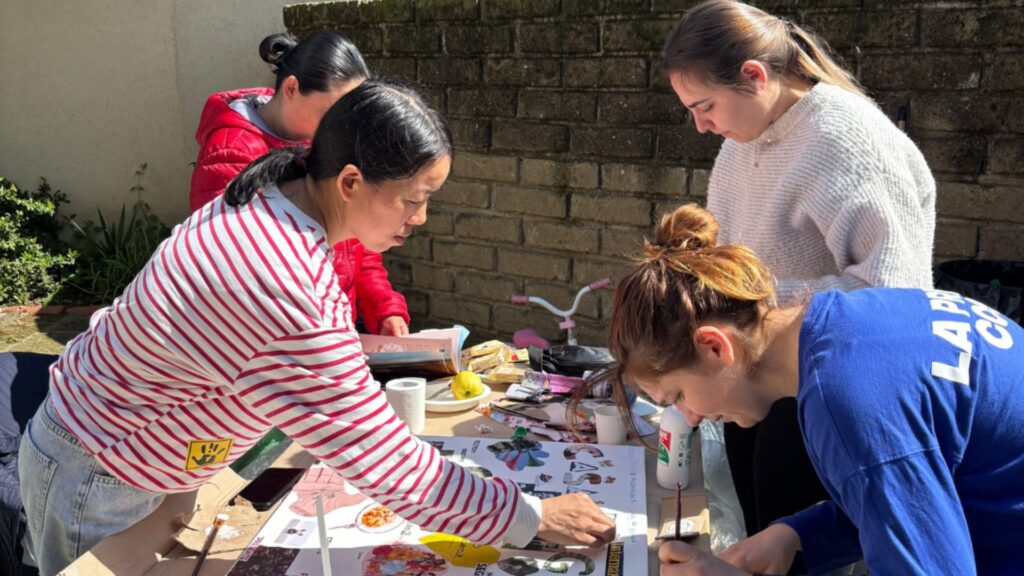
The training programme, completely free of charge, is aimed at strengthening the employability of migrant women through activities and creative workshops. To facilitate participation, the AMIL project chose to carry out the activities directly within the centre, responding to the needs of the beneficiaries.
The pathway was structured into three main areas:
An employability workshop dedicated to exploring the essential tools for entering the labour market in Italy.
A personal empowerment pathway, aimed at self-awareness, the recognition of strengths and areas for improvement, and the definition of strategies to achieve personal goals.
An artistic-expressive workshop, designed to develop soft skills that are valuable in the professional sphere.
This last workshop transformed the space into an environment of expression, connection, and shared imagination. Through simple tools such as painting and decoupage, it was possible to create an accessible setting even in the presence of language barriers, allowing participants to express themselves without the need for words. Visual language made it possible to share complex experiences, encouraging the emergence of emotions and spontaneous dialogue among participants.
The pathway accompanied women from diverse backgrounds and countries – including China, Brazil, Pakistan, Cuba, and several African countries – in a progressive narrative journey that passed through personal roots, lived experiences in the present, and aspirations for the future.
All workshops were conducted using an interactive and non-formal approach, which made it possible to overcome language barriers and foster active and inclusive participation. The deepest value of the experience emerged in its relational dimension. A strong capacity for mutual care developed, expressed through spontaneous gestures of welcome and attention, transforming the workshops into an authentic space of human and social exchange.
Final Thoughts
The experience confirms how, in reception and integration pathways, the connection between people, empowerment, and the construction of future perspectives are central. In particular, it highlights the fundamental role of non-formal education and interaction as tools to overcome linguistic and cultural barriers. It also represented also a valuable exchange for trainers and operators of the centre, offering the opportunity to closely observe the daily dynamics of the reception context and training activities.
THE:PLACE – Türkiye Hand in hand with Europe: Programme for Local Authorities and Civil society Exchange is a multi-year programme funded by the Mercator Foundation and managed by ALDA and MAD – Center for Spatial Justice.
This programme is now open for applications from Civil Society Organisations based in Türkiye, the EU and the enlargement countries (Albania, Bosnia and Herzegovina, Moldova, Montenegro, North Macedonia, Serbia and Ukraine).
It calls for collaboration with Local Authorities through an Associated partner commitment: if you are reading this as a Local Authority, we invite you to contact a Civil Society Organisation you would like to collaborate with and invite them to apply.
An Infoday has been organised to present the programme in detail on Monday May 18th at 14:00-16:00 CEST / 15:00-17:00 TRT to which you can register here.