In the last couple of months, the project’s consortium has organized and implemented several initiatives to strengthen the dynamics of dissemination and, through the presentation of the Intellectual Outputs produced, reach more direct and indirect beneficiaries.
Right after the summer break, the partners met in Seville for the last Transnational Project Meeting where they discussed the development of the project’s activities and results, exchanged views on the situation in their respective home countries and talking together about the finalisation of intellectual outputs. Specifically, dissemination and communication issues were addressed. ALDA and the other partners created a plan for more efficient and effective dissemination of project outputs and management of the Facebook page.
Intellective outputs and interactive platforms for community workers
More recently, in the months of October and November, project’s partners have organized multiplier events in Italy (Lamezia Terme), UK (London) and Greece (Athens) to showcase the results produced. Moreover, the partners have hosted local pilot actions, with community workers, to test the effectiveness and the application of the Intellectual Outputs, in particular the e-Learning Platform for the Upskilling and Empowerment of the Target Group.
Lastly, on November 11th ALDA held an Interactive Webinar, with the collaboration of all partners, to present to a larger online audience the project itself and what has been produced in the last 2 years. The invite to the webinar was shared between ALDA’s and the other partners’ network. In this occasion the consortium was able to engage with associations working in similar fields and dealing with Erasmus+ projects.
The exchange of information and interaction between the participants made these experiences unique and useful for gaining further feedback and to implement the latest changes to the digital education platform.
The project is indeed coming to its finish line but given the great interest in the project we are trying to create all the conditions for a possible follow up and continuation of the collaboration.
On the 4th of April, the Vice-President ALDA Alessandro Perelli and the Director of the International Telematics University UNINETTUNO Professor Maria Amata Garito signed a cooperation agreement between the two institutions and launched their first common project, namely the new edition of the Master on-line in European Law and Policies.
Promoted by the International Telematics University UNINETTUNO in collaboration with the ALDA and the Italian Council of the European Movement. By combining the expertise of the network ALDA in the European context and the experience of UNINETTUNO in distance learning with six faculties and nine master’s degree courses and professional training courses and students from 40 different countries, the new cooperation agreement will lead to the development of other training opportunities tackling European themes and topics. In particular, besides the above mentioned Master, ALDA will develop a series of webinars focused on EU programs and funds, with special reference to the new programming period of the European Commission 2014-2020. Finally, ALDA and UNINETTUNO – through signing the agreement – have expressed their common interest to develop new and innovative transnational projects that are able to combine ALDA and commitment on European issues and the focus of UNINETTUNO on distance education.
The Association of the Local Democracy Agencies, LDA Osijek, LDA Sisak, LDA Verteneglio, Foundation for partnership and civil society development of the Istrian Region, AEGEE- Zagreb, Centre for Civil Initiatives (of the Network CEECN) are the initiators of the Croatian Alliance for the European Year of Citizens 2013. The first meeting took place in Zagreb on the 6th of November and confirmed this formal step. The Croatian Alliance for the European Year of Citizens 2013 will therefore officially registered within the National Platforms Alliances supporting the wide Alliance at the EU level.
The Secretary of ALDA, Ms. Paula Rauzan, Delegate of the LDA Sisak will coordinate the group of initiators. She was also accompanied by the Director of ALDA, Antonella Valmorbida and the Delegate of the LDA Osijek, M. Miljenko Turniski The initiators are now working for launching a vast campaign of mobilisation in Croatia that will engage, before the end of the month, the networks of civil society interested to work for the EYAC 2013. They will be proposed to work together to disseminate the Manifesto at the EU level and probably to adapt it to their national and local situation. It is also proposed to work on working groups and to develop common initiative to include more citizens of Croatia in EU policies. The Croatian Platform will be of particular interest because of the upcoming integration of the country into the EU. The Annual priority 2013 – Year of Citizens – will be then meaningful to launch a debate on European Citizenship for this new EU members. ALDA is also member of the EU steering Committee and Coordinator of WG1, as well as initiator of the Italian Alliance. Next 14th of November will take place in Rome (from 10:30 to 13:30 – Eurispes premises Via Orazio, 31) the second meeting of the partners. In this occasion will be adopted a declaration of intent of the Italian Alliance ECY 2013.
Oriano Otocan, ALDA President, and Antonella Valmorbida, ALDA Director and member of CIVICUS International Board, will be participating in the 2012 CIVICUS World Assembly (3 – 7 September 2012) in Montreal, Canada. In particular Mrs. Valmorbida will present ALDAs experiences on participatory governance at the workshop on “Good governance through citizen action” that will take place on 5 September (11.00-13.00), after the opening ceremony of the Assembly (9.00-9.30) and the first plenary session (9.30 – 10.45). In the panel also Mrs. Carmen Malena, Canada, Mehr Latif, Programme Manager, Asia Foundation, Pakistan and Mrs. Paola Margarita Q. Deles, Coordinator, People Power Volunteers for Reform, Philippines.
This session will share good practices and lessons in participatory governance from around the world and challenge participants to think beyond traditional forms of protest and activism to less familiar but potentially more impactful practices of ‘critical collaboration’ and participatory governance. As citizens, publicly denouncing injustices in society is an important first step towards seeking change, but it is not enough. Real change comes when citizens not only cry out in the streets, but claim their rightful place as active participants in processes of public governance and decision-making. In recent years, a wide and exciting array of ‘participatory governance’ approaches have been tried and tested around the world. From citizens’ juries, multi-stakeholder dialogues and integrity pacts to participatory budgeting, social audits and community scorecards, citizens and CSOs are creating a multitude of innovative ways to engage in ‘critical collaboration’ with government counterparts. The 2012 CIVICUS World Assembly will focus on defining a new social contract, through discussions on three key themes: changing nations through citizens, building partnerships for social innovation and redefining global governance. The 2012 Assembly will see the launch of a comprehensive, multi-stakeholder process, led by CIVICUS, on defining a new social contract, that will culminate in the presentation of recommendations to the United Nations in 2015. The World Assembly comes at a pivotal moment for citizens to redefine the relationships and conditions we want for a sustainable future in a changing world. Having a role in CIVICUS International Board, for ALDA means taking a further step to bring internationally the cause of its work: to improve citizens’ and civil society’s participation at the local level, working closely with local authorities, for development, democracy and respect of human rights.
CIVICUS Board of Directors has formally communicated that Antonella Valmorbida, Director of ALDA, has been welcomed as a new co-opted member of CIVICUS International Board. CIVICUS is an international alliance dedicated to strengthening citizen action and civil society throughout the world. The term of Antonella Valmorbida Board membership will be one year and three months, until the Board meeting in September 2013, when all of the current Board members’ terms will expire. Among the forthcoming engagements as member of CIVICUS Board is the attendance of the Board meeting in September during the CIVICUS World Assembly in Montreal, 3-7 September 2012.
CIVICUS, World Alliance for Citizen Participation, is an international alliance of members and partners which constitutes an influential network of organisations at the local, national, regional and international levels, and spans the spectrum of civil society. CIVICUS includes the following in its definition of civil society: civil society networks and organisations; trade unions; faith-based networks; professional associations; NGO capacity development organisations; philanthropic foundations and other funding bodies. CIVICUS has worked for nearly two decades to strengthen citizen action and civil society throughout the world, especially in areas where participatory democracy and citizens’ freedom of association are threatened. CIVICUS has a vision of a global community of active, engaged citizens committed to the creation of a more just and equitable world. This is based on the belief that the health of societies exists in direct proportion to the degree of balance between the state, the private sector and civil society. CIVICUS provides a focal point for knowledge-sharing, common interest representation, global institution-building and engagement among these disparate sectors. It acts as an advocate for citizen participation as an essential component of governance and democracy worldwide. CIVICUS seeks to amplify the voices and opinions of ordinary people and it gives expression to the enormous creative energy of the burgeoning sector of civil society.
The itinerary tour “On Albert Londres’ footsteps” will take place in August 2012 in several Balkan countries. This events is dedicated to promote reporting journalism among dispriviledged youth from France and Balkan countries. On 13 June, the France Balkans Network gathered in Saint-Denis, France, to discuss this forthcoming activity of the network. This project is organised within the multilateral decentralised cooperation programme for good governance in South-East Europe supported by the French Ministry of Foreign and European Affairs. The lead partners are the County Pays Vichy Auvergne and ALDA, the Association of Local Democracy Agencies. The main objective of this project is to revive Albert Londres’ (1884-1932) experience, born in Vichy, father of modern journalism and reporting, during his numerous investigation trips in the Balkans at the beginning of the 20th century. His story is aimed at stimulating the taste of adventure, curiosity and openness to other cultures among young people with talent for reporting but who do not have the opportunity to travel much and put their knowledge in reporting. By enabling local authorities, civil society organisations and territories from France and the Balkans to meet and exchange on joint projects, this programme supports the values of peace and intercultural dialogue, as well as promotes European integration of all the countries from South East Europe. Other partners which are involved in this adventure are the Regional Council of Auvergne, the Regional Council of Lower-Normandy, Maison de l’Europe in Caen, the General Council of the Hautes Alpes, CRET Hautes Alpes, the city of Dijon, the City of Saint-Denis and their counterparts from Albania, Bosnia and Herzegovina, Bulgaria, Macedonia, Montenegro, Serbia and Romania as well as the Local Democracy Agencies in Serbia, Croatia, Bosnia-Herzegovina, Montenegro, Albania, the French and Macedonian ALDA offices as well as two Italian partners. Regional and national journalists and several associations (France Television, the National Association for the promotion and defence of press youth initiative, the Association of European Journalists) are also partners in the operation, which receives funding communities, the MAE, Foundations and probably Europe. Then forty young French and Balkan bloggers, young and amateur journalists aged between 18 and 30, were selected to travel in the Balkans for two weeks and report about the current political, social, economic and environmental situation in the Balkans via different means of reporting (old and new technologies) and reflect upon the overall situation in Europe. In preparation to this meeting, ALDA organised a meeting on 6 June with the Local Democracy Agencies involved in the project.
A meeting of municipalities and communities from the Region of Lower Normandy who cooperate with the Macedonian municipalities will take place on April 25 in Caen. The meeting will gather the officials and representatives from the Lower Normandy communities, but also representatives of the Regional Council of Lower Normandy, as well as representatives of the organisation Horizons Solidaires and the representatives from ALDA Skopje office that are in charge of technical support for the cooperation of cities. Participants will have the opportunity to discuss the progress of each municipality in the cooperation and will give an update on administrative and financial matters. They will also discuss the opportunities in establishing new links and introducing other municipalities in the cooperation. One part of the meeting will focus on the tourism component, as a part of the Decentralised cooperation between the Region Lower Normandy and Republic of Macedonia, and on the role of the municipalities from both regions in tourism development. In the framework of the Decentralised cooperation between Lower Normandy and Macedonia, there are currently seven active town twining’s, and more pairings are planned in the future. The town twinning segment builds up contacts and friendship with communities from the two territories and promotes better understanding. The Programme for Decentralised cooperation is coordinated by ALDA.
The increased involvement of Local Authorities (LAs) and Civil Society Organizations (CSOs) in EU development policy generates the need for the establishment of a new alliance among them in order to capitalise and improve their experiences and methods of actions. On 28th of March 2012, in the Committee of the Regions premises in Brussels, will be launch WTD – Working Together for Development with the International Conference ”Local authorities and civil society: a partnership for development”.
During the last two decades, LAs gained a significant expertise in terms of conflict prevention, decentralisation and confidence building in development, revealing themselves as real catalysts for change. In strong cooperation with CSOs, LAs confirmed decentralised cooperation methodology as one of the most relevant tools to promote a shared and bottom-up approach to development, inside and outside Europe. ALDA, which has been one of the first European actors promoting this practice through the network of Local Democracy Agencies, is launching a new alliance between LAs and CSOs interested in having a voice heard in Europe as for policy making about development cooperation. We will be pleased to involve your institution or organisation in this new challenging European endeavour, thus the president of ALDA is honoured to invite you all in Brussels. The Conference will gather the main European stakeholders in the field of development and aims at debating on the opportunities LAs have to work together with CSOs to foster a bottom up approach to development and to plan a join strategy to make their efforts more efficient. WTD, Working Together for Development, is a multi-annual development alliance granted within the framework of the European Commission NSA & LA Programme in the Objective III. It has been conceived by ALDA in cooperation with 21 international partners and associates coming from 16 different countries from enlarged the wider Europe. It involves both Associations of Local Authorities and NGO networks, and aims at improving their capacities to act as development agents inside and outside Europe, in partnership with EU and national institutions. WTD adopts a multi-stakeholder approach and focuses on creating strong partnerships between Local Authorities and NGOs. It has a special particular focus on Eastern and South Eastern Europe.
“The European Year of Citizens, suggested by the European Commission for the 2013, today focused on rights, mostly on right to move and work in the Union, should have a wider perspective, and promote European citizenship and identity, including social and cultural aspects”. This is the main proposal of ALDA about the EYC 2013, expressed during the public hearing promoted by the European Economic and Social Committee, in Brussels. The European Economic and Social Committee is drawing up an opinion on the proposal of the European Commission and would like to give every European citizen, NGO, enterprise, trade union etc. an opportunity to contribute to its opinion, which will be sent to the European Parliament, Commission and Council once it has been adopted. A first NGOs meeting was held in Brussels in EESC on the 27th of January and ALDA was represented by Mr. Marco Boaria. Mrs. Antonella Valmorbida, ALDA Director, attended to the public hearing that was held the day before. “We are interested in an Alliance which main aims should be promoting the participation of a wide spectrum of civil society organisations working to promote European citizenship and implement the European Year of Citizens 2013. ALDA supports the idea of organising quickly “decentralised” groups of support at the national level”, stated Mrs. Valmorbida. ALDA think that the activities of the “year” should be done even more on new members States, future member countries (those of the Enlargement process), and the countries of the ENPI Interregional Programme, since they are the direct beneficiaries of the effects as neighbours of Europe. ALDA proposes that the programme of the 2013 European Year of Citizens works mainly with small and local events and not only focusing on high level discussions, engaging civil society and local authorities and promoting an open debate on the future of participation mechanisms to strengthen European identity and The European Project. ALDA proposes also to reach political objectives in terms of citizens’ participation (and mechanisms for facilitating this) with legislative initiatives, best practices at the community level, etc. with the EYAC 2013. The group, in preparing the Year, should set these high objectives, planning the Year in this direction, considering the upcoming European Parliament Elections in 2014. For further information please visit the EESC website
LDAs Mostar and Central and Southern Serbia – Niš signed a partnership agreement with the Association of Fenomena from Kraljevo (Serbia) for the implementation of project “Promotion of the European Charter for equality between women and men at the local level”, during the first project meeting that took place on 11-12 January 2012. The Project, funded by the European Commission under the IPA Civil Society Facility: Partnership Actions-Empowerment of Women, will be implemented during the 2012. The Association Fenomenon, as the leading organisation in the project, will implement the activities in cooperation with other organisations: Centre for Local Democracy LDA from Nis, Serbia; ANIMA – Center for Women and Peace Education from Kotor, Montenegro, Association of Citizens for Local Democracy Agency Mostar in Bosnia and Herzegovina and The Kvinna till Kvinna Foundation in Stockholm, Sweden. The overall project objective is to contribute to the development of policies, measures and budgeting to improve gender equality in Serbia, Montenegro and Bosnia and Herzegovina. The specific objective is to create conditions for development of policies, measures and budgeting to improve gender equality, development of local action plans to implement the European Charter for equality in cities and municipalities participating in the project.
The celebration for the 15th anniversary of the LDA of Sisak (HR) coincides, for a not accidental case, with the eve of Croatian access in the big European family, and the awarding of the “12 stars label” to the Municipality for its efforts in ELDW, the European local democracy week, by the Congress of Local and Regional Authorities of the Council of Europe. The official celebration will take place the 4th of November, with an international conference on “The Road of Croatia towards the EU: the role of Croatian Local Democracy Agencies (LDAs)”, organised in the framework of the ELDW, ) by the LDA of Sisak, in cooperation with ALDA, the Congress of Local and Regional Authorities of the CoE and the the Municipality of Sisak (9.00-13.30 City Hall Sisak). The Conference will be attended by many national and international experts and representatives of European and national institutions as well. Among them Ms Barbara Toce, Member of the Congress of Local and Regional Authorities and Vice Mayor of Pedaso (Italy), Ambassador Henrik Ofstad, Royal Norwegian Embassy in Zagreb, Ambassador Paul Vandoren, Head of the EU Delegation to Croatia, Mr. Dinko Pintarić, Mayor of Sisak, Mr Per Vinther, President of ALDA. In these 15 years, starting from the ruins of the conflict, the LDA has been a promoter of many initiatives whose aim was primarily to promote the participation of citizens and their associations and to strengthen the democratic debate with local authorities. These are the values which Croatia has signed up to get access to the European community and some credit goes also to the work done by the ADL of Sisak. During last 15 years LDA Sisak has implemented more than 100 projects that have directly involved over 15.000 people. Established in 1996 as a pilot project of Congress of Local and Regional Authorities of Council of Europe and since 2006 working as a domestic organisation, Local Democracy Agency Sisak enforced itself as one of the key actors in civil society development in Sisak and Sisačko-Moslavačka County. From its very beginnings LDA Sisak is implementing projects aiming to protect human rights and democratic society development, promotes values of tolerance and non-discrimination, multiculturalism, cooperation, partnership and active citizenship. In addition to the international conference, Sisak was selected by ALDA to host the Annual LDAs Delegates meeting and the Annual Meeting of the Lead Partners Representatives of the LDAs (3 – 5 November). The Association of LDAs is confident that the regular meetings and discussions among the Delegates and the Lead Partners of the LDAs could contribute to the development of all the network of the Agencies, in particular with regards the concept of partnership in the framework of the multilateral decentralised cooperation and the area of intervention and interest of each LDA.
The new Local Democracy Agency Armenia will open on 28th of October in Gyumri. It is the second LDA in the South Caucasus area and the thirteenth LDA opened by the Association of Local Democracy Agencies (ALDA) with the support of the Congress of Local and Regional Authorities of the Council of Europe. “Decentralisation of power and the development of administrative capacities at the local level, together with a capable and vivid civil society, represent a fundamental step in the process of democratisation, stability and development of Armenia”, says ALDA President, Per Vinther. On occasion of the official opening ceremony, ALDA organises a conference to gather Local Authorities, NGOs, citizens, and international representatives that are actively involved in local governance issues to discuss and learn about best practices of involving citizens in public life. The opening conference will take place in the City Hall of Gyumri and will be also be part of the European Week of Local Democracy.
In an effort to support the process of democratisation, stability and development of Armenia ALDA and the Congress decided to establish the Local Democracy Agency in the country. The opening plan has been developing since 2008. It is a long term project and it will utilise the expertise of ALDA and the other LDAs and the network, which gather about 160 members, including Local Authorities, Associations of Local Authorities and non-governmental organisations, coming from more than 30 countries. Partners of LDA Armenia will come from three countries: the Rhône-Alpes Region (France), the Friuli Venezia Giulia Region (Italy), the International Committee For The Development of Peoples CISP (Italy), the Union of Communities of Armenia, the Urban Foundation for Sustainable Development (Armenia), the Journalists’ Club Asparez (Armenia), and the Armenian Municipalities of Gyumri, the host city, and Ijevan. The role of the international partners will be to provide core financial support, participate in activities where they have the skills and capacities, to encourage their own partners to participate in the work of the LDA and to promote the work of the LDA in their own community and encourage wider participation. Gyumri is the second largest city in Armenia, situated in the North of the country and has been selected as host since it will provide a good basis to allow the LDA to work on a national level. The Municipality of Gyumri provides an office and rooms for the LDA in a building which already hosts other public associations and NGOs in Gyumri. “Furthermore the vibrant civil society in Gyumri and the possibilities to improve the situation for cooperation between civil society and local authorities are also very important factors”, stresses President Per Vinther. “In addition”, says Mr Vinther, “Gyumri is also twinned with the Georgian city Kutaisi which provides a strong basis for developing the cooperation between both cities”. The first LDA in the Caucasus is based in Kutaisi, Georgia since the year 2006. The LDA will facilitate the participation of civil society in the decision-making process at the local level, increase the interest, awareness and capacities of citizens to take part in the decision-making process at the local level and increase the awareness and skills of the local communities and local authorities to address the needs of their citizens. So a practical exercise of policy sharing between citizens and local authorities should also be facilitated. The LDA will support capacity building of civil society and local authorities and it will implement its activities at the local level with trainings, study visits and other participative methods. Acting as a promoter of democracy and local self-government, the Local Democracy Agency will also promote human rights and sustainable development. The realisation of all objectives will be reached by implementing projects with local authorities and NGOs using the international partners support. The LDA will aim to serve as a bridge between Europe and Armenia and will bring Armenian practice to Europe and European experience to Armenia. Finally the LDA will also work to ensure cross border cooperation in South Caucasus and will work to promote peace and understanding in the South Caucasus region. “There are plans to set up an LDA in Azerbaijan in the near future as well. So the LDA in Armenia will also become part of a network of LDAs in South Caucasus that can promote cooperation and mutual understanding between the countries in South Caucasus” announces Per Vinther.
ALDA will take part in the International conference for the European Year of Volunteers on “Italy – Central and South Eastern Europe: Volunteerism and Institutions in comparison”, 7-9 October 2011 – Gorizia (I). Mrs. Antonella Valmorbida, ALDA Director, will take the floor on the last day, after the presentation of the results of the working groups, together with Anica Mikus Kos, Slovenska Filantropija President, Andrea Waxenegger, University of Graz, President EUCEN (European Network of University Centers for Long Life Learning), and Luca Jahier, the Economic and Social Committee, President Group III.
The conference is promoted by the Friuli Venezia Giulia Region and organised by the regional CSV in collaboration with CSVnet – National Coordination Centres for Voluntary Service; it has also received the patronage of the Ministry of Labour and Social Policies, European Commission Representation in Italy CEV – European Volunteer Centre, Brussels. The conference will be an opportunity to continue the comparison between volunteerism and institutions in Italy and in Central and South Eastern Europe, focusing on issues such as diversity and social inclusion, young people and participation. The aim is to draw a roadmap for future advocacy activities and common planning. The event represents an important moment to engage and support existing realities of volunteering of those countries which are not members of the European Union yet. The conference will be attended by over 100 Italian and foreign volunteers, institutional representatives and leaders of voluntary organisations, the Centers for Voluntary Service and Volunteer Centers, coming both from Italy and other countries such as Albania, Austria, Bosnia, Bulgaria, Croatia, Kosovo, Macedonia, Montenegro, Romania, Serbia, Slovenia and Turkey. The Conference will be opened, the first day, by a plenary session titled: “Which role for volunteering in the Europe of the future”. The second day will be dedicated to working groups, accompanied by the interventions of Italian and foreign associations introduced by the relations of Joachim Ott, Acting Head of Unit, Directorate General Communication, Unit Policy for Citizens of the European Commission, and Martijn Pakker, Director CEV – European Centre for Volunteering.
Starting from July 4 until July 8, 2011, Macedonian and French professionals will work on discovering and practicing the technics of renovation of traditional buildings in Pont Farcy, Lower Normandy. This practical workshop on renovating ancient buildings with natural and ecological materials will be held in the Norman farms and sites, where the experts from the two countries will demonstrate their skills in reconstruction using traditional methods. The experts will work not only on the implementation, but also on the basic theory knowledge regarding preparation of building sites, renovating and constructing stone walls, cob walls, etc. while using the traditional (natural) materials, easy to practice individually. More information on this specific workshop and building heritage activities can be found at www.balkansheritage.eu. This practical workshop is organised in the framework of the Decentralised cooperation between the Lower Normandy region and Republic of Macedonia, in the component 5 – Sustainable Tourism and Cultural Heritage, project coordinated by ALDA. For further information please consult the webpage of the Cooperation http://crbn-mk.courriers.info/
With three days of exhibitions, debates and concerts, the city of Brindisi has commemorated the first landing of Albanian citizens fleeing towards freedom. From 11th to 13th of March was held the exhibition “The hospitable city: Albania – Brindisi twenty years later“. It was March 7th, in 1991, when thousands of Albanians fleeing from a country devastated by a severe economic and political crisis landed in the port of Brindisi.
Twenty years have passed and the city of Brindisi recovered the memory of this historical page, still current. The program, developed through an extensive course of action, has decreased the city in an atmosphere of reflection and commemoration. Moments of entertainment and discussion, including art installations, events of the narrative, allegorical band marches through the streets of the historic center, documentaries and special interest, conference-seminar on immigration and the concert of an artist of great appeal, have read, with the lens of history, those days of March that shook nationally and internationally the public attention.
“The City hospitable” proposed to rediscover a dramatic period in the history of the Balkan country and also the great welcome offered by citizens and institutions in Brindisi, which was able to alleviate the suffering of countless lives embarked on an adventurous journey, revealing an extraordinary spirit of cohesion.
Twenty years later, today those people are integrated and vital into the civil society of the city.
The members of the Governing Board of Asael, the Association of municipalities of Aragon Region (Spain) that was dissolved in late 2009 swept away by a scandal, former President Jesus Alone in the head, will be liable personally for debts left. ALDA, with its other partners, decided to take legal action on the basis of the Spanish Law on Associations (the “Ley Organica 1 / 2002, de 22 de marzo, reguladora del Derecho de Asociacion). “We are forced to choose the legal way -said Antonella Valmorbida, Director of ALDA-because all our efforts to resolve the issue amicably have not been successful. The Aragon institutions we questioned, as Asael was an association of local authorities, ignored our calls or answered that the issue does not concern them. A rubber wall has been raised around Asael and its administrators that were all mayors of Aragon towns”.
But the Spanish Law on Associations is clear and says that administrators are responsible of debts of their Association debts, caused by malicious reasons, and also for culpable negligence, and that they have to pay with their personal assets. “It’s clear-stated the Director of Alda, AntonellaValmorbida- that during the Sol management of Asael, in recent years none of the administrators has exercised effective control, to avoid accumulating debts and that European funds were not used for the purpose for which they were assigned to Asael, to support project activities”.
The projects were developed in the years 2008-2009 and were Bandair, Emanzipar and Eclau. The other ALDA members partners of the project managed by Asael were the province of Reggio Emilia (Italy), the City of Bydgoszcz (Poland), Baltisfem (Lithuania), the Local Councils’ Association, Association of Municipalities (Malta), the Institute of Enterpreneurship, an NGO (Greece), the Association for the development of mountain communities (Bulgaria). The credit of ALDA and its partners amounts around to 115.000 (ALDA 30,180, City of Bydgoszcz 31,000, Baltifem, 24,000, Institute of Enterpreuneurship, 9,700, Province of Reggio Emilia 9,000, Association for Development of Mountain Municipalities, 9,000, Local Councils’Association, 1,800). This is an amount of money that Asael has to pay to its partners for activities under the project, personal taxes, social contributions. Some of them could have lots of serious financial difficulties if they will not be paid.
“We believe that the situation has been largely overlooked bye very one here in Aragon – still says the Director of ALDA, Antonella Valmorbida – by the risk that it may have in relations with the European Community. The Commission’s representative office in Madrid is aware of what happened and shares our position. TheCommission’s anti-fraud office is investigating possible embezzlement of which has been discussed in newspapers in the region. We are willing to go all the way to guarantee our rights, and we believe that it’ll be hard that any other European project could have partners entities such as the Aragonese Famcp, one of which vice president is the current President of Asael, whose responsibilities, if not for Sol’s management facts, is now due to elude any response.”
Asael’s former partners do not understand how institutions and political forces in Aragon do not exercise all is in their power to success fully resolve the issue, which also includes former employees of Asael remained without payment.
“We know that the former president of Asael, JesusSol, was very close to the President of PAR, Jose Angel Biel, who is vice president and spokesman of the regional government, and that the majority of members of Municipality member of Asael were led by mayors of the PAR. Can the PAR, which will celebrate its congress in the next days – still says Antonella Valmorbida – ignore the moral issue internally? And do the other parties in government and in the opposition not have the heart to safeguard the image of the region of Aragon in Europe? And how do they believe that, at the upcoming May elections, they can nominate again those outgoing mayors responsible for this failure?”
These are questions which the public of the region should demand answers, because the ethics of elected representatives and the institutions they governed has been called into question.
“We regret being forced to give public evidence of this situation – concluded the Director of ALDA, AntonellaValmorbida-but silence would be complicit in unlawful conduct. And we are even more regretful for the thirty years of history of Asael, its efficient staff and the president himself Sol, who we always had, until these facts have emerged, a very good account on. Asael was our partner and Sol was a member of our Board. It’s a real shame that things have had this outcome.”
The next 10th and 11th of March will take place in Sarajevo “NEXPO 2011” , the first Local Government Fair including participants from South Eastern Europe. ALDA is actively involved in the programme of this event with a stand and the participation of its President, Per Vinther, in the first panel on Good Governance and EU Integration (see http://nexpo.nalas.eu/).
The stand will mostly present the last activities of ALDA on local governance and citizens participation as well as the activities of the Local Democracy Agencies from Mostar, Prijedor and Zavidovici. “NEXPO 2011” is organised by NALAS, network of associations of local authorities of South East Europe, and more than 1,000 people will be participating, representatives from local municipalities, associations and international organisations.
A clear definition and extension of the competences of local authorities, appropriate local and regional financial means and autonomy, improvement of governance through increased transparence and participation and strengthening of capacities for public services. These are the four central needs of local authorities in the Western Balkans indicated by Keith Withmore, President of the Congress of Local and Regional Authorities, in his conclusion speech of the conference on the European perspective of the Western Balkans and the contribution of local and regional authorities that took place in Paris, in the French Senate, on 18th and 19th of February. Mr Keith Whitmore underlined also the involvement of the Congress in the Balkans (citing explicitly the LDAs and their existence since 1993 and ALDA’s work).
The conference united representatives of local authorities and other stakeholders of European decentralised cooperation. It was an excellent occasion for French local authorities and authorities from the Western Balkans to meet and exchange their views on the strategies and priorities of European integration.
A central point of reflection was the role of local authorities’ international cooperation in the integration process. Further subjects discussed included the role of good local governance and public local policy for European integration. The pause of enlargement is a chance to rethink the relationship between the EU and the Western Balkans, underlined the debate, and the governments in the Balkans have to act now, and at the same time, the EU has to speed up the accession procedures and propose viable political solution to problems such as the Kosovo issue. Many participants also demanded a greater implication of local authorities in the accession process.
Per Vinther, President of ALDA, was present at the conference and informed about its activities in decentralised cooperation in one of the workshops. The project of decentralised cooperation between Lower Normandy and the Republic of Macedonia was at the centre of attention. The conference was organised by the French Association of the Council of European Municipalities and Regions (AFCCRE) in cooperation with the municipality of Dijon and the Community of Greater Dijon.
In cooperation with the The Franco-German Youth Office OFAJ and memorial centresOradur-sur-Glane in France and Dachau in Germany, LDA CSS implemented three cycle seminar entitled “War and Propaganda: An Approach to History in Europe”.
After a seminar in Dachau, this year youth groups from Germany, France and Serbia met in Oradour, France and Nis. Each seminar has been led by wellknown national historians, experts on each specific topic. Young people had the opportunity to question the relationship between propaganda in the Second World War and the 90s conflicts in the former Yugoslavia while investigating transnational historiography.
On 15 July, the application period closed for the project “Empowering Local Authorities and Citizens to Foster Open Dialogue and Women’s Leadership”, implemented by ALDA with the support of the U-LEAD with Europe Programme.
The project aims to promote inclusive and participatory local governance, supporting the development of women’s leadership and implementing citizens’ participation, including the drafting (or updating) of the Charters of territorial communities in accordance with the Law of Ukraine “On People’s Power at the Local Self-Government Level”.
A total of 106 applications were submitted by territorial communities from eight regions of Ukraine–Vinnytsia, Dnipropetrovsk, Zhytomyr, Zaporizhzhia, Odesa, Poltava, Rivne, and Kharkiv– with populations of up to 50,000 residents. This strong response highlights the growing commitment of Ukrainian communities to advancing open governance, strengthening citizen participation, and promoting women’s leadership at the local level.
Representatives of the selected communities will have the opportunity to:
participate in training activities and capacity-building programmes;
receive expert support in developing or updating their Territorial Community Charter;
strengthen mechanisms for citizen participation and local democracy;
join a network of Ukrainian communities implementing modern democratic practices;
receive support for implementing local civic initiatives;
exchange knowledge and experience with Ukrainian and international partners.
The results of the selection process, including the list of participating communities, will be announced after all applications have been evaluated.
Communities that are not selected to participate in the project will also receive informational support. They will have access to the project’s resources, practical tools, and methodologies developed within the initiative.
We will continue to share information about new opportunities, training activities, and initiatives designed to help communities further strengthen open governance and encourage citizens’ participation in local decision-making.
The project “Empowering Local Authorities and Citizens to Foster Open Dialogue and Women’s Leadership” is implemented by ALDA within the framework of the U-LEAD with Europe Programme, which is supported by the European Union and its Member States Germany, Denmark, France, Austria, Poland, and Slovenia.
Families of missing and fallen Ukrainian defenders recently gathered in Slavuta, Ukraine, for a dedicated support initiative aimed at promoting connection, resilience and mutual support.
Hosted at the Robohoroshko Development Centre, the event provided a safe and welcoming environment where families could share their experiences, find comfort in one another and strengthen their sense of community.
The initiative was organised by the NGO Love in Action in partnership with LDA Mariupol.
While children took part in creative workshops and explored robotics, LEGO, virtual reality, PlayStation and other interactive activities, their mothers had the opportunity to rest, connect with one another and reflect on both personal and community sources of support.
The discussion was facilitated by professional psychologist Anna Pustovit, who guided participants through an open and respectful conversation where they could share their thoughts, emotions and experiences in an atmosphere of trust and mutual understanding.
For the children, the event also offered an opportunity to make new friends and spend time with peers facing similar circumstances, helping them feel less isolated in their experiences.
By creating spaces for dialogue, care and solidarity, initiatives like this play a vital role in strengthening community resilience and supporting families affected by the long-term consequences of war.
ALDA warmly thanks Love in Action, the Robohoroshko Development Centre, LDA Mariupol and everyone involved in making this meaningful initiative possible.
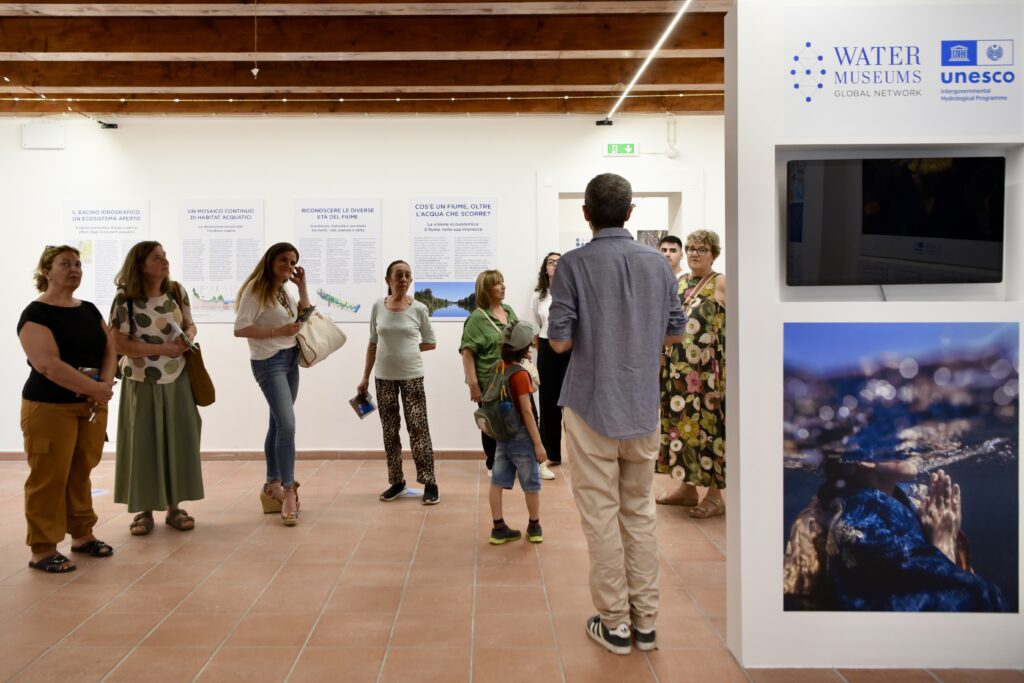
Il patrimonio naturale e culturale legato all’acqua nell’Alto Tammaro ha ora una casa. Ha aperto ufficialmente lo Spazio Mefite – Atlante delle acque dell’Alto Tammaro, il nuovo centro culturale e didattico interattivo ospitato nella suggestiva cornice dello storico Palazzo Vitelli, in via Girolamo Vitelli 19 a Santa Croce del Sannio.
L’evento di inaugurazione, svoltosi venerdì 26 giugno 2026, ha segnato un momento di celebrazione per la comunità locale. L’iniziativa, curata dall’Associazione Paese dell’Acqua, ALDA Italia e la Rete mondiale dei musei dell’acqua, ha rappresentato un tassello cruciale del progetto locale di rigenerazione culturale e sociale Tracce. Promosso in sinergia dai Comuni di Santa Croce del Sannio e Circello, il progetto è stato finanziato nell’ambito dei fondi PNRR (Misura M1C3 – Intervento 2.1), dedicati al rilancio e all’attrattività dei borghi storici.
Dalla cultura dell’acqua al progetto Tracce
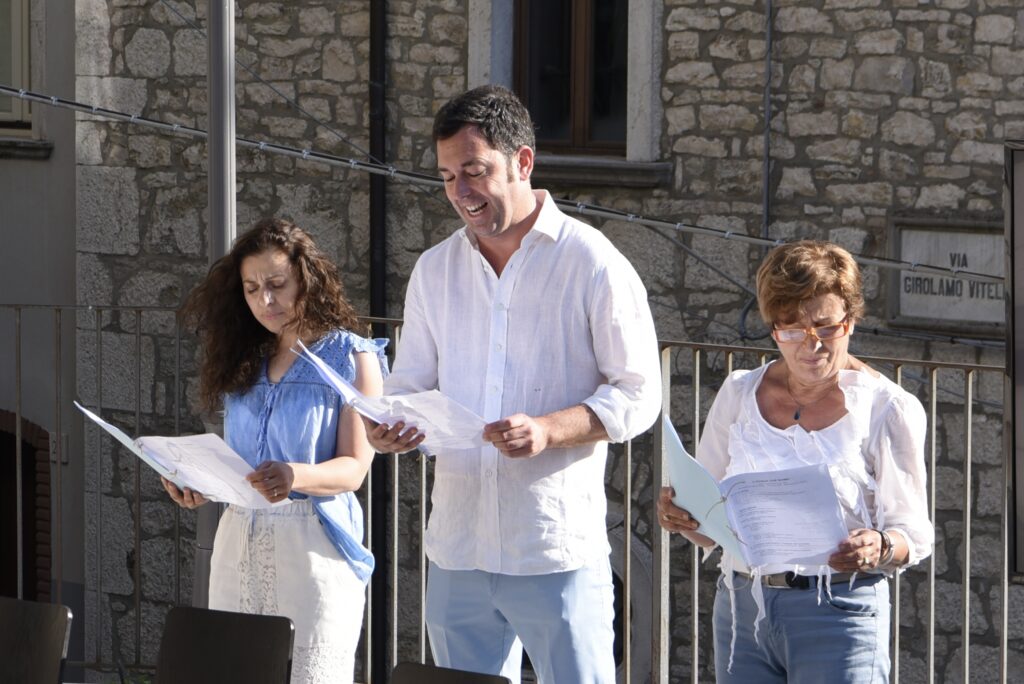
Ad aprire l’evento, nel teatro all’aperto antistante Palazzo Vitelli, sono state le letture espressive a più voci dal titolo “L’acqua che siamo”. Curata dall’’Associazione Giuseppe Maria Galanti, la performance ha introdotto il pubblico alla dimensione ancestrale e vitale della risorsa idrica, preparando l’atmosfera per i successivi interventi.
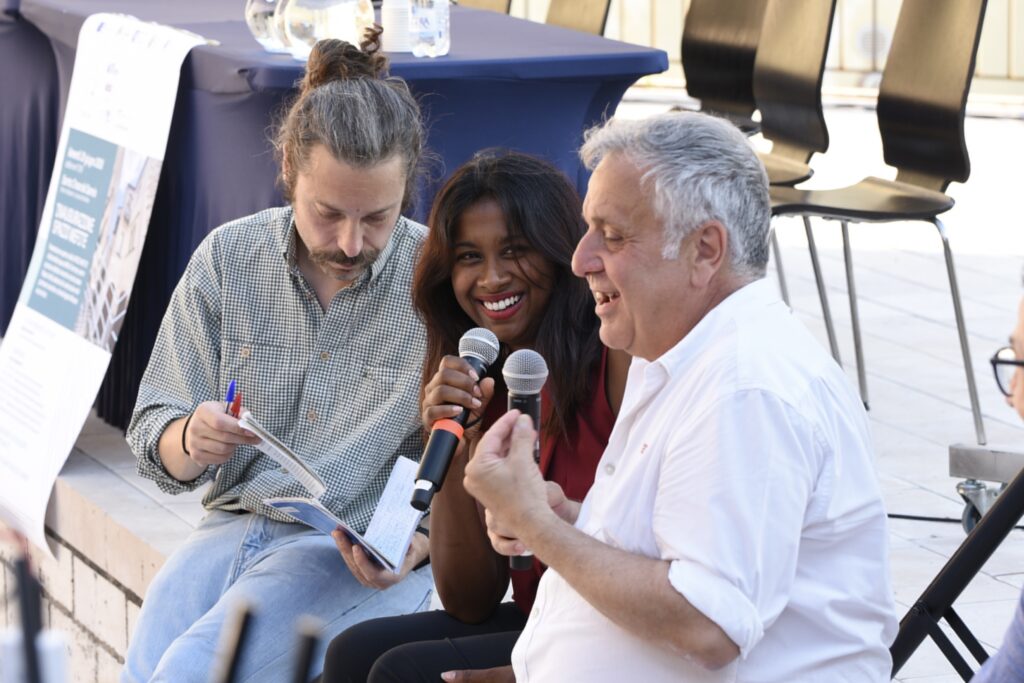
Successivamente, si è tenuta la conferenza pubblica, che ha visto gli interventi di enti pubblici e privati coinvolti nel progetto “Tracce”, oltre che di esperti del settore idrico. Ad aprire la serie di interventi è stato Antonio Zeoli, sindaco di Santa Croce del Sannio, che ha espresso grande orgoglio per la restituzione di questo storico spazio alla cittadinanza. Subito dopo, Marco Iamiceli, presidente dell’Associazione Paese dell’Acqua, ha ripercorso le fasi della costruzione dello Spazio Mefite, lasciando poi la parola a Eriberto Eulisse. Il direttore esecutivo della Rete mondiale dei musei dell’acqua ha così presentato al pubblico le ispirazioni e i concetti chiave che guidano l’esposizione all’interno del centro.
Il confronto è proseguito con il contributo di Lizzy Catherine Galiazzo, coordinatrice per i finanziamenti e le strategie di ALDA+, che ha illustrato i risultati concreti delle azioni intraprese all’interno del progetto Tracce, dalla scrittura di progetti europei per le realtà locali fino all’organizzazione di eventi mirati alla promozione del territorio. Alla discussione si aggiunta la prospettiva accademica di Francesco Visentin, professore associato di Geografia all’Università di Udine, che ha offerto una riflessione sui corsi d’acqua e su come questi siano ormai completamente strutturati dagli esseri umani. Infine, Cristiano Mutti, responsabile per la comunicazione del progetto Tracce attraverso Imago Editor, ha rendicontato il prezioso lavoro di promozione e mappatura delle azioni svolto sul sito web del progetto, arricchendo la serata con la proiezione del video di sua produzione intitolato “La Pace di Santa Croce del Sannio”.
Il taglio del nastro e la scoperta dello Spazio Mefite
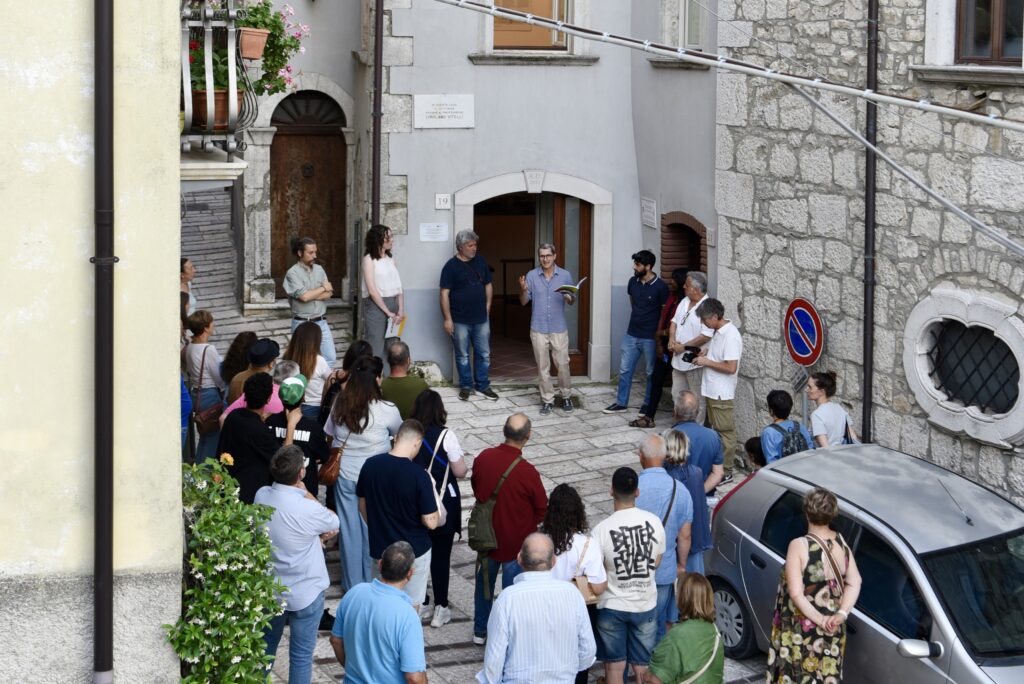
Al termine della conferenza, i partecipanti si sono spostati all’ingresso di Palazzo Vitelli. Qui si è svolto il simbolico taglio del nastro da parte del sindaco di Santa Croce del Sannio. Subito dopo, Eriberto Eulisse ha illustrato la logica dell’esposizione incentrata sulla scoperta del concetto di fiume.
I presenti hanno così potuto varcare la soglia del centro per una prima visita, esplorando i contenuti multimediali e le installazioni didattiche che animeranno lo Spazio Mefite nei mesi a venire. Una prima immersione che, tra l’entusiasmo della cittadinanza e la sinergia degli enti coinvolti, restituisce ufficialmente alla comunità un luogo d’incontro vivo, capace di trasformare la memoria dell’acqua in un’opportunità di futuro per l’intero territorio.
🎬Scopri quiuno dei video presentati all’interno dello Spazio Mefite, prodotto da Noor Studio e promosso da Alda Italia nell’ambito del progetto “Tracce”.
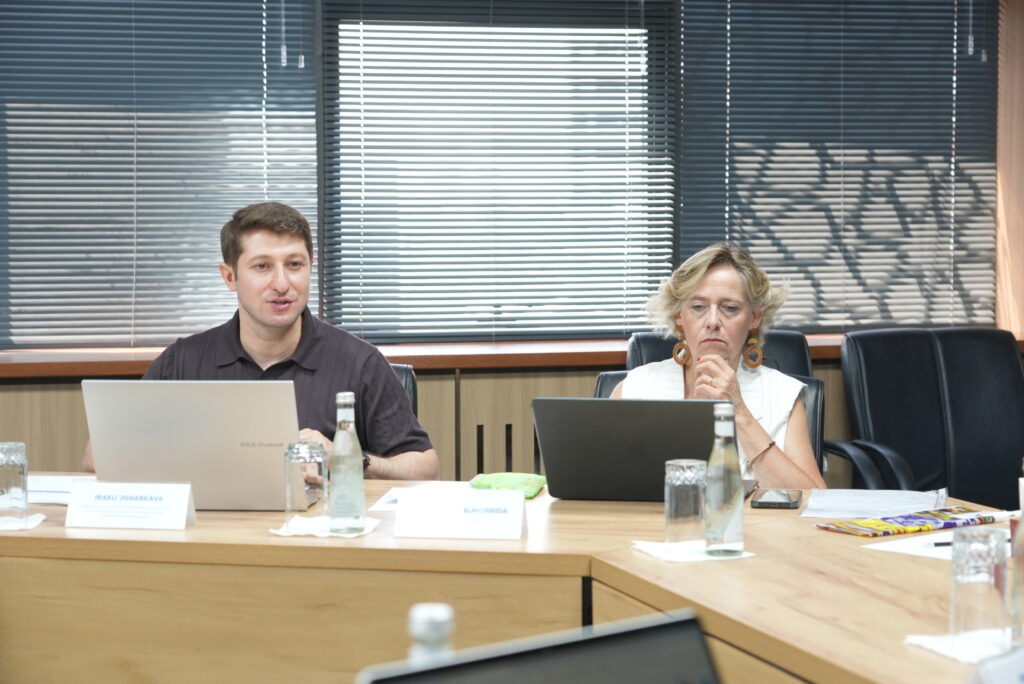
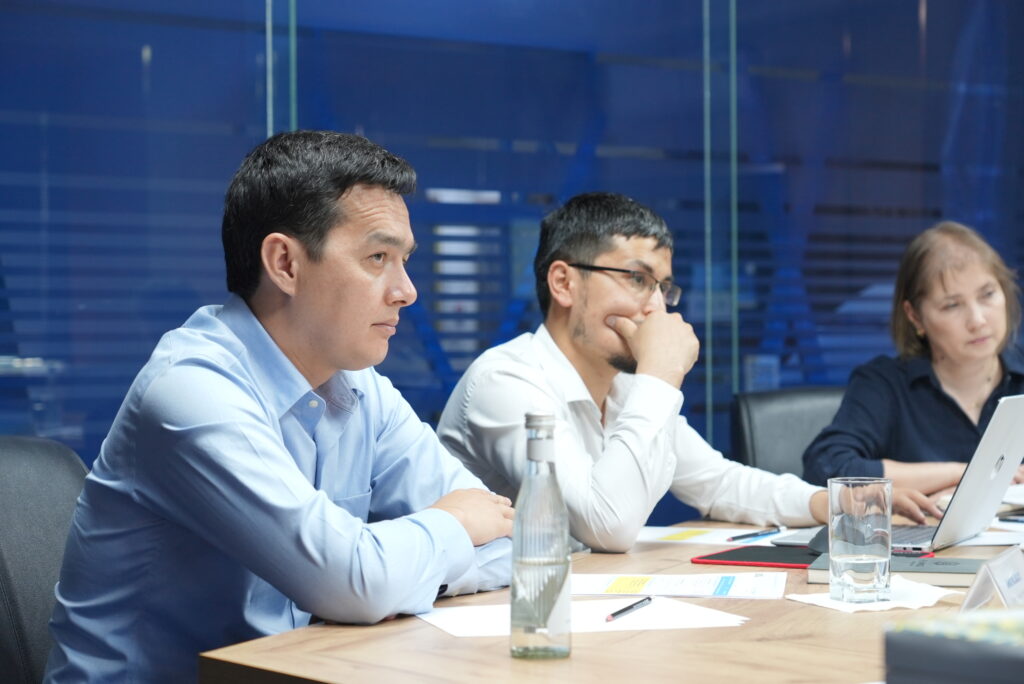
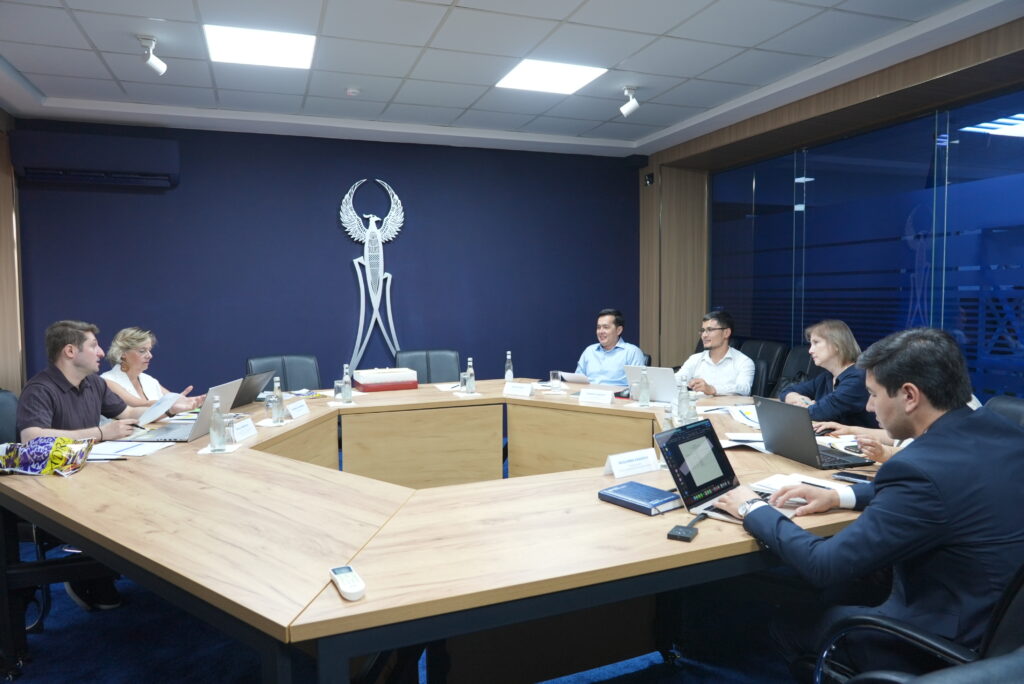
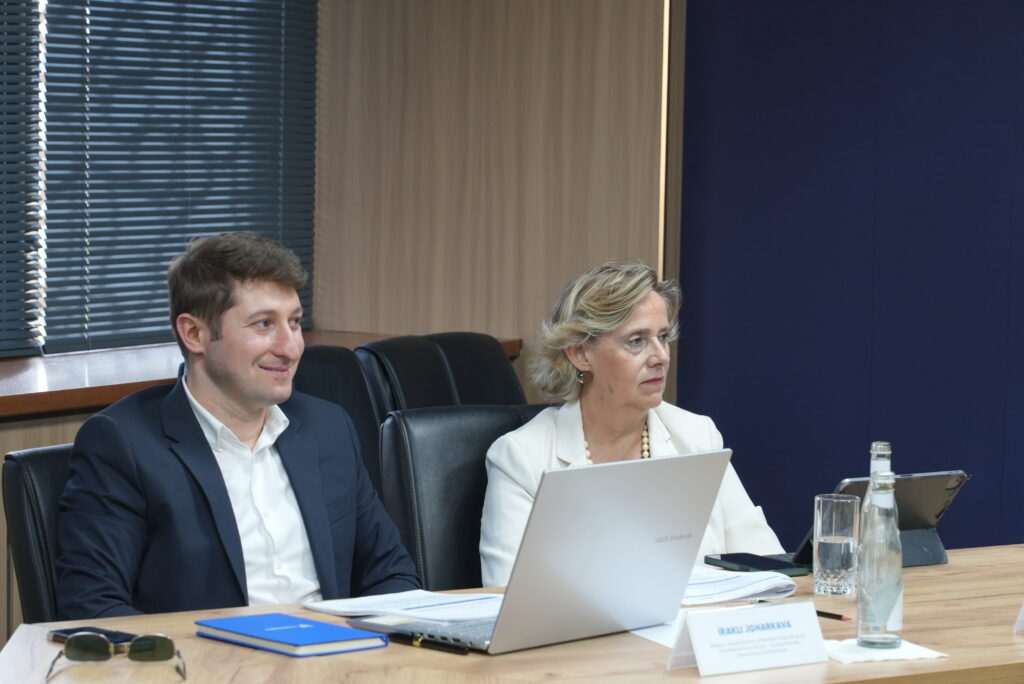
On 7-8 July, ALDA officially launched the IDROK-UZ – Inclusive Disinformation Resilience and Open Knowledge project during the first Transnational Project Meeting held in Tashkent, Uzbekistan.
Representing ALDA, Secretary General Antonella Valmorbida and Central Asia Regional Coordinator Irakli Jgharkava met with the team of the Institute for Socio-Economic Initiatives (ISEI), ALDA’s local partner and co-applicant, to establish the project’s implementation framework and strengthen cooperation for the next three years.
The two-day meeting focused on project management, financial and monitoring systems, communication, security, stakeholder engagement, and the implementation roadmap for the first phase of the project. The discussions also confirmed shared working methods and coordination mechanisms, ensuring that the project will be implemented in line with international standards from the very beginning.
Funded by the European Union under the Support to Civil Society in Uzbekistan programme, IDROK-UZ aims to strengthen societal resilience to disinformation by promoting media and information literacy, critical thinking, digital safety, and open knowledge. Over the next three years, the project will establish five regional Media and Information Literacy Centres, implement a nationwide awareness campaign, facilitate dialogue between civil society and public institutions, organise an international study visit, and support local initiatives through a small grants scheme.
For ALDA, IDROK-UZ represents an important milestone in its growing engagement in Uzbekistan and Central Asia. The project reflects the strengthening partnership between the European Union and Uzbekistan and demonstrates the value of long-term cooperation in addressing emerging challenges in the information environment.
Building on its experience across Europe and the Eastern Neighbourhood, ALDA aims to share relevant European expertise and practical approaches with partners in Uzbekistan and across Central Asia. Through knowledge exchange, capacity building, and collaboration between civil society organisations and public institutions, the project seeks to contribute to stronger local capacities and more resilient communities.
The first partners’ meeting marked the official launch of the IDROK-UZ project and the beginning of a three-year collaboration between ALDA, ISEI, and their partners to strengthen media and information literacy, promote open knowledge, and enhance societal resilience to disinformation across Uzbekistan.
On 9–10 July 2026, ALDA President Natasa Vučković participated in the 7th edition of MedCat Days, organised by the Government of Catalonia in collaboration with the European Institute of the Mediterranean (IEMed). The event brought together representatives of European institutions, regional networks, local and regional authorities, and civil society to discuss how to transform the Pact for the Mediterranean into concrete, place-based action.
The MedCat Days 2026 addressed how Mediterranean governance can become more effective,coordinated and action-oriented within the framework of the new Pact. The first day focused on the operational dimension of the Pact, addressing how it can be implemented in practice through governance and coordination mechanisms, territorial approaches, and concrete projects and partnerships that support delivery on the ground. The second day shifted to the political and strategic dimension, examining how the Pact is shaped and influenced. (Source: Government of Catalonia)
Representing ALDA during the policy exchange “Enhancing Territorial Diplomacy in Europe’s External Action”, President Vučković contributed to the debate on strengthening the role of local and regional authorities in the EU’s neighbourhood, enlargement and cooperation policies.
Opening her intervention, she stressed that the future of Euro-Mediterranean cooperation depends on empowering local actors:
“As we discuss moving ‘from Pact to Impact’, we must recognise that the impact we seek cannot be achieved through top-down mandates alone. True impact is grown from the ground up.”
She highlighted that territorial diplomacy means recognising local authorities, regional networks and civil society organisations as essential partners in shaping European external action, rather than simply implementing it.
Drawing on ALDA’s nearly three decades of experience in promoting local democracy, President Vučković presented the Association’s multilevel governance model, built on partnerships between municipalities, civil society and international institutions. She underlined the role of ALDA’s network of 19 Local Democracy Agencies, describing them as proven platforms for fostering democratic resilience, citizen participation and sustainable local development in Europe, the Mediterranean, Africa and the Eastern Neighbourhood.
During her speech, she also shared ALDA’s experience in supporting democratic resilience in fragile contexts, emphasising the importance of flexible funding mechanisms, long-term capacity building for grassroots organisations, co-creation with local authorities and spaces that encourage meaningful citizen participation.
“The alliance between local and regional governments and civil society is key for democracy and sustainable development.”
Referring to ALDA’s ongoing work in Ukraine, President Vučković highlighted how cooperation between municipalities and civil society has become a fundamental pillar of resilience and reconstruction. She welcomed the growing collaboration with Catalonia in this field and pointed to initiatives such as the Shoulder to Shoulder programme as concrete examples of territorial partnerships delivering tangible results.
She also called for stronger consultation mechanisms within the European Union to ensure that local and regional voices are systematically integrated into the design and implementation of EU external policies.
“We think this dynamic is extremely important to bring the voice of local authorities and grassroots members to the higher levels, and we wish for consultation mechanisms to be further integrated by proactively including local voices.”
Over the two days, discussions focused on the territorial implementation of the Pact for the Mediterranean’s Action Plan, covering topics such as climate action, youth mobility and participation, science diplomacy, water resilience, entrepreneurship, port cooperation, wildfire prevention and early warning systems. Participants also explored how territorial diplomacy can become a stronger pillar of the EU’s external action, contributing to the development of a future Manifesto on Territorial Diplomacy.
Several common messages emerged throughout the event. Participants agreed that the Mediterranean faces increasingly complex challenges, from geopolitical tensions and conflicts to migration and climate change, but also offers significant opportunities for cooperation and shared development. They stressed the need for structured mechanisms that give local and regional authorities a meaningful role in European decision-making and emphasised that the priority should be to strengthen and better coordinate existing initiatives rather than creating entirely new instruments.
ALDA’s participation in MedCat Days 2026 reaffirmed the Association’s commitment to promoting local democracy, decentralised cooperation and multilevel governance as key drivers of a more resilient, inclusive and interconnected Mediterranean.
Across Europe, policymakers, institutions and communities are searching for new ways to reconnect citizens with public institutions, strengthen democratic resilience and create meaningful opportunities for participation. In Bosnia and Herzegovina, where democratic development continues to be shaped by the legacy of conflict and complex political structures, these challenges are particularly visible.
For more than two decades, Local Democracy Agency (LDA) Mostar has demonstrated that democracy is not strengthened solely through elections or institutional reforms. It grows when citizens are empowered to shape decisions affecting their everyday lives, when public institutions embrace dialogue, and when European democratic values are translated into practical solutions for local communities.
Today, LDA Mostar is recognised as one of Bosnia and Herzegovina’s leading organisations in participatory and deliberative democracy, good governance and active citizenship. Its experience shows how long-term investment in local democracy can transform challenges into opportunities for democratic innovation.
From democratic vacuum to democratic innovation
Few European cities have experienced a democratic vacuum like Mostar. Between 2008 and 2020, the city held no local elections, leaving citizens without the opportunity to elect their local representatives.
Rather than accepting this situation as inevitable, LDA Mostar launched the civic initiative ELECT Mostar, mobilising citizens to advocate for the restoration of democratic governance. What began as a symbolic campaign evolved into a broad civic movement that demonstrated how democratic change can emerge from the grassroots.
The initiative also contributed to wider discussions facilitated by the Council of Europe, creating momentum for one of Bosnia and Herzegovina’s most significant democratic innovations – Citizens’ Assemblies.
Following the return of local elections in 2020, Mostar became one of the first cities in the Western Balkans to introduce deliberative democratic processes through Citizens’ Assemblies. Building on years of experience in participatory governance, LDA Mostar developed the expertise needed to design, facilitate and support these processes in line with European standards, becoming a recognised regional actor in deliberative democracy.
Bringing European standards to local communities
LDA Mostar’s contribution extends well beyond deliberative democracy. For years, the organisation has worked to transform European principles of good governance into practical tools that local authorities and civil society organisations can apply in their daily work.
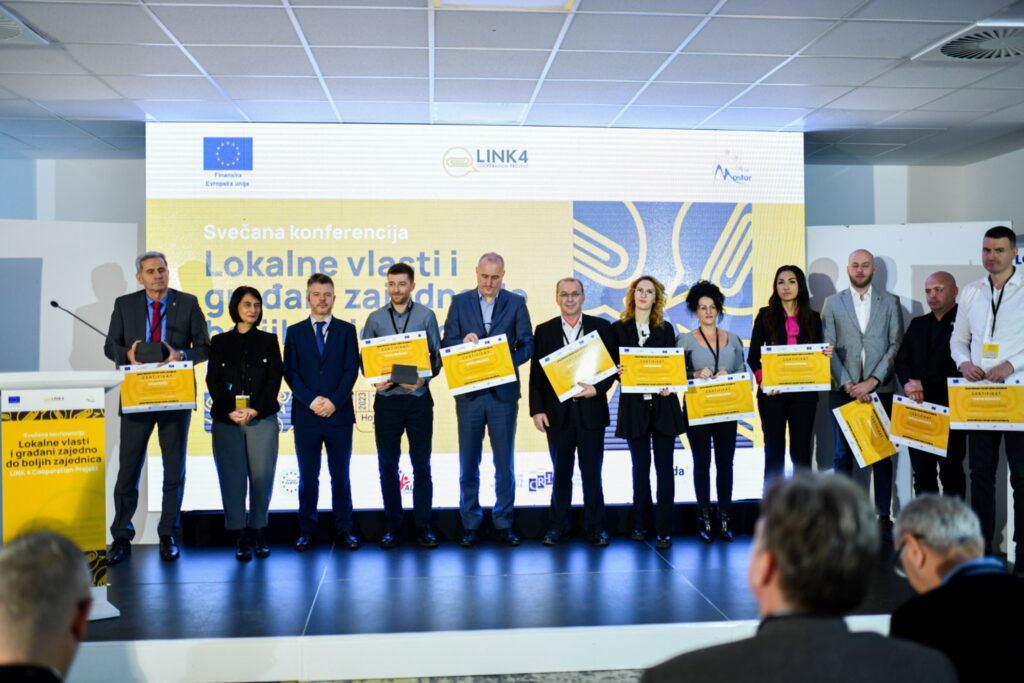
Through the EU-funded LINK4Cooperation project, Bosnia and Herzegovina became the first country outside the European Union to implement the Council of Europe’s European Label of Governance Excellence (ELoGE) programme. As the country’s first accredited ELoGE Platform, LDA Mostar has supported municipalities across Bosnia and Herzegovina in applying European principles of transparency, accountability, participation, effectiveness and ethical governance.
The organisation has also contributed to strengthening collaborative leadership through the Council of Europe’s Leadership Academy Programme (LAP), reinforcing partnerships between local authorities and civil society.
These experiences demonstrate that European standards become meaningful only when they are adapted, tested and embraced by local communities.
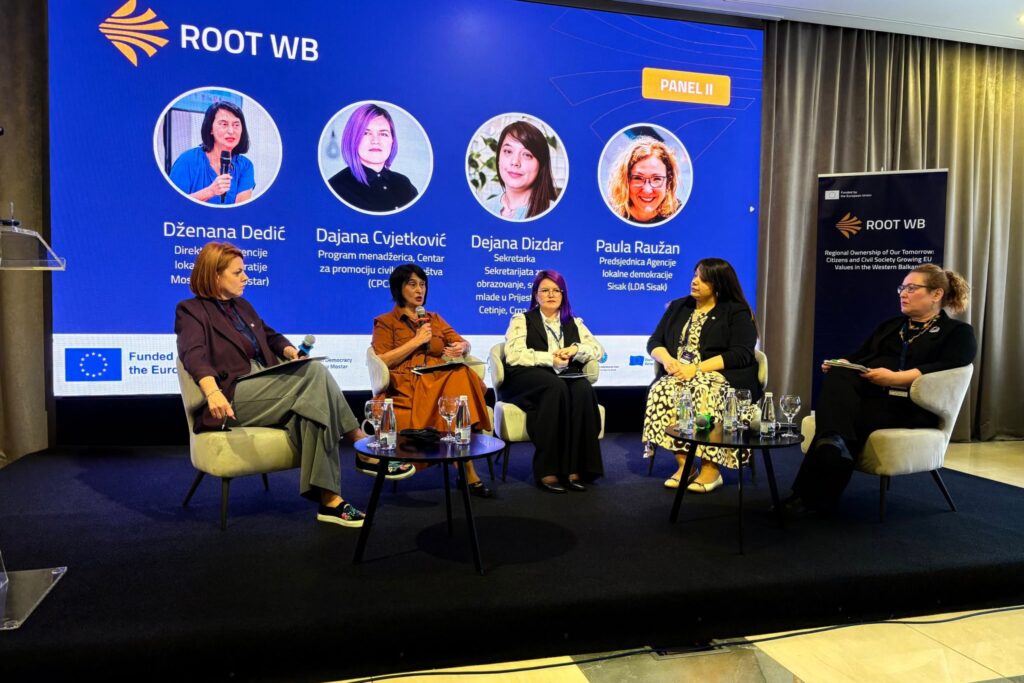
Building on this experience, LDA Mostar is currently leading the regional project ROOT WB – Regional Ownership of Our Tomorrow, funded through the EU’s Citizens, Equality, Rights and Values (CERV) Programme. Bringing together partners from across the Western Balkans and the European Union, the project strengthens civic participation, democratic resilience and awareness of EU values through capacity-building, policy dialogue, participatory governance and cross-border cooperation.
One of the project’s most important milestones was the publication of the comparative Assessment Reports on Civic Participation Trends and Barriers, providing a regional overview of civic participation trends, barriers and opportunities for strengthening democratic engagement across the Western Balkans, while also reflecting on relevant European Union experiences and approaches.
Empowering young people as active citizens and drivers of democratic change
LDA Mostar believes that democratic resilience cannot be built without young people.
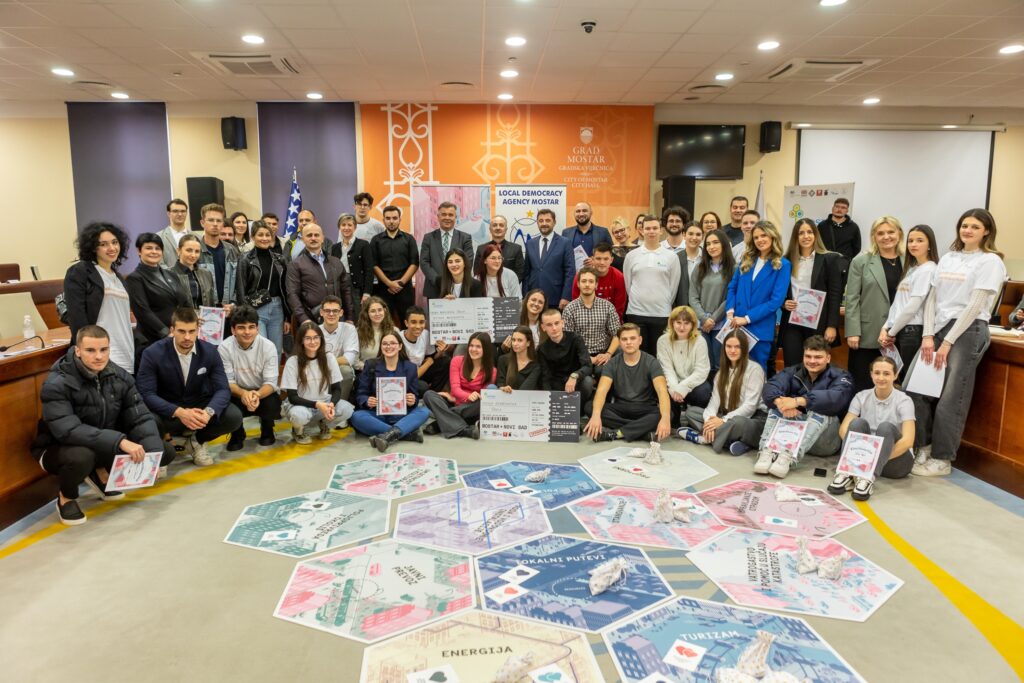
Through innovative educational approaches, the organisation encourages young people to move from being passive observers to active citizens and community leaders. One example is Electionville, an educational simulation that invites students to exchange their school desks for city council seats and experience democracy from a completely different perspective. By debating local issues, listening to different viewpoints and making collective decisions, participants gain first-hand insight into how local democracy works while developing the skills needed for active citizenship.
The organisation has also pioneered more equitable approaches to engaging with young people who are Not in Employment, Education or Training (NEET). Guided by the principle of “Leave No One Behind” (LNOB), a core commitment of the UN 2030 Agenda for Sustainable Development, LDA Mostar recognises that young people do not have the same starting points, face the same barriers or have equal access to opportunities. Through tailored support, research, innovative methodologies, capacity-building and regional cooperation, the organisation contributes to raising awareness of the challenges faced by NEET youth and promoting more responsive approaches within youth work and local communities. It has also introduced the first trained Youth Inclusion Coordinators in Bosnia and Herzegovina, equipping youth professionals with practical tools to identify, reach and support young people who are often overlooked by existing services.
These efforts are complemented by numerous Erasmus+ initiatives promoting civic engagement, social innovation, critical thinking, leadership and European cooperation among young people across Bosnia and Herzegovina and the Western Balkans in line with the European Youth Goals. As the National Contact Point for the Erasmus+ Youth Programme in Bosnia and Herzegovina, LDA Mostar also serves as a resource and support hub for young people, youth organisations and other stakeholders, providing information, guidance and opportunities for participation in European youth programmes.
Building stronger communities together
For LDA Mostar, democracy extends beyond political participation. It also means creating inclusive communities where everyone has the opportunity to contribute.
This commitment is reflected in programmes promoting gender equality and women’s leadership in line with the Women, Peace and Security agenda, as well as initiatives strengthening social cohesion, intercultural and interreligious dialogue, and connecting artistic, cultural and natural heritage with active citizenship. Across all its work, the organisation promotes one simple principle: citizens are not beneficiaries of development – they are its co-creators.
A local laboratory for European Democracy
The story of LDA Mostar is not simply the story of one organisation. It is the story of how local democratic innovation can generate wider regional and European relevance.
At a time when democratic resilience is becoming one of Europe’s strategic priorities, LDA Mostar’s experience offers an important lesson: sustainable democracy cannot simply be designed in policy documents or transferred through institutional reforms. It must be built patiently, locally and together with citizens.
For more than twenty years, the organisation has developed, tested and refined democratic approaches in one of Europe’s most complex political environments. In doing so, it has become far more than a project implementer. It serves as a trusted bridge between citizens and institutions, a reliable resource centre and a recognised Hub for Local Democracy, connecting local experience with wider regional and European democratic innovation.
Because some of Europe’s most important democratic innovations do not begin in institutions: they begin with people.
The launch of a new era for Franco-Ukrainian territorial cooperation
July 7th 2026 marked a groundbreaking milestone for decentralised cooperation as the official visit of the delegation from the Ternopil Regional Council (Ukraine) to the Department of Calvados (France) culminated in the signing of a historic Memorandum of Understanding (MoU).
ALDA – the European Association for Local Democracy, has steered this partnership from its very inception: brokering the initial matchmaking, facilitating strategic negotiations, and supporting the process all the way to the final signature. Moving forward, ALDA will serve as the operational anchor, committed to turning this strategic framework into a sustainable engine for regional resilience, democratic governance and local development.
The Calvados-Ternopil partnership serves as a strong proof of concept for ALDA’s unique methodology in supporting Ukrainian local authorities. Rather than relying on traditional, top-down administrative pairings, this initiative introduces a dynamic, scalable model built on two core pillars that define the long-term perspective of this cooperation:
The Multilevel & Multiactor Blueprint: The agreement establishes a structure that operates simultaneously across different tiers of local governance (department-oblast and municipality-municipality). Crucially, it brings together an entire ecosystem beyond local authorities, actively engaging civil society organisations (CSOs), academia, local business ecosystems, and the vibrant Ukrainian diaspora in France. This ensures that high-level institutional goodwill directly feeds into practical, grassroots projects.
National and European Scaling: This territorial partnership is not an isolated initiative; it is firmly aligned with national recovery frameworks. It connects directly with ALDA’s MoU with the Ukrainian Ministry of Development of Communities and Territories regarding the “Shoulder to Shoulder” initiative, a model ALDA aims to scale up across the entire European Union.
The momentum generated by the signing led to an important debriefing hosted at the Embassy of Ukraine in France in Paris. The Ternopil delegation presented the successful outcomes of their visit, expressing deep gratitude and respect to ALDA for transforming this ambitious partnership into reality. The Embassy did not hide its enthusiasm for the newly signed agreement, formally highlighting that this is the first time a French department has signed an MoU with a regional partner from Ukraine, marking a monumental step forward for bilateral diplomatic and territorial relations.
”This agreement represents the ultimate ALDA signature: a holistic approach where local authorities, citizens, universities, and businesses co-create a shared democratic future. It sets a resilient, modern standard for how European and Ukrainian territories can build long-term solidarity.”
In a coordinated effort between April and May 2026, the PACT project consortium translated the core pillars of the PACT Toolkit—Participation, Narratives, Social Cohesion, and Collaboration—into a series of high-impact local workshops and conferences namely Laboratories for Inclusive Democracy.
Local Workshops: Laboratories for Inclusive Democracy
Italy (Brescia) On April 26, ADL a Zavidovici organised a workshop at a local mosque in Brescia, identifying it as a safe and meaningful space for the Muslim community. Focusing on the reconstruction of discriminatory narratives, this workshop involved 35 participants in a safe space (a local mosque) to ensure authentic representation. Under technical guidance, working groups co-designed a 5-episode narrative series focused on the Eid al-Adha feast, aimed at transforming identity-building into a tool for civic access.
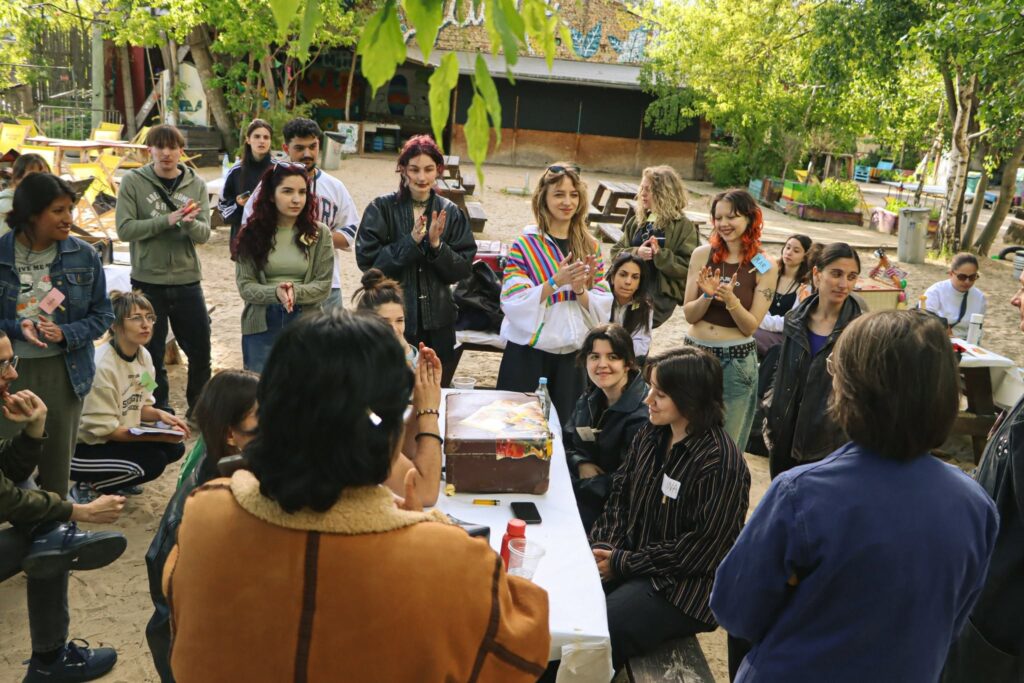
Spain (Barcelona) On May 18, Fons Català gathered 28 participants from municipalities and civil society to analyse barriers to inclusive participation. This workshop for 28 municipal and CSO representatives served as a dissemination platform for the PACT Toolkit. It utilised the “Arts que Transformen” socio-educational tool to demonstrate how creative expression can resolve local governance conflicts and dismantle “rumors” through certified anti-rumour agents.
Greece (Piraeus) On May 25, KMOP hosted 26 young people and youth workers in Piraeus. A group of 26 youth workers and young people with migrant backgrounds focused on inclusive communication frameworks. Through the “Inclusive Taboo” methodology, participants critically analysed exclusionary language and co-developed positive, hope-based storytelling techniques to restore institutional trust.
France (Paris) On May 20, PLACE Network organised “Prenons PLACE” at its Paris offices. Utilising the Policy Lab methodology, this workshop engaged 26 participants, primarily with migration backgrounds, to map stakeholder competencies at local and regional levels. The session focused on micro-experimentation as a low-risk innovation space to test policy recommendations before institutional scaling.
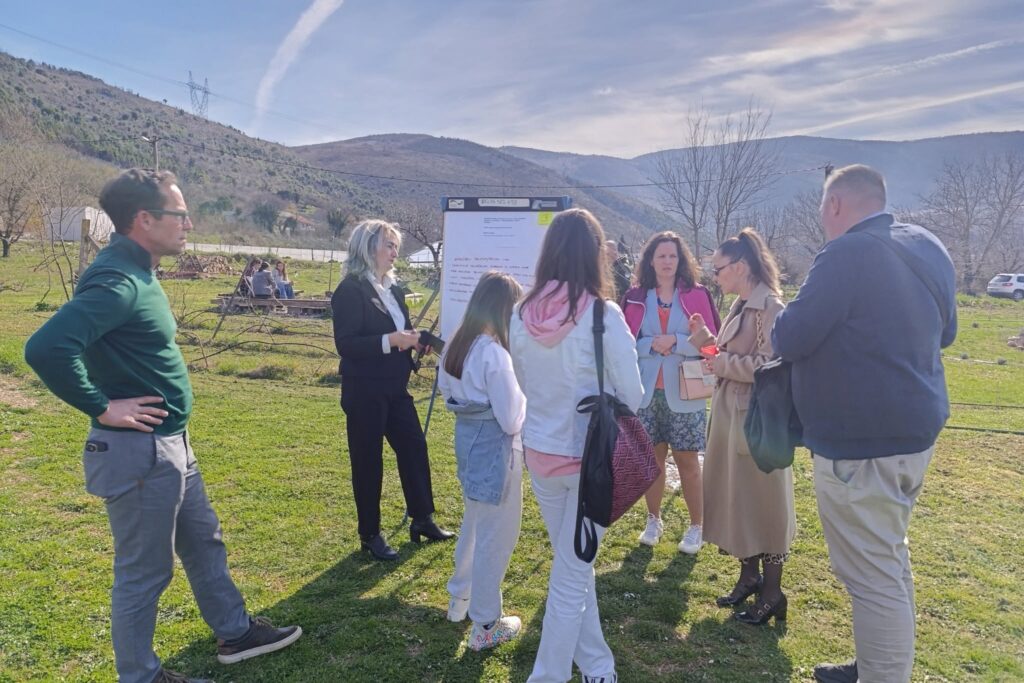
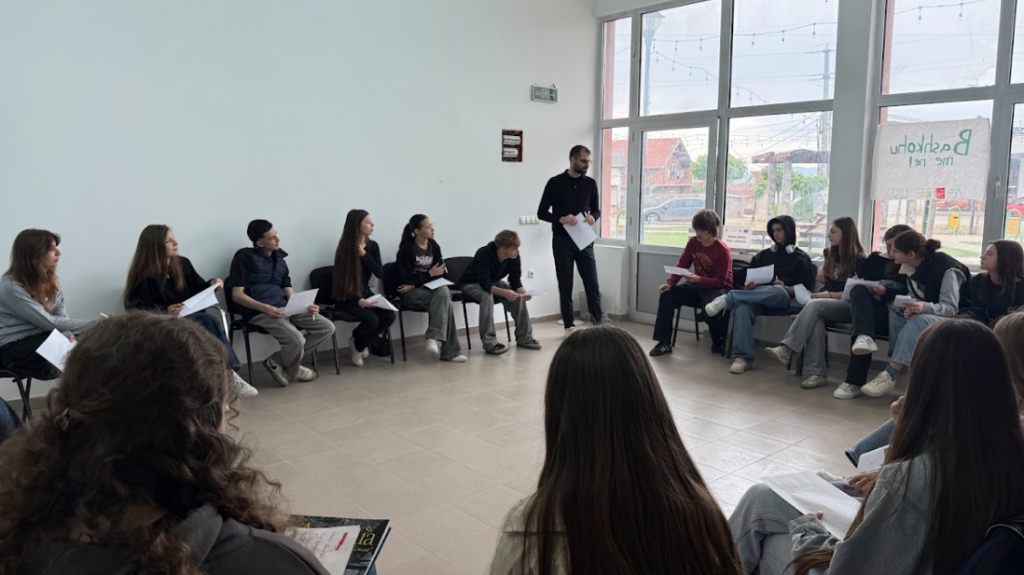
North Macedonia (Lipkovo) On May 19, the Center for Intercultural Dialogue (CID) brought together young participants for an interactive day focused on human rights. Engaging 26 young participants, this workshop used the “Take a Step Forward” simulation and the “Identity Flower” exercise to physically map structural inequalities. This experiential learning model strengthened the civic capacity of participants to recognize and act upon human rights principles in their daily community life.
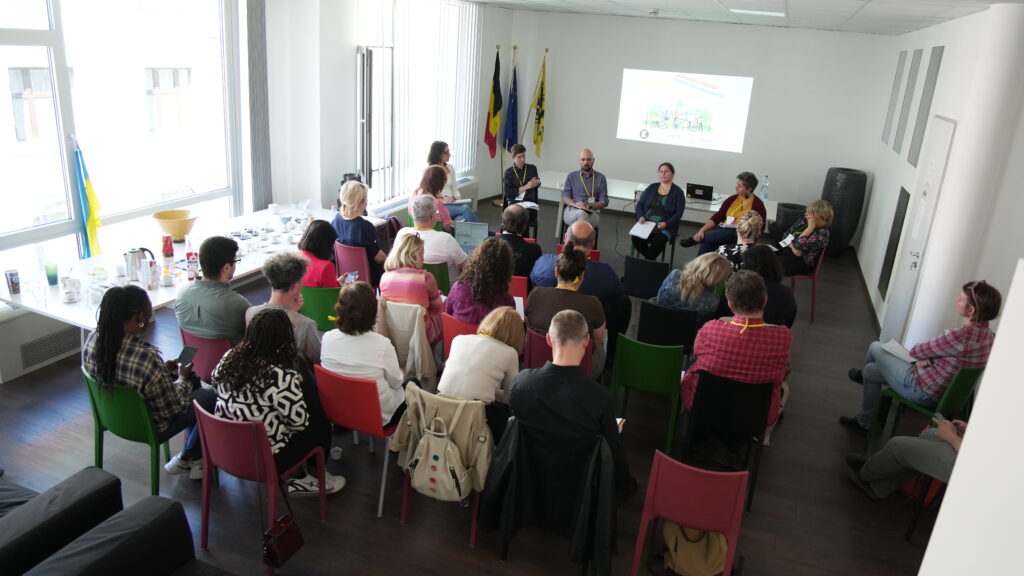
Hungary (Budapest) On May 20, the Konkáv Foundation hosted a capacity-building conference at the Flemish Representation in Budapest. Addressing the institutional fragmentation of social inclusion practices, this conference gathered 36 participants (including representatives from Hungary, Afghanistan, and Nigeria). High-level decision-makers, such as the Deputy Mayor of Ferencváros, engaged in a “de-bureaucratization” dialogue aimed at transitioning municipal services toward a user-centric public service model. A key technical outcome was the definition of the “minus-step” approach, which prioritizes soft-skill development and trust-building before formal advocacy
The data gathered from these events confirms that successful inclusion requires addressing “invisible” barriers—such as power dynamics and unconscious bias—through intersectional and trauma-sensitive designs. The PACT Toolkit remains the primary technical repository for these 9 innovative governance mechanisms, providing a scalable framework for municipalities to institutionalise participation and build social resilience.
Ready to transform your local governance?
👉Download the PACT Toolkit to access these proven methodologies and discover how to build a stronger, more cohesive, and truly democratic Europe.
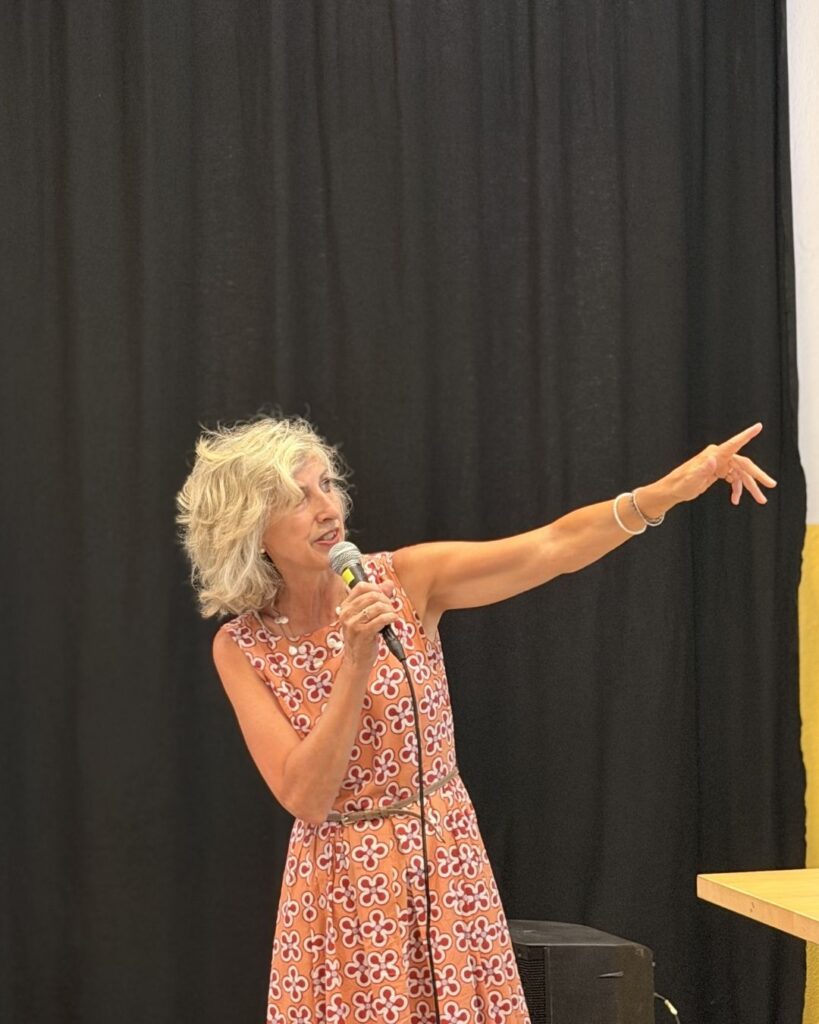
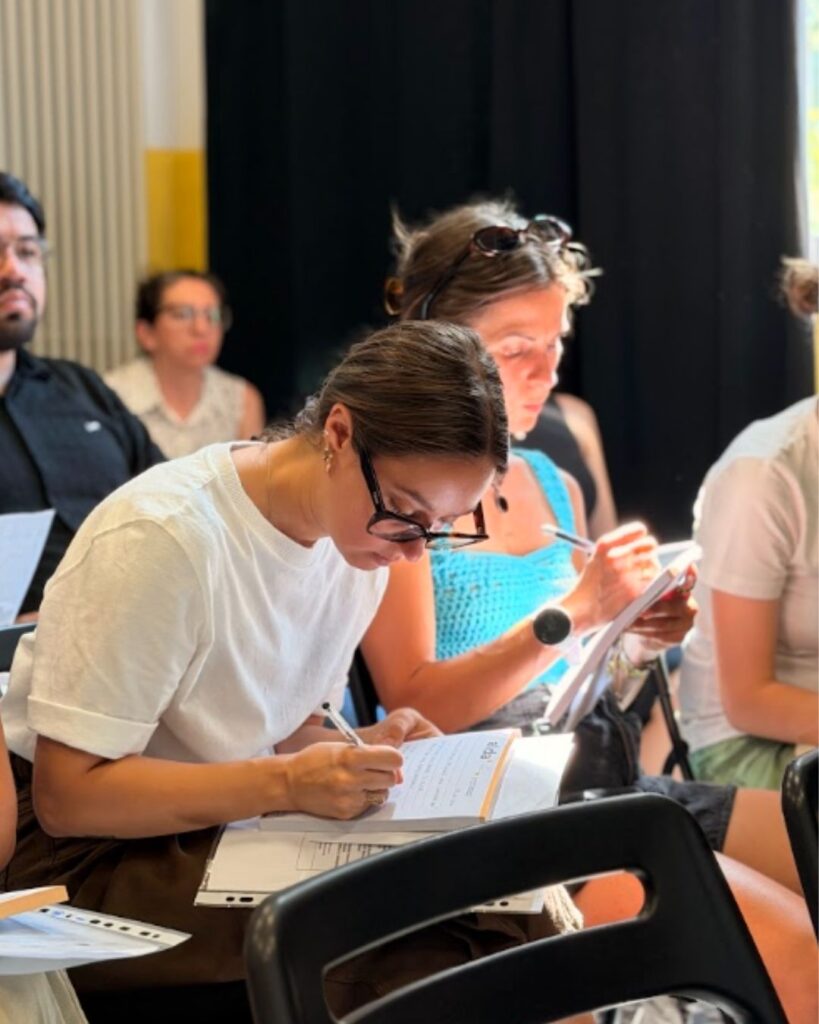
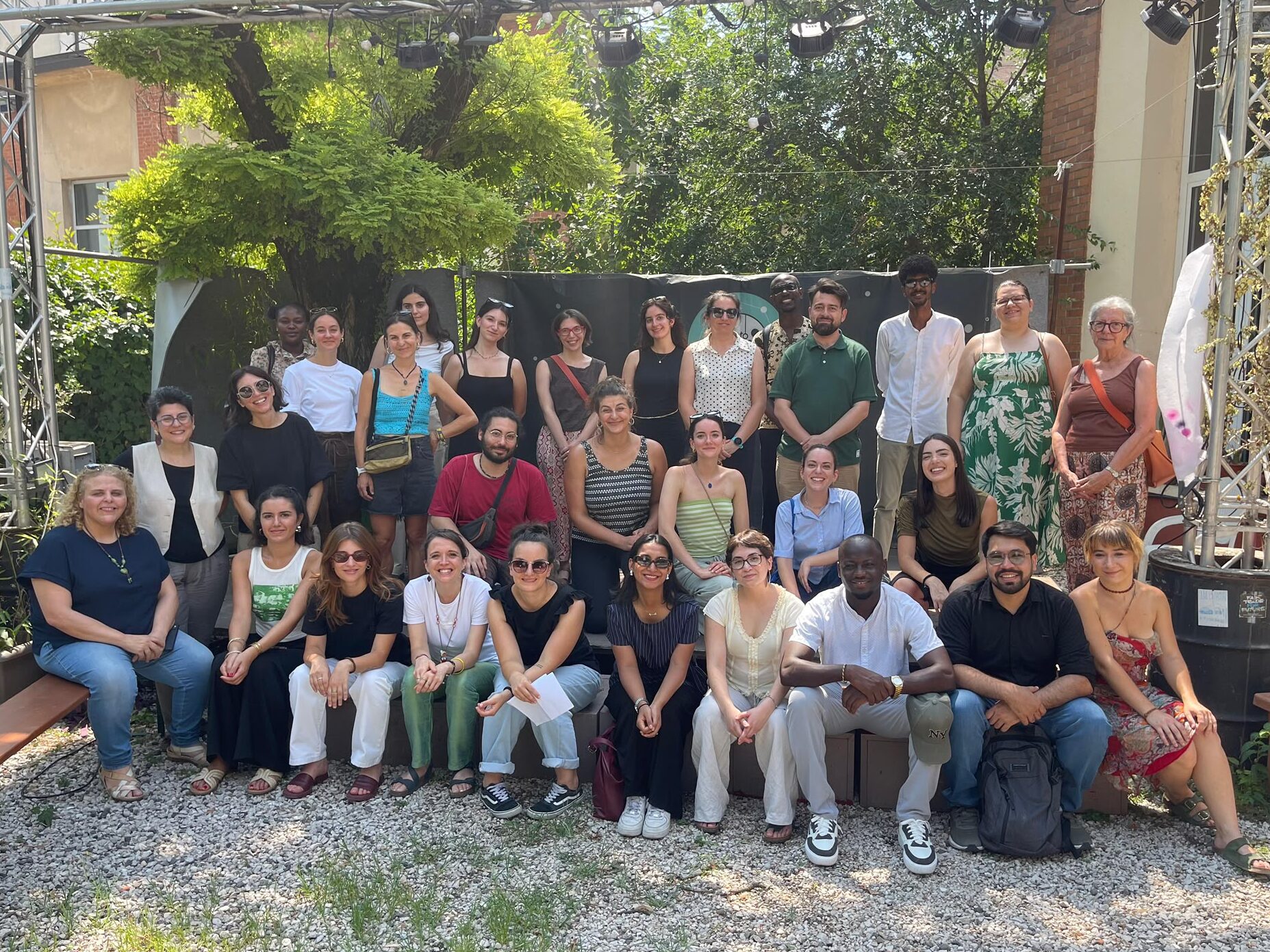
The Citizenship Academy Project officially kicked off through an international seminar in VicenzaonJune 30, 2026, gathering over 51 participants from 10 European countries. The event, led by ALDA and Jovesólides under the CERV-funded “CIV” program, set a clear mission: bridge the critical gap between the demographic reality of European cities and the actual political participation of people with migrant backgrounds.
A Proven Model Ready for Scaling
This kick-off event wasn’t just a meeting; it was the strategic start of scaling a powerhouse methodology for democratic inclusion. Jovesólides, the project’s lead partner, brings an evidence-based approach honed over 6 local editions of their Citizenship School in Valencia. The quantitative impact of their work is a benchmark for the project:
260 participants trained from 43 different nationalities.
65% of participants were women, addressing the specific “female participation factor” in migration contexts.
Transformation of Agency: Post-program civic engagement skyrocketed to 76% of graduates, compared to just 22% before joining the academy.
Vicenza: A Laboratory of Demographic Change
The choice of Vicenza as the seminar’s host city was data-driven. As of 2025, foreign residents represent 15.9% of the city’s population (17,619 individuals), with major communities including Romania (2,726), Serbia (1,582), and Nigeria (1,116). Most significantly, the city is witnessing a “citizenship surge”: acquisitions have grown by 138% in seven years, rising from 402 in 2018 to 959 in 2025.
To meet this transformation, Deputy Mayor Isabella Sala presented a concrete institutional response: the Council for Foreigners, Migrants and Stateless Persons. Established in late 2025, this advisory body includes 18 local associations—ranging from the Bangladesh Community to the Union of Serbs in Italy—giving new citizens a direct seat at the municipal table and a voice in city statutes.
Beyond Motivation: Participation as a “Design Challenge”
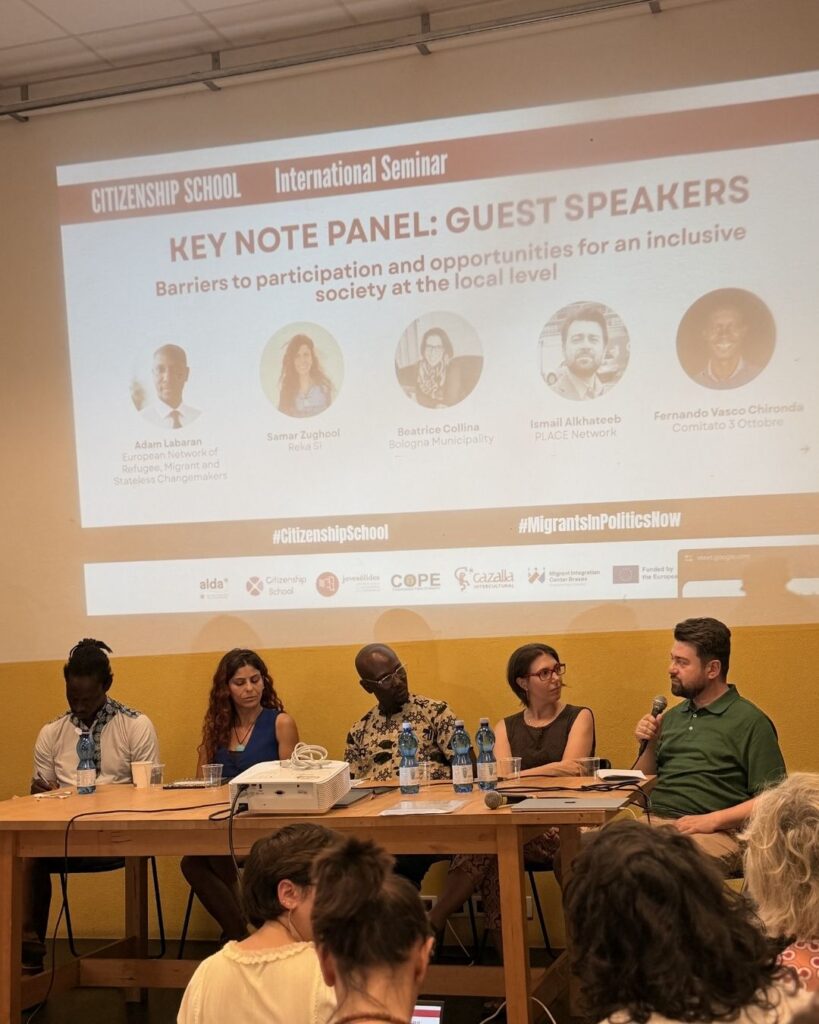
The seminar shifted the narrative on low civic engagement. Experts during the keynote panel argued that low participation is rarely about a lack of motivation, but rather a “design flaw” of institutions. Ismail Alkhateeb (PLACE Network, France) emphasized that public institutions were traditionally built for individuals with stable socio-economic conditions. When “showing up” carries a high cost, participation becomes a filter rather than a door.
Fernando Chironda (Comitato 3 Ottobre) pushed this further by introducing the concept of belonging. He noted that many migrant individuals encounter “invisible rules” in institutional spaces that make them question: “Is this space really for me?”. True inclusion, therefore, requires removing the structural barriers of daily survival:
The seminar also showcased some examples of successful practices:
Co-Managed Services (Bologna, Italy):Beatrice Collina shared the success of Bologna’s co-managed Anti-discrimination Help Centre and the Intercultural Forum, where residents are not just users but co-shapers of city services.
Intersectional Arts (Slovenia):Samar Zughool (Reka Si) presented the “Womxn to Womxn” initiative, which uses diasporic community arts led by refugee women to challenge integration barriers and mainstream gender into local policies.
Outcome-Oriented Co-design (France): A call to fund processes where resident ideas reach actual implementation in city services, treating migrants as actors who shape public life.
The Roadmap: A 4-Pillar Blueprint
The Citizenship Academy seminar concluded with a World Café workshop to finalize the training blueprint for the upcoming project phases. Partners defined four strategic thematic pillars:
Self-Managed Community Spaces: Training groups to advocate for their own political participation independently.
Practical Civic Agenda-Setting: Turning residents from “passive participants” into active influencers of local government policies.
Safe Participation: Creating rights-based pathways that remove the fear of institutional interaction for vulnerable individuals.
Funding Resilience: Building coalitions between associations to share resources across national borders.
As the Citizenship Academy moves into its operational phase, the insights from this International Seminar will serve as a laboratory for a training programme where inclusion is not just a principle, but an active practice of shared governance.
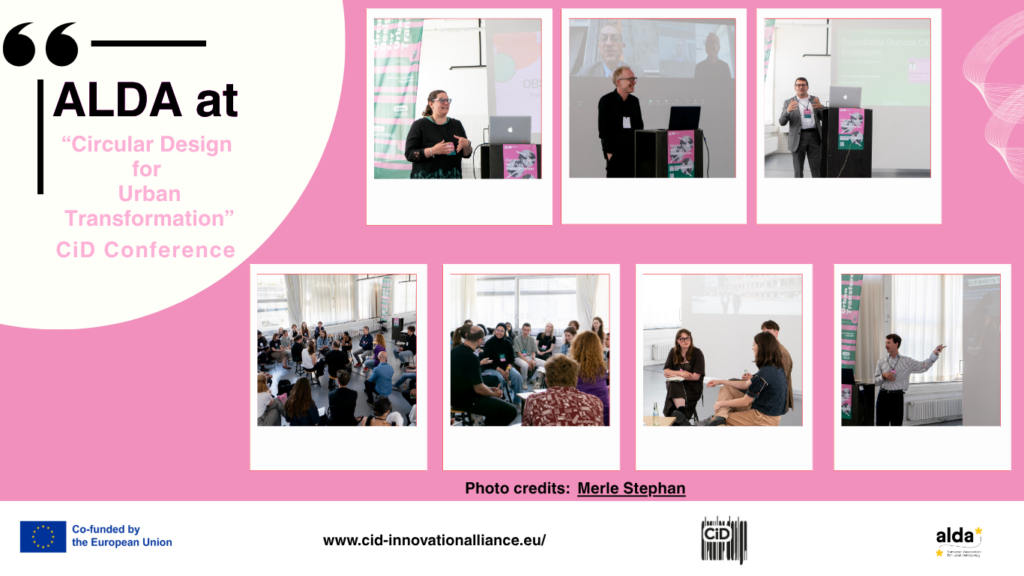
From 28 to 30 May 2026, the Circular Design (CiD) project of which ALDA is a proud partner, held the conference “Circular Design for Urban Transformation” in Hannover, Germany. Organised by the Leibniz University Hannover, the event brought together researchers, architects, designers, urban planners, and policymakers to explore how circular approaches can drive urban regeneration beyond consumption of resources and expansion.
By focusing on how long-term thinking in architecture and urban planning can contribute to more sustainable, resilient, and environmentally responsible urban development, the conference approached circularity as a key framework to rethink urban spaces, heritage, governance, and socio-economic processes. Special attention was given to the role of skills and the flow of knowledge between research, education, and professional practice, as well as to entrepreneurship and social innovation.
The conference programme was structured around three core thematic tracks: Circular Regeneration (focusing on urban space, communities, and nature), Circular Constellations (exploring actors, flows, and urban networks), and Circular Processes (addressing engagement, policies, and urban strategies). Alongside these main tracks, the programme featured key lectures, fishbowl discussions, a CiD LAB Hannover, and local site visits.
Roundtable Discussion: Impact and Outlook for the CiD Ecosystem
A major highlight of the event was the roundtable session “Outlook CiD Ecosystem,” held on Friday 29th of May. The panel brought together project partners to evaluate the transferability and future scaling of the project’s results. During the session, the University of Genova shared insights on implementing innovative academic courses, while Tallinn Business Incubator mapped out the role of the accelerator program. Additionally, ARCES addressed the necessity of continuous education to bridge professional skill gaps, and the Leibniz University of Hannover discussed the co-production of knowledge.
Eleonora Ambrosi represented the European Observatory of Urban Transformation coordinated by ALDA, the discussion addressed the long-term sustainability of the project’s foundational hubs. Given that these observatories are a distinctive feature of the CiD ecosystem, connecting the alliance directly to real-world needs, local stakeholders, and circular design experts, the exchange focused on the long-term outlook for these hubs after the project ends.. These discussions represented only a portion of the work carried out by the project. In particular, the project successfully connected more than 130 stakeholders through its observatory networks, demonstrating the strong interest in and relevance of Circular Design not only within education but also across a wide range of sectors.
Visit the website to find out more about the project.
As part of the H.I.L.L. – Habitat in Living Landscape project, supported by the Cariverona Foundation, more than 30 young people gathered in Monte di Malo, Italy, on 29 May for a Hackathon dedicated to designing innovative ideas for sustainable tourism and youth entrepreneurship in the Alto Vicentino area.
The initiative, co-organised by ALDA Italia APS and Elevator Innovation Hub, encouraged participants to develop creative solutions capable of enhancing the natural and cultural heritage of the territory while contributing to its long-term social and economic development.
The H.I.L.L. project aims to protect and enhance the environmental and cultural assets of the municipalities of Monte di Malo, Cornedo Vicentino, and Castelgomberto. One of its flagship actions is the creation of a larger protected area by connecting and expanding the Special Areas of Conservation (SACs) Buso della Rana and Le Poscole. Alongside biodiversity conservation and scientific monitoring, the project includes the refurbishment of the Priaboniano Museum with new digital tools, as well as a range of educational and awareness-raising activities targeting citizens, businesses, and young people.
The Hackathon represented one of these initiatives, giving young participants the opportunity to become active contributors to the future of their territory. Working in multidisciplinary teams, they explored how innovation, digital technologies, and entrepreneurship can help promote sustainable tourism while strengthening local communities.
The event opened at the Monte di Malo Theatre with welcome remarks from representatives of Elevator Innovation Hub and the Mayor of Monte di Malo. Participants were then inspired by three keynote speakers with different perspectives on the relationship between nature, local identity, and entrepreneurship:
Giovanni Bombieri, forestry scientist and herpetologist;
Valeria Ricci, entrepreneur and manager of Malga Davanti;
Giancarlo Ferron, writer and nature photographer.
Following the keynote sessions, participants were introduced to four mentors who supported the teams throughout the challenge:
Matteo Pozzi, CEO of Elevator Innovation Hub;
Edoardo Santi, President of SFClub Padova and innovation enthusiast;
Andrea Silvello, management engineer specialising in artificial intelligence and start-ups;
Martina Burlando, application consultant and innovation expert.
Divided into four multidisciplinary teams, participants spent the afternoon transforming ideas into concrete project proposals through brainstorming sessions, collaborative design, and prototype development. At the end of the challenge, each team presented its solution to a jury for evaluation.
The Hackathon generated a wide range of creative concepts, demonstrating both the participants’ entrepreneurial spirit and their commitment to promoting the local territory. Among the proposals were immersive escape rooms inside the Priaboniano Museum, outdoor treasure hunts designed to encourage visitors to explore the surrounding landscape, a digital platform for sharing recommendations and discovering local attractions, and an experiential hub where visitors could create and share personalised itineraries.
The winning project, Arboris, proposed an interactive outdoor treasure hunt platform suitable for participants of all ages. Through different levels of difficulty, users would explore the territory by locating checkpoints, completing challenges, and discovering the area’s natural and cultural heritage in an engaging and educational way.
By placing young people at the centre of the innovation process, the H.I.L.L. Hackathon demonstrated how creativity, collaboration, and digital solutions can contribute to building more sustainable, resilient, and attractive rural territories. The ideas developed during the event represent an important source of inspiration for the future implementation of the H.I.L.L. project and for strengthening sustainable tourism across the Alto Vicentino area.
On 10 and 11 June 2026, ALDA hosted an International Capacity-Building Event in Vicenza, Italy, as part of the project Bridging Beliefs: Advancing Peace, Democracy, and Inclusion through Interfaith Dialogue in Europe. The two-day training brought together 28 participants from eight European countries – Italy, Portugal, Croatia, Austria, Belgium, North Macedonia, Greece, and Bosnia and Herzegovina – with the common objective of strengthening local capacities for inclusive governance, intercultural dialogue, and community engagement.
The programme combined expert input with interactive and collaborative activities, creating opportunities for participants to exchange experiences, engage in meaningful dialogue, and develop practical solutions that can be adapted to their local contexts. The event was coordinated by ALDA, while the King Abdullah International Centre for Interreligious and Intercultural Dialogue (KAICIID) led the training sessions throughout the two days.
Project partners also played a key role in outreach activities, particularly in Italy, ensuring the participation of a diverse group of representatives from civil society, public institutions, and local communities.
Day One: Building the Foundations of Interfaith Dialogue
The first day focused on developing a shared understanding of interfaith dialogue and its role in fostering inclusive governance. Following an opening session and an icebreaker activity, ALDA welcomed participants and highlighted both the importance and the opportunities offered by Europe’s rich religious and cultural diversity.
Giovanni Selmo, representing the Municipality of Vicenza, together with Don Gianluca Padovan, Bishop’s Delegate for Ecumenism and Dialogue, opened the programme by presenting the religious landscape of the Veneto region, where several Christian denominations coexist alongside Muslim, Sikh, Hindu, Baha’i, and Buddhist communities. Their intervention also highlighted future opportunities for cooperation, including the co-design of an online course on religious literacy for municipal authorities, which will be developed jointly by the project partners with the support of KAICIID.
The keynote session was delivered by Andrew James Boyd, Senior Programme Manager at KAICIID, who explored the importance of interreligious and interconvictional dialogue in preventing conflict, strengthening human rights, and promoting peaceful coexistence. He described dialogue as a process based on mutual learning, active listening, and respect, rather than debate or persuasion. A case study from Argentina illustrated how this approach can contribute to community integration and social cohesion. The session concluded with the definition of shared ground rules for respectful dialogue, including confidentiality, active listening, and equal participation, which guided all subsequent discussions.
Participants were then introduced to the work of the Interreligious Studies Academy (ISA Academy), which has been promoting peaceful coexistence in Milan and Northern Italy since 2007 through educational initiatives involving representatives of Hinduism, Buddhism, Judaism, Christianity, and Islam. The presentation highlighted how religious illiteracy and prejudice, rather than religion itself, often contribute to radicalisation, emphasising the importance of promoting religious literacy from an early age. Participants also learned about the reflections of Shaykh Abd al-Wahid Pallavicini, founder of ISA Academy, on the shared ethical foundations of monotheistic religions, alongside practical initiatives such as The Wednesdays of Islamic Wisdoms and Together to Take Care, which promotes interreligious training within healthcare settings.
The afternoon was dedicated to the presentation of good practices from partner organisations, showcasing successful local experiences in promoting dialogue and inclusion. The day concluded with a Compassionate Listening exercise facilitated by KAICIID, during which participants shared personal experiences of intercultural and interreligious encounters while practising values-based listening as a tool for building trust and understanding across cultural and religious differences.
Day Two: Turning Learning into Local Action
The second day focused on peer learning and on translating the knowledge acquired into concrete local actions. Participants took part in a World Café organised around four thematic areas: local governance and citizen participation; schools and youth engagement; social cohesion and the prevention of polarisation; and culture and the arts.
Across all discussion groups, participants agreed that religious literacy, mutual understanding, and meaningful participation are essential to overcoming prejudice and strengthening social cohesion. Particular attention was given to the importance of involving young people and embedding interreligious dialogue within long-term local policies and governance processes.
The training concluded with a co-creation workshop entitled Local Replication Canvas, during which project partners and their associated local authorities worked together to design how the methodologies and knowledge gained during the training could be adapted and implemented within their own communities. In preparation for the local workshops planned for September, participants identified key challenges, mapped relevant stakeholders, and defined concrete actions for replicating the training at local level. During the final plenary session, each group presented its proposals and contributed to a shared set of recommendations that will guide the next phase of the project.
Looking Ahead
The International Capacity-Building Event in Vicenza, Italy, marked an important milestone for the Bridging Beliefs project, equipping local authorities and civil society representatives with practical tools, methodologies, and networks to promote interfaith and interconvictional dialogue within their communities.
Building on the recommendations developed during the training, project partners will now organise local replication workshops across the participating countries in September, further expanding the project’s impact and strengthening local capacities to foster dialogue, inclusion, and democratic participation throughout Europe.
ALDA is looking for an experienced research expert or research team to carry out a research study on participatory democracy, civic engagement and democratic resilience across Europe.
The study will examine how participatory democracy contributes to stronger democratic governance, identify good practices from across Europe and the Western Balkans, and provide recommendations to support future policies and initiatives.
The assignment will run from September to December 2026.
If you have experience in participatory democracy, civic engagement, governance or policy research, we invite you to apply.
Application deadline:20 July 2026
Please download the Terms of Reference below for the full description of the assignment, eligibility criteria and application procedure.
ALDA marked an important milestone in its continuous commitment to Ukraine during the Ukraine Recovery Conference (URC) 2026 in Gdańsk by officially signing a Memorandum of Understanding (MoU) with the Ministry for Development of Communities and Territories of Ukraine. The agreement was signed by Antonella Valmorbida, Secretary General of ALDA, and Oleksii Riabykin, Deputy Minister for Development of Communities and Territories of Ukraine, within the framework of the national programme “Shoulder to Shoulder: Cohesive Communities.”
The signing took place during the workshop “Shoulder to Shoulder: Cohesive Communities – Resilience through Partnership: Communities Acting Together,” a high-level event dedicated to exploring how partnerships between local authorities, civil society and international organisations can reinforce community resilience and contribute to Ukraine’s recovery and European integration.
Beyond the signing ceremony, ALDA played a central role throughout the event. Antonella Valmorbida moderated the international panel discussion, bringing together representatives of Ukrainian territorial communities alongside international local authorities and organisations to exchange experiences on local recovery, decentralised cooperation and democratic resilience.
Among the international speakers was Pau Rodríguez Madrid, representing the Municipality of Cubelles (Spain), together with representatives from Poland, Germany, Latvia. The discussion highlighted the value of peer-to-peer cooperation between municipalities, demonstrating how local partnerships have become one of the most effective tools to respond to the challenges generated by the war while fostering long-term sustainable development.
During her intervention, Antonella Valmorbida presented ALDA’s mission and over thirty years of experience in promoting local democracy, citizen participation and decentralised cooperation across Europe and neighbouring regions. She also illustrated the Association’s work in Ukraine through its network of Local Democracy Agencies (LDAs) and its extensive collaboration with municipalities, civil society organisations and institutional partners.
A particular focus was placed on ALDA’s contribution to the “Shoulder to Shoulder” initiative. Leveraging its broad European network, the Association has played a key role in facilitating partnerships between European and Ukrainian municipalities, creating long-term cooperation frameworks that support capacity building, knowledge exchange and community resilience.
Among the partnerships facilitated by ALDA are those between the Municipality of Zugliano (Italy) and the Yavornytska and Kalush Territorial Communities; the Municipality of Thiene (Italy) and the Shevchenkivska and Korosten Territorial Communities; the Municipality of Cubelles (Spain) and the Novhorod-Siverskyi City Council and Yahotyn City Council; the Municipality of Bergamo (Italy) with the cities of Chernivtsi and Zaporizhzhia; and the Municipality of Bonate Sopra (Italy) with both the Zolochiv Territorial Community (Kharkiv Oblast) and the Zolochiv Territorial Community (Lviv Oblast).
These collaborations demonstrate how decentralised cooperation enables municipalities to exchange expertise, develop joint initiatives and strengthen local governance, transforming solidarity into concrete action for Ukraine’s recovery.
The Memorandum of Understanding signed during the workshop represents a significant step forward in institutionalising this cooperation. It establishes a strategic framework between ALDA and the Ministry for Development of Communities and Territories of Ukraine, aimed at strengthening democratic governance, community resilience, social cohesion and participatory recovery processes.
Through the agreement, ALDA formally becomes a strategic partner of the national “Shoulder to Shoulder: Cohesive Communities” programme, contributing its expertise in local democracy and its extensive European network to connect Ukrainian communities with municipalities, regions and local governance stakeholders across Europe.
The Memorandum identifies several priority areas for cooperation, including strengthening local democracy and citizen participation, supporting inclusive governance and community-led recovery, facilitating peer-to-peer partnerships between municipalities, delivering capacity-building activities for local authorities and civil society organisations, promoting the exchange of knowledge and good practices, and supporting initiatives that contribute to Ukraine’s democratic transformation and European integration. It also recognises the strategic role of Local Democracy Agencies as long-term mechanisms for fostering resilient, democratic and cohesive communities.
The agreement further provides the basis for organising joint events, study visits, technical exchanges, networking initiatives, communication activities and future collaborative projects. Although it does not establish financial obligations, it creates a long-term institutional framework for cooperation, remaining valid for an initial period of three years with automatic renewal.
The workshop also featured presentations from Ukrainian territorial communities, showcasing practical examples of resilience developed in response to the challenges of war. Participants shared innovative experiences in areas such as waste management, cultural diplomacy, intermunicipal cooperation and community protection, demonstrating how local leadership and international partnerships can generate tangible solutions for citizens.
For ALDA, the signing of this Memorandum is more than a formal agreement. It recognises the Association’s long-standing contribution to supporting Ukrainian local authorities and civil society while opening a new chapter of structured cooperation with the Ministry. By combining local expertise, international partnerships and democratic values, ALDA will continue to accompany Ukrainian communities in their recovery, strengthening resilient local governance and fostering cooperation between communities across Europe.
As Ukraine advances on its path towards recovery and European integration, ALDA remains committed to ensuring that reconstruction is built not only through infrastructure and investment, but also through empowered local authorities, active citizens and lasting partnerships founded on solidarity, participation and democracy.
In the framework of the Ukraine Recovery Conference 2026 in Gdańsk, ALDA organised the side event “Local Democracy Agencies for Democratic Resilience and Recovery in Ukraine”, together with the Local Democracy Agencies and in collaboration with the Ministry for Development of Communities and Territories of Ukraine.
The event gathered more than 50 participants, including representatives of Ukrainian and European local authorities, civil society organisations, institutional partners and international stakeholders. It provided a high-level space to discuss the role of local democracy, territorial cooperation and participatory governance in Ukraine’s recovery and European integration process.
A concrete outcome of the event was the signing of three intermunicipal cooperation agreements, confirming the shared commitment to strengthen cooperation between Ukrainian communities and European partners. These agreements represent an important step in consolidating territorial partnerships and supporting locally owned recovery processes.
The discussion was moderated by Denys Tkachov, ALDA Expert, and opened with institutional remarks by Adrien Licha, Coordinator of the Secretariat and the Eastern Partnership Unit of ALDA. The opening framed local governance and democratic resilience as essential components of Ukraine’s reconstruction. As Ukraine moves from emergency response towards long-term recovery, the local level remains central to ensuring that reconstruction is not only efficient, but also inclusive, transparent and sustainable.
The keynote session, “From Emergency Response to Democratic Recovery: Why Local Democracy Matters”, focused on the transition from immediate support to long-term democratic resilience. In her intervention, Antonella Valmorbida, Secretary General of ALDA, underlined that sustainable recovery cannot be delivered to communities from the outside, but must be built with them and through them.
Drawing on ALDA’s long-standing experience in post-conflict contexts, including the Western Balkans, she recalled that physical reconstruction must go hand in hand with the rebuilding of civic trust, local capacities and democratic participation. In this perspective, local democracy is not a secondary element of recovery, but one of its foundations.
A central concept of the event was the methodology of embedded localism, which lies at the heart of the Local Democracy Agency model. Rather than relying on external, top-down approaches, LDAs operate through a permanent presence in local communities. This allows them to act as trusted platforms where local authorities, civil society and international partners can work together, identify real needs, co-design solutions and strengthen accountability.
This approach is particularly relevant in the context of large-scale reconstruction. Furthermore the panel discussion, “Leveraging the LDA Network for Reconstruction and Localised EU Integration”, addressed how the LDA network can help prevent the risks of top-down recovery models. Speakers discussed the importance of ensuring that reconstruction projects respond to actual community priorities, from housing and critical infrastructure to social cohesion, accessibility and public services. The discussion also explored the role of intermunicipal and interregional cooperation as a catalyst for Ukraine’s European integration. Participants highlighted that EU accession is not only a process negotiated at national level, but also one that must be implemented in municipalities.
In this framework, the panel addressed the relevance of EU Cluster 1 – the Fundamentals, with a focus on democracy, rule of law, public administration reform and civic engagement. The ALDA network was presented as a bridge between Ukrainian local authorities and European partners, supporting municipalities in strengthening their governance practices and aligning them with EU standards. A significant contribution was delivered by Tetiana Lomakina, Presidential Commissioner for Barrier-Free Environment, who expressed her gratitude to ALDA for their many years of support to local democracy in Ukraine. She underlined that, for many Ukrainian communities, Local Democracy Agencies have become more than partners: they have become spaces of trust, solidarity and joint problem-solving. She highlighted how Ukraine’s recovery is already happening now in every community hosting internally displaced people, in every local decision on housing, education, transport, accessibility and social services. For this reason, the development of local democracy is not a secondary task, but a key condition for successful recovery. In her moving remarks, Tetiana Lomakina paid tribute to the resilience of Mariupol and emphasised that a true recovery requires a shift toward “inclusive leadership based not only on authority, but on trust”.“Ukraine needs a culture where everyone has the opportunity to be heard, and where recovery begins with human dignity,“ she stated. The full speech is available here.
Another important theme was inclusive leadership as the event highlighted the need for a style of governance based not only on authority, but on trust, dialogue and shared decision-making. Inclusive leadership means listening to different voices: veterans, persons with disabilities, young people, internally displaced persons, older people and all those who are often less represented in decision-making processes. The quality of reconstruction will depend on the extent to which different experiences and needs are taken into account.
Through its network, ALDA will continue to support Ukrainian communities by promoting participation, strengthening cooperation with European partners and contributing to a culture of governance based on trust, responsibility and democratic ownership.
The side event in Gdańsk reaffirmed that Ukraine’s recovery must be locally driven, inclusive and democratic. It must rebuild what has been destroyed, but also strengthen the civic and institutional foundations of a fairer, more resilient and more united Ukraine.
6-10 juillet | 25 jeunes de 5 pays différents vont rencontrer les acteurs clés de la démocratie locale et européenne
[Article in French]
La démocratie ne fonctionne que si les citoyens y participent de manière active. Et cela est possible si l’on connaît les différentes modalités, tant au niveau local qu’européen, pour le faire.
Du 6 au 10 juillet, 20 jeunes et 5 animateurs de jeunesse de Chypre, Grèce, France, Italie et Portugal vont participer à une visite d’étude à Strasbourg pour découvrir de près le rôle des acteurs clés en impliquant les jeunes dans la vie démocratique et la prise de décision. Chaque groupe national est composé de 4 jeunes et d’un animateur jeunesse.
En tant que capitale européenne, Strasbourg offrira aux participants l’occasion de rencontrer 1) les institutions, tels que le Parlement européen et le Conseil de l’Europe, 2) les autorités locales, la Municipalité de Strasbourg, et 3) les initiatives locales de jeunesse.
Les objectifs immédiats et concrets de la visite sont:
Renforcer les connaissances des jeunes en matière de programmes locaux efficaces favorisant la participation sociale et civique à Strasbourg.
Faire découvrir aux jeunes et aux animateurs de jeunesse des méthodes et des outils concrets qui renforcent la démocratie et la citoyenneté active au niveau local.
Créer des opportunités d’apprentissage et de co-création transnationales permettant à des jeunes de différents pays d’échanger des idées entre eux et de concevoir ensemble des activités menées par les jeunes.
Rapprocher les participants au Parlement européen afin d’approfondir la compréhension de son rôle, de ses processus et des moyens par lesquels les citoyens de l’UE, en particulier les jeunes, peuvent participer aux consultations civiques.
La visite d’étude s’inscrit dans le cadre du projet Erasmus+ “Youth Social Act” et est organisée par l’ALDA en collaboration avec les partenaires du projet.
Youth Social Act (YSA) est un projet Erasmus+ qui rassemble des organisations de Chypre, de Grèce, d’Italie, du Portugal et de France afin de promouvoir des formes alternatives de participation active des jeunes à la vie démocratique, au niveau local.
Visite d’étude à Thessalonique (Grèce)Atelier de production vidéo à Strasbourg: communiquer les initiatives localesVisite d’étude à Oroklini (Chypre)
Grâce à une combinaison de formations, de programmes locaux d’ambassadeurs de la jeunesse, de visites d’étude à l’etrangère, d’activités d’éducation non-formelle et d’actions de communication, le projet aide les jeunes avec moins d’opportunités à concevoir et à mener leurs propres initiatives locales sur des thèmes tels que 1) égalité et inclusion, 2) participation au processus décisionnel, 3) intégration sociale, 4) durabilité, 5) modes de vie sains et 6) expression créative des jeunes.
The Ukraine Recovery Conference (URC2026) has officially opened in Gdańsk, bringing together international institutions, governments, local authorities and civil society organisations committed to shaping Ukraine’s recovery. Taking place on 25–26 June 2026, the conference provides a key opportunity to strengthen partnerships and advance concrete initiatives that support resilient and democratic local communities.
ALDA is actively participating in this year’s conference, reaffirming its long-standing commitment to supporting local democracy, decentralisation and the recovery of Ukrainian communities through close cooperation with its members and partners. Throughout the two-day event, the Association is engaged in a series of high-level meetings, institutional exchanges and networking opportunities aimed at consolidating existing partnerships and fostering new collaborations for the benefit of local communities across Ukraine.
Alongside these activities, ALDA is also present at the Bridges of Trust stand, which serves as a welcoming space to meet partners, municipalities and stakeholders, showcase ongoing initiatives, and promote dialogue on the crucial role of local governance in Ukraine’s recovery.
Representing ALDA in Gdańsk are Antonella Valmorbida, ALDA Secretary General, Adrien Licha, Coordinator of the Secretariat, Denys Tkachov, France Network & Partnership Expert, Anastasiia Buslaieva, Ukraine LDAs Coordinator, and Valentyna Smachylo, delegate of the Local Democracy Agency (LDA) Kharkiv. Throughout the conference, the delegation has engaged with numerous institutional representatives and long-standing partners, further strengthening ALDA’s extensive network of cooperation in support of Ukraine.
Among the first strategic exchanges were discussions with representatives of U-LEAD with Europe, including the programme’s new Team Leader Astrid Kohl and Olena Tomniuk, focusing on future collaboration to further empower local authorities throughout Ukraine.
ALDA also held meetings with Jaume Duch, Minister of the European Union and Foreign Action of Catalonia, Serhii Bostan, Deputy of the Chernivtsi City Council, Mathieu Mori, Secretary General of the Congress of Local and Regional Authorities of the Council of Europe, Oleksandr Vasylenko from UAROR, and Bastian Veigel, former Head of U-LEAD and now part of GIZ’s management team. These exchanges reinforced the importance of coordinated international cooperation in supporting Ukraine’s recovery, strengthening democratic governance and decentralisation, and empowering local authorities to respond to the challenges ahead.
At the Bridges of trust stand, ALDA also welcomed the Director General of Expertise France, representatives of AEGIL, and Viktor Liakh, President of the East Europe Foundation. These encounters provided further opportunities to exchange experiences, identify new avenues for cooperation and strengthen the network of organisations working together for democratic resilience and sustainable local recovery.
Alongside the delegation’s activities, Antonella Valmorbida, Secretary General of ALDA, gave an interview for the Shoulder to Shoulder initiative, reflecting on ALDA’s contribution to the programme through its work in facilitating partnerships between European and Ukrainian local authorities. To date, ALDA has played a fundamental role in fostering numerous municipal partnerships that continue to support Ukraine’s recovery and strengthen local resilience. She also met Jakub Mazur, Vice President of Wrocław, to discuss further opportunities for cooperation between European and Ukrainian cities.
ALDA’s participation in URC2026 once again reflects its continuous commitment to supporting Ukraine through strong partnerships, democratic local governance and international cooperation. By working closely with local authorities, civil society and institutional partners, the Association contributes to resilient communities and a sustainable, locally led recovery.
On 24 June 2026, the European Alliance of Cities and Regions for the Reconstruction of Ukraine convened a political-level meeting in Gdańsk, held as a formal side event to the Ukraine Recovery Conference 2026 (URC2026). Gathering on the eve of the conference, the political leadership of the Alliance came together to set the scene for the local and regional dimension of URC2026.
The meeting brought together all relevant EU and Ukrainian local and regional authorities’ associations and key partners, as well as cities and regions actively involved in Ukraine’s reconstruction, to coordinate joint efforts for a decentralised and sustainable recovery aligned with Ukraine’s EU integration.
The Alliance, which counts among its members the leading Ukrainian and European associations of local and regional authorities (LRAs), has consistently championed a decentralised approach to reconstruction, one that places cities and regions at the heart of the recovery effort and ensures that local communities have a meaningful voice in shaping their own futures.
Antonella Valmorbida, ALDA’s Secretary General, represented the organisation at the meeting, bringing ALDA’s expertise and perspective to the fore. Her participation underscores ALDA’s commitment to a multilevel, community-driven approach to Ukraine’s recovery.
“ALDA is very much working with a multilevel approach in Ukraine. Resilience and good governance, which are key to the Reconstruction, should be built on these different layers, creating a community-to-community approach that involves authorities, but also CSOs, the education sector and more.” Antonella Valmorbida, ALDA Secretary General
Central to the meeting was the adoption of a Joint Statement by the Alliance’s 100 partners, setting out concrete recommendations for donor action and support. The Statement reaffirms the Alliance’s firm commitment to a decentralised approach to both the reconstruction of Ukraine and its EU accession process, and signals a united call to place local and regional authorities at the centre of international recovery efforts.
The Statement:
Recognises that Ukrainian municipalities and regions have been at the core of Ukraine’s resilience, providing emergency response, maintaining infrastructure, strengthening energy and water resilience, and acting as operational hubs for humanitarian assistance, all whilst preparing for a sustainable future.
Calls on institutional partners to recognise local and regional authorities as strategic partners and integral decision-makers in the planning and governance of reconstruction support.
Urges donors to allocate ring-fenced and transparent funding for local and regional development, including direct access to finance and dedicated technical assistance, and encourages greater use of tools such as the DREAM platform to prioritise and match investment projects at the local level.
Stresses that local self-government and decentralisation are fundamental pillars of Ukraine’s path to recovery and EU accession, and calls for stronger, structured dialogue between local and regional authorities and the Ukraine Donor Platform.